JS-SEZ: how the policy actually works
3,588 km², nine flagship areas, eleven target sectors — and a tax package written for companies, not for people buying a condominium. This page separates what has been gazetted from what has only been announced.
⚡ Typical reply within 15 minutes, 9am–10pm MYT · No obligation
What is the JS-SEZ, and what does it change?
Short version, before the detail.
The Johor–Singapore Special Economic Zone is a bilateral investment framework, not a property scheme. It offers approved companies a 5% corporate tax rate and approved knowledge workers a 15% personal rate, inside nine flagship areas across 3,588 km² of Johor. It changes nothing about buying a home: the RM1,000,000 minimum purchase price for a non-citizen in Johor, the state consent requirement, the 3% state approval fee and the 8% stamp duty all still apply, unchanged.
- Agreement signed
- 7 January 2025exchanged at the 11th Leaders’ Retreat, Putrajaya
- Area covered
- 3,588 km²Iskandar Malaysia 2,300 km² plus Pengerang 1,288 km²
- Who the incentives are for
- Companies and employeesnot property purchasers, in any category
- Foreign-buyer rules changed
- Noneand three separate costs have gone up since 2025
What has landed, and what has only been announced
This is the section I would read first. Almost everything written about the zone treats the announcement and the delivery as the same event. As at 2026-08-05 they are not.
Operating, or on the statute book
- Forest City SFZ tax incentives — Eleven instruments, P.U.(A) 350 to 360 of 2025, gazetted 3 October 2025Gazettedlaw, not a press release
- Single Family Office incentive scheme — Securities Commission guidelines SC-GL/5-2025, issued 9 October 2025Operatingapplications open, conditions published
- IMFC-J investment facilitation centre — Opened 18 February 2025; MIDA, IRDA and Invest Johor under one roofOperatingissues the flagship-location confirmation you need before applying to MIDA
- Fast-track manufacturing licence — Approval within 7 working days for non-sensitive JS-SEZ sector projects, announced by MITI on 14 October 2025OperatingJohor’s no-objection letter runs in the same 7 days
- QR and passport-free immigration clearance — Singapore extended QR clearance to all land modes on 16 December 2024; Malaysia began NIISe passport-free trials at both crossings from 22 September 2025Operatingnot a JS-SEZ instrument, but it is the crossing you will actually use
- The legal framework for the RTS Link — Malaysia’s RTS Link Bill 2026 passed the Dewan Rakyat on 12 February 2026 and comes into full force on 30 September 2026; Singapore’s co-location Bill passed in May 2026Enactedsingle clearance, target under 7 seconds per passenger
Announced, not delivered
- The JS-SEZ 5% corporate rate — Published as a MIDA and Ministry of Finance guideline; I could not locate a gazette order giving it statutory effectGuideline onlyapproval in principle, pending subsidiary legislation
- The 15% knowledge-worker rate — No detailed guideline, no application form and no gazette order located on MIDA, TalentCorp, IRDA, MOF or LHDN as at August 2026Announcedcriteria published on slides, not in an instrument
- The JS-SEZ Master Plan — Slipped from end-2025 to March 2026 to Q4 2026; now targeted at the 13th Leaders’ Retreat in December 2026Not launchedthe Economy Minister says implementation has begun ahead of the launch
- The boundaries of the seven new flagship areas — The official FAQ still says the boundaries will be shared later, upon approval by the ministriesNot publishedthis is why IMFC-J has to confirm your location in writing
- The Johor-Singapore Cooperation Ministerial Committee — Agreed on 25 November 2025 to replace the Iskandar joint committee; the inaugural meeting is targeted for November 2026Not yet metthe old committee held its 17th and final meeting in November 2025
- A JS-SEZ visa or cross-border talent pass — Johor proposed special border passes for senior executives in 2024; nothing was createdDoes not existthe closest thing is MIDA’s general 12-month Investor Pass
- A second Malaysia-Singapore power interconnector — TNB, SP Group and Singapore Energy Interconnections signed a joint development agreement on 17 October 2025 for a feasibility studyStudy stageno construction; indicative horizon around 2030
- Cross-border single window and data sharing — The Agreement text commits the two sides to explore potential data sharing; only Singapore’s single transhipment permit has landedExploratorycustoms and immigration data sharing is not in place
The sequence, with the dates that are actually documented
- 11 January 2024 — Memorandum of understanding signed by Malaysia’s Economy Minister Rafizi Ramli and Singapore’s Deputy Prime Minister and Trade and Industry Minister Gan Kim YongMOUthe starting gun
- 20 September 2024 — Forest City Special Financial Zone incentive package formally launched, a year ahead of the JS-SEZ package and under its own guidelineSeparate schemeflagship I
- 7 January 2025 — The JS-SEZ Agreement exchanged at the 11th Malaysia–Singapore Leaders’ Retreat in Putrajaya, witnessed by Prime Ministers Anwar Ibrahim and Lawrence WongAgreementthe operative instrument
- 8 January 2025 — The Ministry of Finance and the Johor state government announce the tax incentive package: a 5% corporate rate, flagship-specific incentives, and a 15% rate for eligible knowledge workersPackage announcednothing on residential property
- 18 February 2025 — IMFC-J officially opened, inaugurated by the Regent of Johor with the Menteri Besar and the Investment, Trade and Industry MinisterFacilitation centreMIDA + IRDA + Invest Johor
- 14 October 2025 — Second Joint Investment Forum in Singapore; MITI announces the seven-working-day manufacturing licence, a RM200 million top-up to the co-investment fund in Budget 2026, and RM650 million for skills trainingFacilitation measuresthese did land
- 25 November 2025 — The Iskandar joint ministerial committee holds its 17th and final meeting and is replaced by a new Johor–Singapore Cooperation Ministerial CommitteeGovernance changefirst meeting targeted Nov 2026
- 4 December 2025 — 12th Leaders’ Retreat in Singapore; the joint statement welcomes ratification of the Agreement and a supplementary agreement on the RTS Link is signedRatificationno entry-into-force date published
- 12 February 2026 — Malaysia’s RTS Link Bill 2026 passes the Dewan Rakyat, coming into full force on 30 September 2026, conditional on reciprocal Singapore legislation passed in May 2026Enactedsingle clearance at Bukit Chagar
- December 2026 — Current target for the launch of the JS-SEZ Master Plan, at the 13th Leaders’ Retreat hosted by MalaysiaTargetslipped from end-2025 and from March 2026
Nine flagship areas, each with a sector mandate
The zone is not a ring drawn around Johor Bahru. It is nine designated areas spread from Pontian to Pengerang, each tied to a specific industry, across six local authority areas. The incentives announced in January 2025 apply to flagships A to G; H and I already carried their own earlier packages.
- A. Johor Bahru Waterfront
Business services — global services hubMBJB, Johor Bahrulocal authority - B. Iskandar Puteri
Business services — global services hubMBIPlocal authority - C. Tanjung Pelepas
Logistics — smart logistics complexPontianlocal authority - D. Tanjung Langsat – Kong Kong
Manufacturing — downstream specialty chemicalsMBPG, Pasir Gudanglocal authority - E. Senai – Skudai
Manufacturing — aerospace manufacturing and MROMPKu, Kulailocal authority - F. Kulai – Sedenak
Manufacturing — AI and quantum supply chain, medical devices, pharmaceuticalsMPKu, Kulailocal authority - G. Desaru – Penawar
Tourism — integrated tourism projectKota Tinggilocal authority - H. Pengerang Integrated Petroleum Complex
Manufacturing — petrochemicals; carries its own earlier incentive packageMPP, Pengeranglocal authority - I. Forest City Special Financial Zone
Financial services; a separate scheme announced 20 September 2024MBIPlocal authority
If what you actually want is which developments sit in or near these areas, that is a different question and it has its own page: projects inside the Johor–Singapore SEZ. This page is about how the policy works.
The eleven target sectors named in the Agreement are manufacturing, logistics, food security, tourism, energy, the digital economy, the green economy, financial services, business services, education and health. A project has to satisfy three things at once to qualify for anything: the right location inside a flagship area, the right economic sector, and the right activity within that sector.
“5% for 15 years” covers less than the headline suggests
The package is set out in a Ministry of Finance and MIDA guideline, and the application window runs from 1 January 2025 to 31 December 2034. It is not one incentive. It is five schemes with different rates, different thresholds and different flagship areas, and the headline rate applies to only two of the five.
- Global services hub — flagships A and B
Annual operating expenditure of at least RM50 million; serve or control at least ten network companies; at least half of high-value positions, meaning a minimum basic salary of RM10,000 a month, filled by full-time Malaysians; at least five key personnel on a minimum basic salary of RM35,000 a month5% for 15 yearsthe headline case - Manufacturing — flagships E and F
New company with capital expenditure excluding land above RM1 billion; at least half of high-value positions filled by full-time Malaysians; local vendor development programme; use of local ports and airports for export5% for 15 yearsabove RM1bn capex only - Manufacturing — flagships E and F
New company with capital expenditure excluding land between RM500 million and RM1 billion5% for 10 yearsthe more common case - Downstream specialty chemicals — flagship D
Capital expenditure excluding land of at least RM500 million; managerial, technical and supervisory staff at least a quarter of total manpower; Industry 4.0 adoption; Tier 1 additionally requires an ESG programme and local suppliers5% or 10%two tiers, up to 10 years - Smart logistics complex — flagship C
Capital expenditure excluding land of at least RM500 million; built-up area of at least 50,000 m²; at least three Industry 4.0 technologies; at least 80% of the full-time workforce Malaysian; a local main contractorInvestment tax allowancenot a reduced rate - Integrated tourism project — flagship G
Capital expenditure excluding land of at least RM500 million; a hotel of at least 80 rooms plus a qualifying attraction; golf courses and driving ranges expressly excluded; at least 80% Malaysian workforceInvestment tax allowanceoffset limited to 70% of statutory income
The conditions that sit underneath all of them
Every applicant has to be incorporated under the Companies Act 2016, resident in Malaysia, with paid-up capital of at least RM2.5 million, and has to apply to MIDA before the business commences — in practice before the first sales invoice. A company already holding an incentive for the same project cannot double up. After approval, the obligations continue: an annual compliance report to MIDA within seven months of the end of each year of assessment, and failure to meet the conditions in any year means losing the special rate for that year and being taxed at prevailing rates.
And there is a ceiling on the whole thing that is rarely mentioned in property marketing. Malaysia’s domestic top-up tax took effect on 1 January 2025 under the global minimum tax rules. A multinational group with global revenue at or above 750 million euro can be topped up to an effective 15% rate regardless — which economically neutralises a 5% headline rate for exactly the kind of large multinational the zone is designed to attract. For those groups the real draw is land, power, water and labour cost, not the tax line.
Who actually qualifies — and who is being told they do
This is the single most misunderstood element of the zone, and the misunderstanding is usually commercial. The 15% flat rate applies to chargeable employment income for ten years. The criteria published by MIDA and IRDA are: the applicant may be a Malaysian or a non-Malaysian; must not have generated employment income in Malaysia in the 24 months before applying; must earn more than RM20,000 a month; must meet academic qualification or professional experience thresholds; and must be in a listed critical occupation within a qualifying JS-SEZ sector. It is available across all flagships. Applications go to TalentCorp, and the window runs to 31 December 2034.
Buying an apartment does not generate employment income, is not an occupation, and has no connection to any part of that scheme. There is no version of the 15% rate available to a person on the strength of a property purchase.
The confusion often comes from a second scheme sitting nearby. There is an MM2H category tied to the special economic zone and special financial zone which does require a property purchase. But the Ministry of Tourism, Arts and Culture’s own published terms for that category state that business and investment activities are not allowed and career opportunities are not allowed. So the pass you can obtain by buying property expressly forbids the employment the 15% rate is built on. They are not two halves of one offer. They are mutually exclusive.
Two honest caveats on the 15% rate itself. As at August 2026 I could not find a detailed guideline, an application form or a gazette order for it on MIDA, TalentCorp, IRDA, the Ministry of Finance or the Inland Revenue Board. And nothing published states that the employer must itself hold a MIDA-approved JS-SEZ incentive — the stated linkage is location plus qualifying sector. Anyone telling you otherwise, in either direction, is going beyond the documents. Where this page and an official announcement differ, the announcement governs.
Forest City’s Special Financial Zone is a different scheme, and it has been legislated
Flagship I, Forest City, was announced on 20 September 2024 — before the JS-SEZ package — under its own guideline, with its own application window opening 1 September 2024. On 3 October 2025 eleven instruments, P.U.(A) 350 to 360 of 2025, gave it statutory effect. That is the difference between it and everything else discussed on this page.
The corporate side runs a 0% rate for single family offices, over ten years of assessment and a further ten, administered by the Securities Commission under guidelines issued on 9 October 2025 with conditions including assets under management of at least RM30 million rising to RM50 million, at least two and later four full-time officers each on at least RM10,000 a month and resident in Malaysia, local operating expenditure of at least RM500,000 a year, and a dedicated physical office of at least 450 sq ft. There are also 5% rates for a Forest City global services hub and for services relocation, structured as ten years plus ten rather than the JS-SEZ’s flat fifteen.
The part that touches a home buyer is narrow, and it is the only such measure anywhere in the family of schemes: a 50% stamp duty remission on the instrument of transfer and on the loan or financing agreement. The conditions are strict. The sale and purchase agreement must be executed between 1 September 2024 and 31 December 2034. The purchase must be direct from the developer — sub-sale is excluded. And construction of the unit must have been completed before 1 September 2024, which means it applies to existing completed stock, not to a new launch. IRDA verifies eligibility and the Inland Revenue Board can revoke it on audit. A separate order exempts non-citizen and non-permanent-resident individuals from real property gains tax on disposals in year four or later.
Read the last sentence of this paragraph twice, because it is where people go wrong. The Forest City remission sits on top of the ordinary rules, not instead of them. A foreign buyer at Forest City still faces the RM1,000,000 minimum purchase price, still needs section 433B state consent, still pays the 3% state approval fee or RM30,000 whichever is higher — RM50,000 rather than RM30,000 if the property is a serviced residence transacted below RM1 million — and still pays the 8% non-citizen stamp duty — on which the 50% remission then operates. It is a discount on one line item, not an exemption from the regime.
What the zone does not change — and what has gone up since
Set the announcements aside and look only at the instruments that govern a foreign purchase in Johor. Every one of them is unchanged by the zone, and three of them have moved against the buyer since the Agreement was signed.
- Minimum purchase price — the Johor Land and Mines Office publishes RM1,000,000 as the floor for acquisition by a foreign interest, with developer quotas by product typeUnchangedapplied unit by unit
- State consent — section 433B of the National Land Code, catching non-citizens, permanent residents, foreign companies and Malaysian companies more than half owned by themUnchangedIRDA’s own Forest City guideline confirms it still applies
- State approval fee — raised from 2% or RM20,000 to 3% of the stamped purchase price or RM30,000, whichever is higher, from 1 July 2025; industrial property moved to 4%IncreasedPekeliling PTG Johor Bil. 3 Tahun 2025
- Stamp duty on transfer — a flat 8% for non-citizen individuals and foreign companies acquiring residential property, on consideration or market value, whichever is greaterIncreasedfrom 1 January 2026, Finance Act 2025
- Land office registration fees — raised from 1 April 2026 with an explicit non-citizen premium above RM1 millionIncreasedJohor Land (Amendment) Rules 2026
There is positive evidence for this, not just an absence of evidence. The Ministry of Finance and Johor state announcement of 8 January 2025 lists the package as exactly three tax items plus lower state entertainment duties, with nothing at all on residential property. The official frequently-asked-questions page describes eligibility as three aspects — location in a flagship area, economic sector, and activity — with no property content anywhere. And in September 2025 the Johor state government publicly warned that circulating offers of subsidised or free housing to foreigners, including Singaporeans, were a scam, restating that the state had set a floor price of RM1 million for house purchases by foreigners. I have set the full arithmetic of a foreign purchase out separately in the eligibility guide.
An employment story, on a timetable that has already slipped
The honest case for the zone mattering to a residential buyer runs through jobs, not through ownership rules. The Agreement text commits the two governments to promoting and facilitating 50 projects in the first five years and a cumulative 100 within ten years, with the intent of creating 20,000 skilled job opportunities. In July 2026 the Economy Minister said he expected the 20,000 target to be exceeded and thought it could be reached within three years. Johor’s own ambition, stated by the Menteri Besar, is larger again.
The investment figures published so far are: RM37.1 billion approved in the first half of 2025 according to MIDA; RM76.98 billion approved across full-year 2025 with 57% of cumulative approvals said to have moved into implementation; RM5.49 billion in the first quarter of 2026; and, from the Singapore side, S$5.5 billion committed by Singapore-based firms since the January 2024 memorandum. What has never been published is the project count against the target of 50, or how many companies have actually been granted the 5% rate. Everything is reported in ringgit committed rather than in projects delivered.
Three things to weigh against it
The salary bands do not match the rental market. The incentives are built around high-value positions at RM10,000 a month and key personnel at RM35,000 a month, and the knowledge-worker rate needs more than RM20,000 a month. Those people exist and they will rent well. They are also a small fraction of 20,000 jobs, and they are spread across nine flagship areas from Pontian to Pengerang with different sector mandates — not concentrated in the Johor Bahru city centre where most of the new residential stock is.
The timetable has moved more than once. The master plan slipped from end-2025 to March 2026 to the fourth quarter of 2026 and is now aimed at December 2026. The new ministerial committee has not held its first meeting. The flagship boundaries are unpublished. In July 2026 the Menteri Besar publicly demanded the master plan’s immediate release and the federal Investment Minister publicly disagreed about who had done the work. None of that means the zone will not happen. All of it means a 2028 rental thesis is a forecast, not a fact.
The supply picture is the counterweight. NAPIC’s first-quarter 2026 snapshot puts Johor at 9,972 unsold completed serviced apartments, the highest of any state and up from roughly 9,018 in the third quarter of 2025. Johor also had the most new residential launches of any state in that quarter at 2,693 units. Nationally, 58.5% of completed unsold serviced apartments are priced between RM500,001 and RM1 million. The zone does not absorb that stock, and a building that is a poor purchase on location, title, developer and price does not become a good one because it sits inside a flagship area.
The infrastructure item that will genuinely change behaviour is the RTS Link. Construction completion is targeted for December 2026 with passenger service from January 2027 according to the Transport Minister in January 2026, though the December 2025 joint statement phrased the target as service commencement at the end of December 2026. Fares have not been announced. Where a project actually sits relative to Bukit Chagar station is a far more concrete input to a rental forecast than the zone is, and I have set that out on the RTS Link guide.
Four projects where a zone rule actually changes the paperwork
Most projects in Johor are affected by the zone only in the general sense that they sit in Johor. These four are different, because a specific scheme rule applies to the transaction itself.

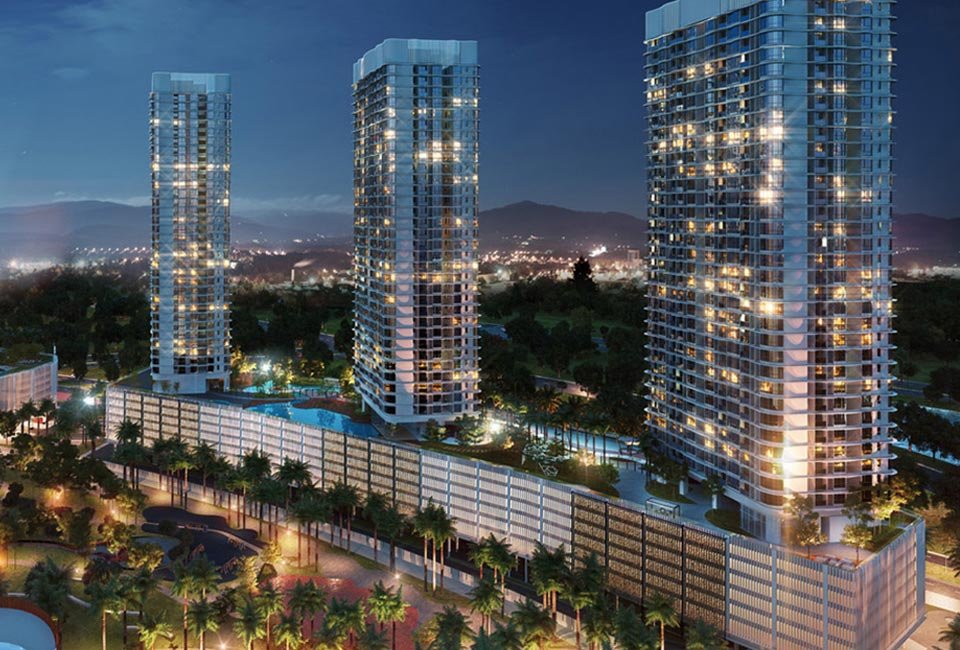
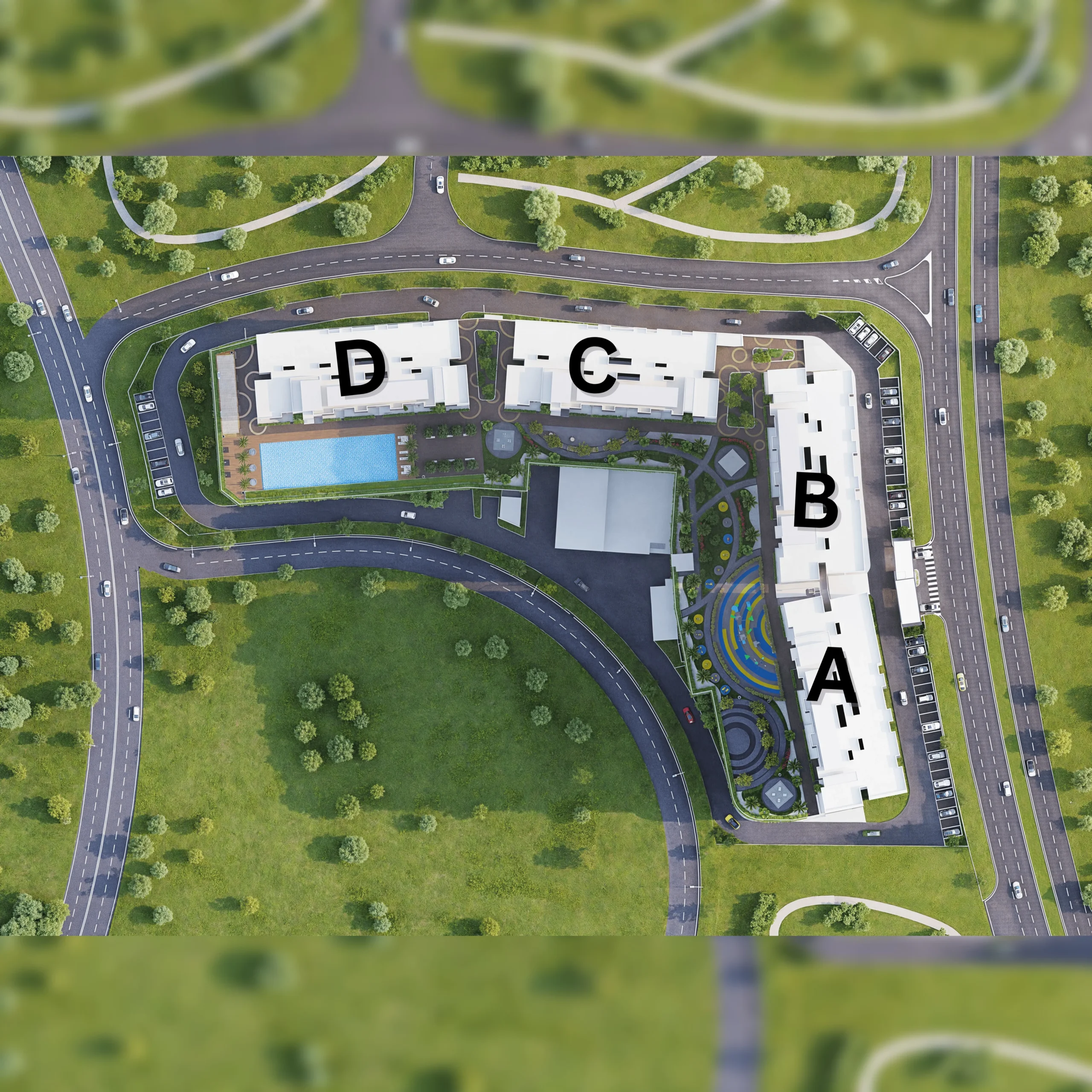
- Forest City Golf Villa · Forest CitySFZ stamp duty remissiondeveloper-direct, completed before 1 Sep 2024 only
- Forest City Nigella Park · Forest CitySFZ stamp duty remissionsame three conditions apply
- The M Macrolink Medini · Medini, Iskandar PuteriMedini / IRDA frameworkhistoric relief from the RM1m floor — confirm in writing
- Verte Medini Residence · Medini, Iskandar PuteriMedini private lease schemeleasehold interest, not freehold
What I could not verify, and will not guess at
A page about a policy in motion has to say where its evidence stops. As at 2026-08-05, the following are open, and where any of them is resolved by an official announcement, the announcement governs and not this page.
- A gazette order giving statutory effect to the JS-SEZ 5% corporate rate or the 15% knowledge-worker rateNot locatedForest City’s equivalents were gazetted 3 Oct 2025
- A 2026 batch of orders that search results suggest may relate to JS-SEZ stamp duty remissionsUnverifiedcheck the federal gazette before relying on it
- The entry-into-force date of the JS-SEZ AgreementNot publishedratification welcomed 4 Dec 2025
- The boundaries of flagships A to GNot publishedIMFC-J confirms location in writing instead
- The number of projects approved into the zone, and the number of companies granted the 5% rateNever publishedreporting is in ringgit only
- The critical-occupation list and the academic or experience thresholds for the 15% rateNot publishedno guideline or form found anywhere
- RTS Link faresNot announcedquoted figures are speculation
- Medini’s current position on the RM1 million floorUnverifiedno primary government source found
Frequently asked questions
Does the JS-SEZ let a foreigner buy property in Johor more cheaply or more easily?
No. Not one part of it touches the rules that govern a foreign purchase. Johor’s published minimum purchase price for a foreign interest is RM1,000,000. State consent under section 433B of the National Land Code is still required. The state approval fee rose to 3% of the price or RM30,000, whichever is higher, from 1 July 2025 — and to 4% for industrial property. A flat 8% stamp duty has applied to non-citizen individuals and foreign companies acquiring residential property since 1 January 2026. Johor also raised land office registration fees from 1 April 2026 with an explicit non-citizen premium.
In other words, every measurable change to the cost of buying property in Johor since the Agreement was signed has made it more expensive for a foreigner, not less. If someone is selling you a unit on the story that the special economic zone opens a door for foreign buyers, ask them to point at the document. In September 2025 the Johor state government publicly warned that offers of subsidised or free housing to foreigners, including Singaporeans, were a scam, and restated the RM1 million floor.
Can I get the 15% personal income tax rate if I buy a condominium in the zone?
No. The 15% rate attaches to chargeable employment income. The published criteria are that the applicant has not generated employment income in Malaysia for the 24 months before applying, earns more than RM20,000 a month, meets academic and professional-experience thresholds, and works in a listed critical occupation within a qualifying JS-SEZ sector. Applications go to TalentCorp, the national talent agency, and the window runs to 31 December 2034. Buying property generates no employment income and there is no property nexus anywhere in the scheme.
There is a related trap. The MM2H pass under the special economic zone and special financial zone category requires a property purchase, and the Ministry of Tourism, Arts and Culture’s own terms for it state that business and investment activities are not allowed and career opportunities are not allowed. So the pass that a property purchase can get you is the pass that forbids the employment the 15% rate is built around. The two cannot be combined.
Has the 5% corporate tax rate actually become law?
On the evidence I can find, not yet in the form of a gazette order. The package is set out in a Ministry of Finance and MIDA guideline, and applications have been open to MIDA since 1 January 2025, but I could not locate subsidiary legislation under section 65B of the Income Tax Act 1967 giving the JS-SEZ rates statutory effect. That matters because the comparison is right next door: Forest City’s incentives were legislated in eleven instruments, P.U.(A) 350 to 360 of 2025, gazetted on 3 October 2025, with numbers you can look up.
Treat the JS-SEZ corporate and knowledge-worker rates as approval in principle under a published guideline, pending legislation. That is not a criticism of the policy — incentives are frequently approved and administered before the order appears. It is a caution against anyone telling you the tax position is settled. Search results also point to a further batch of orders made in 2026 which I could not verify against the federal gazette, so check the gazette yourself before relying on any of it. Where the position is unclear, the official announcement governs, not this page.
What does 5% for 15 years actually cover?
Two situations, and that is all. A global services hub in flagship A, Johor Bahru Waterfront, or flagship B, Iskandar Puteri. Or a new manufacturing company in flagship E or F with capital expenditure excluding land above RM1 billion. Everything else in the package is something narrower: 5% for ten years for manufacturing capex between RM500 million and RM1 billion; a two-tier 5% or 10% for downstream specialty chemicals in flagship D at RM500 million capex; and for smart logistics in flagship C and integrated tourism in flagship G, not a reduced rate at all but an investment tax allowance.
The conditions are heavy and they are ongoing. A global services hub needs annual operating expenditure of at least RM50 million, must serve or control at least ten network companies, must fill at least half its high-value positions — those paying a minimum basic salary of RM10,000 a month — with full-time Malaysians, and must have at least five key personnel on a minimum basic salary of RM35,000 a month. Every scheme requires a compliance report to MIDA within seven months of each year of assessment, and failing the conditions in any year means being taxed at the prevailing rate for that year. One more thing rarely mentioned: Malaysia’s domestic top-up tax took effect on 1 January 2025, so a group with global revenue at or above 750 million euro can be topped up to an effective 15% anyway.
Who approves all this, and in what order?
Location first. The Iskandar Malaysia Facilitation Centre – Johor, IMFC-J, has to confirm in writing that your development sits inside a flagship area, because the boundaries of the seven new flagships have never been published. IMFC-J opened on 18 February 2025 and puts MIDA, IRDA and Invest Johor in one office.
Then the application. It goes to MIDA through the InvestMalaysia portal, is deliberated by the National Committee on Investments, and is approved by the Ministry of Finance, with MIDA issuing the approval letter. Individual applications for the 15% knowledge-worker rate go to TalentCorp instead. Singapore runs a mirror JS-SEZ Project Office set up in April 2025 by the Ministry of Trade and Industry with EDB and Enterprise Singapore, but it facilitates Singapore-based companies — it does not approve Malaysian incentives.
How much investment has actually come in?
The official figures are all in ringgit and all from Malaysian ministers. MIDA reported RM37.1 billion approved in the first half of 2025. The Economy Minister put full-year 2025 approvals at RM76.98 billion and said 57% of cumulative approvals have moved into implementation, with a further RM5.49 billion approved in the first quarter of 2026. On the Singapore side, Deputy Prime Minister Gan Kim Yong said in October 2025 that Singapore-based firms had committed S$5.5 billion since the memorandum of understanding was signed in January 2024.
What has never been published is the number that would answer the question properly: how many projects have been approved into the zone against the target of 50 in five years, and how many companies have actually been granted the 5% rate. All the reporting is in ringgit committed, not in projects delivered or incentives granted. That gap is worth holding on to when you read a headline number.
The Forest City incentives sound different. Are they?
Yes, and the distinction is one of the most useful things on this page. The Forest City Special Financial Zone was announced on 20 September 2024, a year before the JS-SEZ package, under its own guideline, with its own application window opening 1 September 2024, and it has been legislated. It also contains the only property-side concession in the whole family of schemes: a 50% stamp duty remission on the instrument of transfer and on the loan or financing agreement.
The conditions on that remission are narrow and people misread them constantly. The sale and purchase agreement must be executed between 1 September 2024 and 31 December 2034, the purchase must be direct from the developer — sub-sale is excluded — and construction of the unit must have been completed before 1 September 2024. IRDA verifies eligibility and the Inland Revenue Board can revoke it on audit. There is a separate real property gains tax exemption for non-citizens disposing in year four or later. And all of it sits on top of, not instead of, the RM1 million floor, section 433B state consent and the 3% state approval fee.
When will the RTS Link open, and does that count as a JS-SEZ deliverable?
It is a separate bilateral project that predates the zone, but it is the piece of infrastructure that will actually change daily life. The latest official statement I have is from the Transport Minister on 15 January 2026: construction complete by December 2026, with operations beginning in January 2027. The joint statement from the December 2025 Leaders’ Retreat used slightly different wording, giving a targeted service commencement date at the end of December 2026. No formal slippage has been declared. Fares have not been announced, and any figure you see quoted is speculation.
The legal work is the part that moved in 2026. Malaysia’s RTS Link Bill 2026 passed the Dewan Rakyat on 12 February 2026 and comes into full force on 30 September 2026, conditional on Singapore enacting reciprocal protections, which it did in May 2026. That is what makes single clearance at Bukit Chagar possible — one stop instead of two.
So what should a property buyer actually take from all this?
Three things. First, the zone is an employment story, not an ownership story. If the 20,000 skilled jobs and 50 projects in five years arrive, that is tenant demand and it is real — but it lands over years, it lands unevenly across nine flagship areas with different sector mandates, and the salary bands the incentives target are much higher than the median Johor tenant’s.
Second, the dates are the risk. The master plan has slipped three times and is now aimed at December 2026. The flagship boundaries are unpublished. The headline tax rates are not, as far as I can find, gazetted. Buying today on a 2028 rental thesis means underwriting a timetable that has already moved more than once.
Third, look at what the market is doing rather than at what the announcements say. NAPIC’s Q1 2026 snapshot puts Johor at 9,972 unsold completed serviced apartments, the highest of any state, and 58.5% of the national completed unsold serviced apartment stock is priced between RM500,001 and RM1 million. The zone does not clear that stock. Buy a specific building for specific reasons — location, title, developer, price against comparables — and treat the zone as one factor among several, not as the reason.
Ask me what a policy claim is actually based on
If a sales gallery has told you that a project qualifies for something because of the special economic zone, send me the claim and the project name. I will tell you which instrument it comes from, what the conditions are, and whether it applies to the unit you are looking at — or whether nobody has published anything that supports it.
No agent fee payable by the buyer on new developer launches
Louis Koh
11 years in Malaysian property · Johor Bahru & Kuala Lumpur new launches · English & 中文
I work with cross-border buyers from Singapore and with local investors. On policy I would rather tell you what the document says and where it stops than repeat a headline.
Published 2026-08-05 · Last verified 2026-08-05 against the official JS-SEZ portal and frequently-asked-questions, the Ministry of Finance and Johor state announcement of 8 January 2025, MIDA’s JS-SEZ and Forest City tax incentive guidelines, Securities Commission guidelines SC-GL/5-2025, MITI media statements, Singapore Ministry of Foreign Affairs and Economic Development Board releases, Malaysian Hansard reporting on the RTS Link Bill 2026, Pekeliling PTG Johor Bil. 3 Tahun 2025, the Finance Act 2025 and NAPIC’s Q1 2026 property market snapshot. Policy in this area is moving; where anything here differs from a current official announcement, the announcement governs. This page is general commentary, not tax, legal or immigration advice.