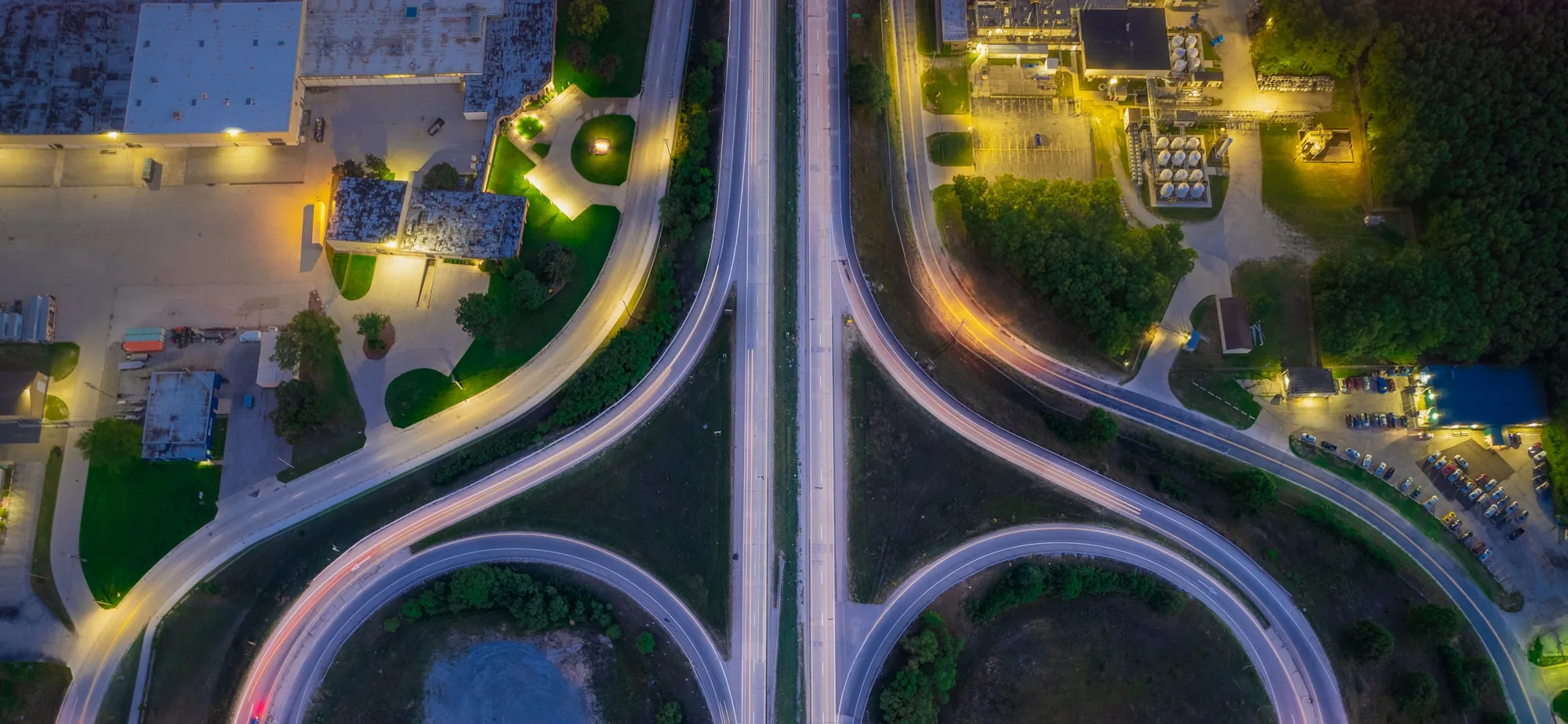
Kempas / Tebrau Bay industrial property
The most central industrial belt in Johor Bahru. The NSE Kempas interchange is right beside it — about 15 km to the Causeway, 18 km to Senai Airport, 28 km to Johor Port. Nothing is far, and nothing is nearest. That is precisely its value: if you serve the whole of Johor Bahru, or you are not yet certain which way your business will tilt, this is the lowest-risk address in the state.
⚡ Usually a reply within 15 minutes · 9am–10pm MYT · rent, buy, build or land
⚡ Kempas / Tebrau Bay in one paragraph
This is Johor Bahru’s hub belt: regional distribution and third-party logistics, building materials and engineering supply, machinery and equipment trading, food and packaging, and a set of mid-sized companies serving the whole city. Ready-built factories rent for roughly RM1.30–2.00 psf, industrial land runs roughly RM40–85 psf — price and position both in the middle.
The test: your customers or delivery points are spread across Johor Bahru, or you need both the airport and the port → nothing else is this convenient. You only move in one direction → the specialist belt for that direction will beat this.
Twelve facts
In the order the decisions actually get made.
- Administrative area
- Johor Bahru CityKempas estates, Kempas Baru, the Tebrau Bay side
- Industry class
- Light to mediumNo heavy industry or chemicals
- Primary logistics mode
- Road hubOn the NSE spine, with routes to the airport, the ports and both crossings
- Standout advantage
- Nothing is farBest at nothing, but nothing holds you back either
- To Causeway CIQ
- approx. 15 kmCloser than Tebrau, further than Tampoi
- To Senai Airport
- approx. 18 kmThe closest of the city-side industrial belts
- Typical tenure
- Both leasehold and freeholdVerify by land search
- Rent, ready-built
- RM1.30 – 2.00 psfOlder estates at the bottom; modern warehouses at the top
- Industrial land
- RM40 – 85 psfHighway frontage highest; outlying parcels lower
- Product character
- Logistics-heavyCentral position makes it a common home for regional distribution centres
- Foreign buyer floor
- RM3,000,000Johor minimum for commercial and industrial property
- Data strength
- ModerateFewer public listings than Senai — bands here indicate positioning
The six kinds of business that actually fit
An industrial address is a cost structure, not a postcode. The last card says who should not come.
Regional distribution and 3PL
The classic use here. From this belt, every industrial area, commercial belt and crossing in Johor Bahru is roughly half an hour away — so if your delivery points are spread across the city, putting the warehouse in the middle minimises total kilometres driven. That is arithmetic on a map, not a feeling.
Businesses that use both airport and port
About 18 km to Senai Airport and 28 km to Johor Port. Neither is closest, but both remain usable — the practical answer for companies split roughly half air and half sea, who would otherwise sacrifice one to favour the other.
Building materials, engineering and equipment supply
Sites are everywhere and customers span the state. The NSE is alongside, so north to Kulai, south to the city and east to Pasir Gudang all run smoothly — the most rational storage and dispatch centre for this trade.
Manufacturers who also need distribution
Companies that produce elsewhere but turn stock over in Johor Bahru often place a transit warehouse here. The share of modern warehouse stock is higher than in the city belts, with better dock levellers and clear height.
Businesses whose direction is not yet settled
I rarely write this on other pages: if your business could shift direction within three years, being central lowers your risk. Whether you later tilt toward the airport or toward the port, you will not have to move immediately — and relocating a plant costs far more than a few cents per square foot.
Who should look elsewhere
Anyone whose direction is already certain. Air freight only → Senai. Port or berth only → Pasir Gudang. City customers only → Tebrau. Pure cost → Masai. When the direction is clear, the specialist belt always beats the central one.
🧭 Import or export?
Neither is the lead here — domestic demand and transit are. Most occupiers serve the whole of Johor Bahru rather than one crossing or one quay. What this belt sells is “nothing is far”, not “nearest to X”. Understand that and you know whether it fits.
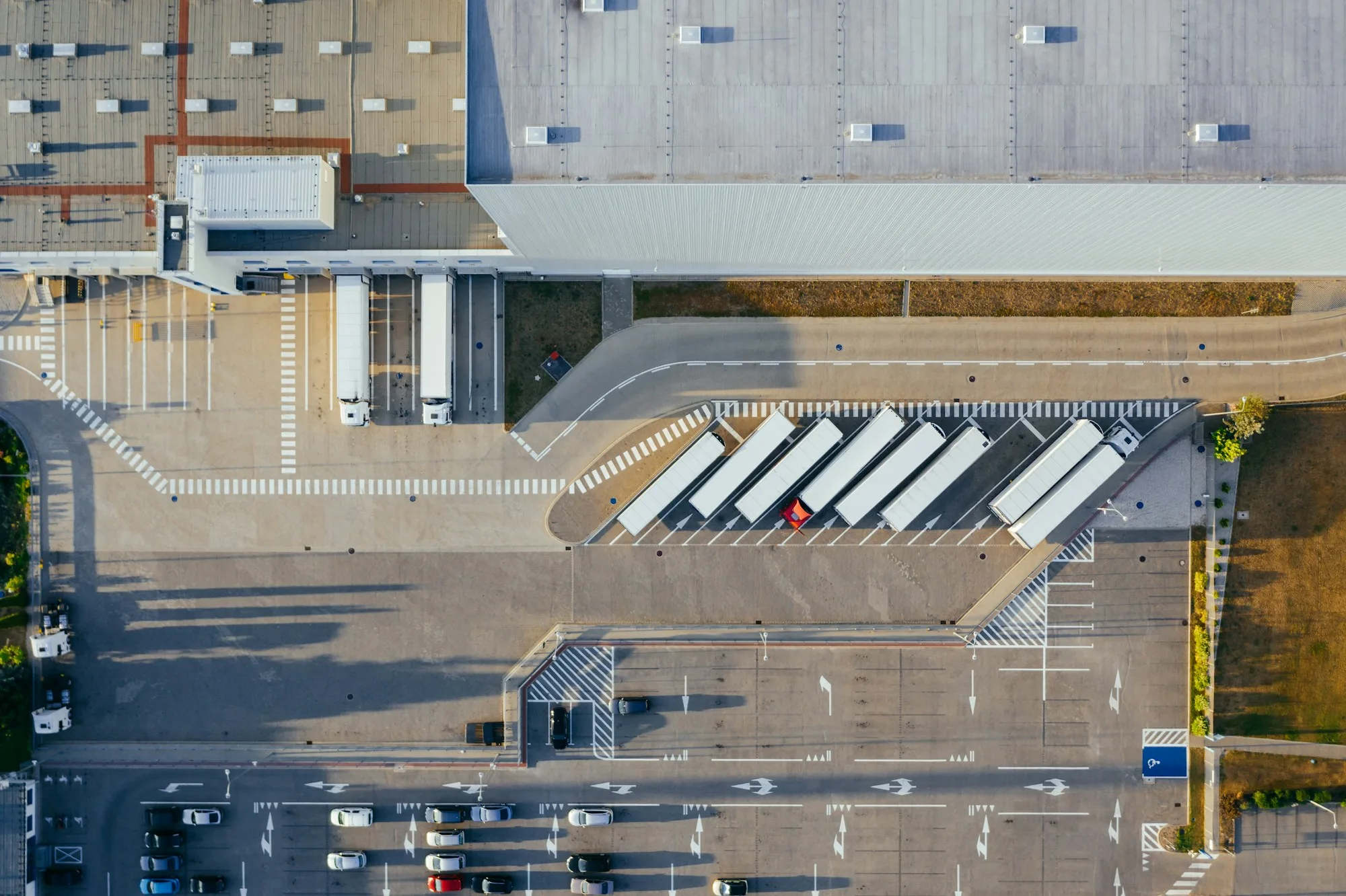
Are your delivery points in one place, or all over Johor Bahru?
All over — then central is the cheapest answer. Concentrated in one direction — then that direction’s belt is better. Send me your delivery points and I will work it out on a map.
Find my best warehouse location Photo: Unsplash (illustrative)Distance is the only logistics argument that never expires
Indicative road distances — verify against your own plot.
A real, draggable map. The buttons below open Google Maps and calculate the actual route and drive time — the single most useful thing to do here is open all seven destinations in turn; you will see immediately what central means.
Bearings and distances at a glance
We drew this ourselves: Kempas at the centre, with seven key destinations at their true bearing and distance. This is the picture that explains the belt best — nothing is especially close, and nothing is especially far. That is what central looks like.
- 🏙️Johor Bahru city centreapprox. 12 km
- 🌉Causeway CIQapprox. 15 km
- ✈️Senai International AirportClosest of the city-side beltsapprox. 18 km
- ⚓Johor Port (Pasir Gudang)approx. 28 km
- 🚧Second Link CIQapprox. 30 km
- 🚢Port of Tanjung Pelepasapprox. 40 km
- 🛣️NSE Kempas interchangeThe core asset of this belt1–4 km
⚖️ What is central actually worth?
Here is the arithmetic. Say you run one trip a day each to the airport, the city and Pasir Gudang. From Senai, the port trip adds about 40 km. From Pasir Gudang, the airport trip adds about 45 km. From Kempas, all three are moderate.
Forty extra kilometres a day, 250 days a year, is 10,000 km. That fuel and driver time usually exceeds the rent gap between Kempas and a specialist belt. The condition, of course, is that you really do run all three directions.
First, what those rents actually buy
The rent and land figures below turn into one of these three buildings. All three are drawn to the same scale, with a 1.7 m person beside them. Warehouse-type units dominate this belt, so clear height and dock height matter more than floor area.
Rents, sale prices and land
All figures are indicative asking bands from publicly advertised listings. The public sample here is smaller than in Senai, so treat these as positioning.
1 · By product type — one card each
Rent is quoted per square foot of built-up area per month.
Terrace / link factory
The main product in the older estates, suited to small trading, processing and engineering firms.
Semi-detached factory
A yard and side access, suited to SMEs with regular truck movements — the most liquid product in this belt.
Modern warehouse / distribution centre
Clearly over-represented here compared with the other city belts: higher clear height, full dock levellers, and the usual home for regional distribution centres.
Detached factory
Ages vary widely here, from older plants to recent build, so specification and rent differ noticeably within the same band.
Industrial land
Mostly small and mid-sized parcels; highway-frontage plots carry the highest value and suit showrooms or headquarters buildings.
Choose on your delivery points, not on instinct
The right method for this belt is concrete: list a month of delivery points and total the kilometres driven.
I will run that from Kempas, Senai and Tebrau and compare total distance and driver hours. The answer is often not what the owner expected.
Run my total mileage2 · Rent bands compared
Horizontal axis is rent per square foot per month.
📊 The price position is itself the explanation
Line the eight belts up: Masai from RM1.00 · Senai from RM1.10 · Pasir Gudang from RM1.30 · Kempas from RM1.30 · Tebrau from RM1.40 · Tampoi from RM1.55 · Iskandar Puteri from RM1.80.
Kempas sits in the lower middle — cheaper than the city belts, dearer than the outer ones, and what you buy is the ability to go in any direction. The market worked that price out, not me.
3 · Vacant industrial land
Land here sits in the middle tier too, with a clear premium for highway frontage.
💡 Here, the most valuable thing about a plot is its access
Much of the price spread comes down to how easily you get onto the main road: two plots of the same size, one joining the highway directly and one three junctions away, differ in both dispatch efficiency and resale value.
Visit at 8am and again at 6pm before you buy, and drive your actual truck route. Plots near the interchange have the best position but can also be caught in the peak — you need to see both things together.
4 · Estate by estate
Tenure below is what is commonly seen — never a substitute for a land search.
Kempas industrial estate
The core of the belt, mainly terrace and semi-detached product, with high SME density and good liquidity.
Kempas Baru
The newer stretch, with bigger plots and more warehouse and distribution product — where the logistics companies concentrate.
Tebrau Bay side
The stretch closest to the city and the water, with a high degree of mixed use — suited to office-plant units and service businesses.
Around the NSE interchange
The core asset of this belt. The closer to the interchange, the better the logistics and the higher the land price — and the heavier the peak traffic.
Toward Skudai
The boundary with Tampoi / Skudai: older buildings but a deeper labour pool — worth comparing together.
Toward Tebrau
The boundary with the Tebrau belt: smaller units but closer to city customers — choose by where your customers are.
🕒 Bands compiled from publicly advertised listings in Kempas, Kempas Baru and the Tebrau Bay side, cross-checked in 2026. The public sample here is smaller than in Senai, so these bands indicate positioning. Asking prices only. Last reviewed 2026-09-06.
What Kempas wins and loses
Advantages and weaknesses side by side, then when you should choose another corridor.
✓ Where it wins
- The most central position: airport, ports, both crossings and the city all within a sensible drive
- The NSE interchange alongside: north and south both run cleanly, so long-haul dispatch is efficient
- More logistics product to choose from: a higher share of modern warehouses than the other city belts
- Cheaper than the city, more convenient than the outskirts: the balance point of price and access
- Lower relocation risk: if your business tilts later, you do not have to move
- Freehold is findable: available in parts of the belt, easing financing and exit
- Relatively easy to re-let: central location means broad tenant acceptance and short vacancy
✕ Where it loses
- First at nothing: if your direction is settled, the specialist belt will beat it
- Peak congestion at the interchange: the advantage junction is also the jam, so measure real drive times
- Uneven building ages: old and new are mixed, and specification varies within the same band
- Moderate supporting-trade density: below Senai and Tebrau, so outsourcing means more driving
- No heavy industry: chemicals, tanks and berth-dependent work are entirely unsuitable
- No advantage on frontage: trades judged on appearance gain nothing here
- Moderate public data: pricing reference is less precise than in the hot belts
Choose Senai / Kulai
Everything flies, you need dense supporting trades and a full product ladder — Senai is 2–8 km from the terminal against 18 km here.
See Senai / Kulai →Choose Pasir Gudang
A berth, tanks, gas or high container volume — Pasir Gudang is 2–5 km from the port against 28 km here.
See Pasir Gudang →Choose Tebrau / Desa Cemerlang
All your customers are in the city, they need to reach you easily, and you want dense supply chains — Tebrau is closer with a deeper tenant pool.
See Tebrau →🧭 The honest version
Kempas is the good-at-everything, best-at-nothing belt. That sounds like a criticism, and for one kind of business it is exactly the opposite: scattered delivery points, undecided direction, or a genuine need for both airport and port.
One question decides it: does your business have one clear direction? If yes, go to that direction’s belt. If no, or if there is more than one, Kempas is the mathematically optimal answer.
Six things to settle before you commit
⏱️Measure the peak drive time yourself
The selling point here is the interchange, but the interchange is also where traffic backs up at peak. Fifteen minutes on a map can be thirty-five in practice.
✓ Drive your real route at 8am and 6pm before you sign.
🚛Docks and clear height
There is plenty of logistics product here, but old and new are mixed: some warehouses are short on docks or low on clear height, and real throughput differs a lot.
✓ Count the dock positions, measure the clear height, and test entry and exit with your actual vehicle type.
🔌Power capacity
Older buildings are common enough that existing capacity may not support modern equipment or cold chain. Price the upgrade and the lead time up front.
✓ Get TNB’s existing capacity and upgrade quotation in writing before signing.
🌏Can a foreigner or foreign company buy?
Yes, subject to Johor’s RM3,000,000 minimum, a 4% foreign levy and state authority consent. Larger product here clears the threshold more easily; small units often ask below RM3m.
✓ Have a Johor conveyancing lawyer confirm your structure in writing.
📜Tenure and use conditions
Leasehold and freehold coexist here, and use conditions are not uniform — approvals for warehousing and for manufacturing can differ.
✓ Confirm tenure type, residue and use conditions by land search rather than from marketing copy.
📈As an investment: steady, not exciting
Broad tenant acceptance and short vacancy make cash flow reliable; but there is no single strong story here, so the appreciation case is weaker than in new parks or conversion belts.
✓ Right for buyers who want stable returns; buyers chasing a story should look elsewhere.
💡 The nationwide sections are on the Senai page
Company structure, Employment Pass thresholds, labour cost, tax and incentives (Pioneer Status, ITA, JS-SEZ, LMW), TNB tariffs, lease terms and financing constraints are national or state-level and apply equally here. They are written up in full on the Senai / Kulai page.
What is nearby, and what else to ask
Housing and hiring
Kempas, Setia Tropika, Setia Indah and the Skudai direction are all densely residential, so staff supply is steady and commutes are moderate — hiring is easier than in the outlying belts.
Worker accommodation
Ample residential supply nearby makes accommodation relatively easy to arrange. Under Act 446 as amended, a Certificate for Accommodation and minimum standards apply.
Roads and access
The NSE Kempas interchange is the belt’s core asset, with exits in every direction. But traffic at the interchange is heavy at peak, so choose your access route carefully.
Commercial and dining
The Setia Tropika and Kempas commercial areas cover daily needs — reasonable options for staff lunches and late shifts, less dense than the city but sufficient.
Parking and truck movement
Newer parts of the belt have better parking than the city estates, but the older sections still suffer from inadequate loading — establish which section you are in when viewing.
Neighbours and mixed use
Industry sits alongside housing and commercial in places, so site selection needs care for noisy or odorous work — avoid parcels backing directly onto housing.
✅ Five questions to ask on every viewing in this belt
One: real peak drive time to your main destinations (drive it yourself). Two: dock count and clear height. Three: existing power capacity and upgrade lead time. Four: tenure type and use conditions. Five: how many junctions between the unit and the main road. All five matter more than the rent.
Why here, and not the corridor next door
Nothing here is first in Johor. But for one kind of business, having no weak side is exactly what cannot be replaced. Six reasons why.
The shortest total mileage, and it is calculable
Suppose you run one trip a day each to the airport, the city and Pasir Gudang. From Senai the port trip adds about 40 km; from Pasir Gudang the airport trip adds about 45 km; from Kempas all three are moderate. Forty extra kilometres a day over 250 days is 10,000 km — and that fuel and driver time usually exceeds the rent gap.
The NSE interchange is right beside you
North to Kulai and Kota Tinggi, south to the city and the crossings, east to Pasir Gudang — all run cleanly. This is one of the most efficient dispatch positions in Johor for long-haul work, and for a fleet covering the state, or running up to Melaka and Kuala Lumpur, that is worth far more than a few sen per square foot.
More modern warehouse stock than the other city belts
Higher clear height with full dock levellers is almost unfindable in Tebrau or Tampoi, yet it is a mainstream product here. For third-party logistics and regional distribution, the supply of the right building is itself the advantage.
The closest city-side belt to the airport
About 18 km to Senai Airport. Tebrau is about 30 km, Tampoi about 20 km, Pasir Gudang about 45 km. If part of your cargo flies but you do not want to move out to Senai, this is the only sensible middle ground.
It lowers the risk of having to move later
I rarely write this on other pages: if your business could shift direction within three years, being central is insurance. Whether you later tilt toward the airport or the port, you will not have to move — and one relocation typically costs the sum of several years’ rent difference.
Easy to re-let, easiest exit
A central position means broad tenant acceptance. Logistics firms, manufacturers and traders will all accept this location, so vacancy is short and resale is quick. For a landlord that is worth more than the headline yield.
🧭 The difference in one line
Other corridors sell one extreme — nearest the airport, nearest the port, nearest the customer, cheapest. Kempas sells the absence of a weak side.
If your direction is settled, the specialist belt wins. If you have more than one direction, or have not settled it yet, central is the mathematically optimal answer. That is not a compromise — it is a different optimum.
Rent is only the beginning: the cash you actually need
Logistics product dominates here, so the case below uses a 20,000 sq ft modern warehouse — the typical scenario in this belt.
Renting a 20,000 sq ft modern warehouse
At RM1.80 psf: RM36,000 a month on a three-year term.
The big variables for storage operations are racking and fire class: high-bay racking carries far stricter requirements (sprinklers and in-rack heads) than an ordinary factory. Settle this before you sign.
Buying at RM4,000,000
Held through a Malaysian company with 70% financing:
Mid-to-large product here clears the RM3m foreign threshold more easily, making this one of the few city-side options genuinely available to a foreign buyer; small units usually sit below it.
⚠️ The 8% stamp duty question your lawyer must answer in writing
From 1 January 2026, transfer stamp duty for non-citizens (permanent residents excepted) becomes a flat 8%. Public material used to be inconsistent about whether industrial property was covered. Verified September 2026: the 8% covers residential property only. It sits in item 32(ab) of the Stamp Act 1949, inserted by the Finance Act 2025; industrial and commercial transfers stay on item 32(aa), a flat 4% for non-citizens. On RM4m a non-citizen buyer pays RM160,000, not RM320,000. Note too that the 1/2/3/4% scale is for Malaysian citizens only, so the RM144,000 figure does not apply to you. Johor’s separate 4% foreign levy on industrial property (from July 2025) sits on top: another RM160,000 on the same RM4m.
While you are at it: the RM3,000,000 foreign buyer floor in the fact card above is the figure most often quoted for Johor, but published sources are not consistent about which band applies to industrial property (RM1m to RM3m all appear). Have your lawyer confirm that one in writing too.
Take your holding structure and the specific parcel to a Johor conveyancing lawyer for a written opinion before you negotiate price.
💡 And one more on the way out: RPGT
Real property gains tax tapers with holding period but never reaches zero for companies or foreigners: companies 30/20/15/10% across years one to six, foreigners 30% for five years then 10%. Assets here resell relatively easily, so plan the exit year early.
From decision to production, how long
Administration here is simple and supply is good. The real variables are warehouse fire class and power capacity.
Rent an existing building: 3–6 months
General warehousing can open in three months. High-bay racking or cold chain needs the fire and power items started six months ahead.
Buy land and build: 15–24 months
Building here sits between Iskandar Puteri and Masai in speed: infrastructure is in place, an EIA is usually not needed, and there is no park design approval gate — a comparatively clean process.
⏱️ Three moves that save real time here
One: in the week you view, drive your real route at 8am and again at 6pm — the interchange is both this belt’s selling point and its bottleneck, and that one trip decides whether you sign. Two: design the racking and the fire system together, rather than discovering non-compliance after the racking is up. Three: run incorporation, bank account and EP applications in parallel while viewing.
Three things a foreign operator must get right
These numbers go straight into your financial model, and they decide whether you can hold property in the company’s name at all.
Company structure
Most manufacturing categories allow a 100% foreign-owned Sdn Bhd.
Holding through a company versus an individual changes how the foreign threshold, the levy and state consent apply. Get this wrong and everything after it has to be redone.
Work passes
Thresholds rose sharply on 1 June 2026, for new applications and renewals alike:
The old thresholds were RM10,000 and RM3,000. For logistics operators, plan the quota for warehouse and driver roles well ahead.
Labour cost
Statutory monthly cost of a local employee:
Labour supply here is steady and commutes are moderate, so hiring is easier than in the outlying belts while wage pressure is lower than in Iskandar Puteri — the same central logic that governs the location.
What you will actually pay
Read the standard rates first, then check whether you qualify — never the other way round, because most incentives attach to an activity, not an address.
- Standard corporate tax
- 24%applies to all non-SME companies
- SME rates
- 15% / 17% / 24%paid-up capital ≤RM2.5m among other tests
- Pioneer Status
- 100% statutory income exempt5 years, extendable to 10 if qualified
- Investment Tax Allowance
- up to 100% of qualifying capexset off against 70–100% of statutory income
- Integrated logistics incentives
- depends on qualifying activitythe item logistics operators here should ask MIDA about
- JS-SEZ
- special rate 5%, up to 15 yearstied to qualifying high-value activities; plain warehousing usually does not qualify
- Bonded warehouse
- import duty and sales tax deferredworth assessing for import-and-distribute operators
- Manufacturing licence threshold
- RM2.5m shareholders’ funds or 75 full-time staffMIDA application required above the threshold
- Real property gains tax
- companies 30/20/15/10%foreigners 30% for five years, 10% from year six
💡 What logistics operators here should actually ask about: bonded warehousing
For a third-party logistics business importing and distributing, a bonded warehouse defers import duty and sales tax until goods actually leave the warehouse — usually a bigger cash-flow effect than any corporate tax incentive.
Integrated logistics incentives are assessed on qualifying activity. Take your actual business description and MSIC code to MIDA and Customs for a written answer before you build it into the model.
Power, fire class, leases and lending: four things routinely underestimated
Utilities
Malaysia moved to the RP4 tariff structure in July 2025:
For cold chain or temperature-controlled storage, the load profile is nothing like an ordinary warehouse — take it to TNB for a formal estimate.
Warehouse fire class (key here)
Warehousing dominates this belt, so this deserves its own column:
A warehouse having a fire system is not the same as it suiting your storage. Raise the racking or change the goods class and the requirement can change entirely — have a fire consultant review your racking plan before signing.
Lease and sale terms
Local market convention, worth checking line by line before signing:
Warehouse leases need two extra points: who owns the racking and who removes it on exit, and whether the floor loading actually carries your rack loads. Structural repair and fire compliance still need spelling out. From January 2026 tenancy stamp duty moved to self-assessment via e-Duti Setem on MyTax.
Financing
Lending conditions here are comparatively solid:
Standard specifications and broad tenant acceptance mean banks view this belt’s valuations and liquidity positively — a genuine plus for both margin and tenor.
Once you are here: what is around you and who to deal with
Local supporting supply chain
- Racking systems and storage equipment: the densest support in this belt
- Forklift sales, rental and service: the ecosystem the logistics cluster created
- Third-party logistics and haulage dispatch: the easiest position for cross-district work
- Building materials and engineering supply: a traditional strength here
- Machinery trading and after-sales: a dispatch centre serving the whole state
- Packaging consumables and pallets: routine warehouse demand
- Cold chain equipment and service: essential support for temperature-controlled storage
- Thin on precision machining and cleanroom support: for that you drive to Senai or Iskandar Puteri
The agencies you will deal with
- Johor Bahru City Council (MBJB): planning, building plans, business licence, CCC
- Fire and Rescue (Bomba): the critical one here — warehouse fire class and in-rack sprinkler approval
- TNB: power capacity and upgrades; cold chain operators should apply early
- SAJ Ranhill for industrial water; IWK for sewerage
- Department of Environment Johor: light requirements for plain storage, separate rules for regulated materials
- DOSH / JKKP: forklift, lifting equipment and operator certification
- Royal Malaysian Customs: bonded warehousing and SST registration
- JPJ / APAD: operating licences for your own fleet
- MIDA for logistics-related incentives; Invest Johor at state level
✅ The right order in this belt
Test the peak-hour drive first, settle the fire class second, negotiate rent last. The drive time decides whether the position means anything to you; the fire class decides whether you can store as planned. Both answers change your offer. Almost every trap in this belt hides in those two items.
Nine things people ask once they have decided
None of these appear in an investment brochure, and every one becomes a real cost after you sign.
🌊One · flooding and drainage
Ground levels and drainage here are reasonable overall, but parcels near watercourses still need their history checked.
✓ Get the drainage plan; standing water on the apron disrupts dispatch more than it damages stock.
🔒Two · security
Warehouses hold value and sit quiet at night, so logistics operators here generally run access control and round-the-clock monitoring.
✓ Check perimeter, access control and CCTV coverage; high-value stock warrants on-site guarding.
🌐Three · connectivity
Coverage is good, so warehouse management systems and live tracking present no obstacle.
✓ Still confirm a redundant line — in logistics an outage stops the whole dispatch chain.
⚡Four · outages and backup
Cold chain and automated storage are the most sensitive to power loss, so generators and UPS are necessities.
✓ Confirm the generator plinth and diesel storage approval, and budget the backup.
☀️Five · rooftop solar
Warehouse roofs here are large with little shading — genuinely good conditions for rooftop PV.
✓ Get a roof structural assessment and owner authorisation; if renting, write PV ownership into the lease.
🎓Six · where the skills come from
Warehouse staff, forklift drivers and admin are steady; certified reach-truck and hazardous goods operators are tighter.
✓ Build operator certification cost and time into the start-up plan rather than assuming you can hire ready-made.
🏡Seven · expatriate living
Central position means the city, Iskandar Puteri and the Skudai side are all within reach — the most flexible belt for housing.
✓ Choose the housing direction by schooling needs; commutes are generally 20–35 minutes either way.
🏭Eight · what the neighbours do
Old and new are mixed, with some residential and commercial alongside, so noisy or night-dispatch operations carry complaint risk.
✓ For frequent night dispatch, deliberately avoid parcels backing onto housing.
🌱Nine · expansion room and ESG
Mid-sized plots are still available, so expansion flexibility beats Tebrau and Tampoi; on ESG, multinational shippers increasingly ask logistics providers for emissions data.
✓ If your customers are multinational brands, start building auditable energy and fleet emissions records early.
Which kind of buyer are you?
The same belt is a completely different proposition depending on who you are. Find yourself below.
Delivery points spread across Johor Bahru, so the mileage saved by being central is real. Send me a month of delivery points and I will total the kilometres — far more useful than comparing rates.
Sites across the state and the NSE alongside. Focus on how many junctions lie between the unit and the highway — it drives your daily dispatch efficiency directly.
Half air and half sea. This is the only position that sacrifices neither. Neither is closest, but both stay usable.
If the centre of gravity could shift within three years, central lowers relocation risk. One move typically costs the sum of several years’ rent difference.
Broad tenant acceptance, short vacancy and reliable cash flow. But there is no single strong story, so the appreciation case trails new parks and conversion belts — right for stability, wrong for a story.
Air freight only → Senai. Port only → Pasir Gudang. City customers only → Tebrau. When the direction is settled, the specialist belt always beats the central one.
Kempas / Tebrau Bay FAQ
What industry class is this belt?
Light to medium, dominated by logistics and warehousing, building materials and engineering, machinery and equipment, food and packaging, and mid-sized manufacturing. No heavy industry or chemicals — see Pasir Gudang for those.
What does a factory rent for?
Indicatively: terrace and link units RM1.30–1.70 psf per month, semi-detached RM1.45–1.85, detached RM1.55–1.95, modern warehouse RM1.60–2.00. Publicly advertised asking bands, not transacted rents.
Is being central actually worth the rent?
It depends on your delivery points. If you run three different directions daily, the mileage and driver hours saved usually exceed the rent gap; if you only run one direction, you are paying an insurance premium you never claim. Send me your delivery points and I will do the map arithmetic.
Is this a good place for a regional distribution centre?
Very good — it is this belt’s strongest use. The NSE interchange is alongside and the share of modern warehouse stock is higher than in the other city belts. But measure the peak drive time: the interchange is both the advantage and the bottleneck.
Is freehold available?
Yes — leasehold and freehold coexist here, but the proportion and the use conditions vary parcel by parcel. Confirm by land search, and check specifically that the approvals cover warehousing or manufacturing as you intend to use it.
Can a foreigner buy a factory here?
Yes, subject to Johor’s RM3,000,000 minimum, the 4% foreign levy and state authority consent. Larger detached factories and warehouses here clear the threshold more easily; small units often ask below RM3m.
How does it compare with Senai?
It loses on air freight and supporting-trade density: Senai is 2–8 km from the terminal against 18 km here, and its trade density is higher. But Kempas is closer to both the city and the port — if you are not a pure air-freight operation, that trade is not necessarily a loss.
Is it worth it as an investment hold?
The central location gives broad tenant acceptance, so vacancy is short and cash flow is reliable. But there is no single strong story here, so the appreciation case trails new parks and conversion belts. Right for buyers who want stable returns.
Six things the brochure will not tell you
An advertisement will tell you the position is central, the interchange is alongside and there is plenty of warehouse choice. These six are what I say out loud on a viewing.
⏱️One · the interchange is the selling point and the bottleneck
Being beside the NSE is the line everyone uses. But that same interchange is where traffic backs up at peak, and fifteen minutes on a map can be thirty-five in practice.
✓ Drive your real route at 8am and again at 6pm before deciding — the best-spent hour of the whole search in this belt.
🔥Two · a fire system is not the same as a fire system that suits you
The most common misunderstanding here. Raise the racking or change the goods class and the requirement can change entirely, with in-rack sprinkler works running up to RM180,000.
✓ Have a fire consultant review your racking plan before signing, not after the racking is up.
🏗️Three · the floor may not carry your racking
Adverts never mention floor loading. Point loads under high-bay racking are nothing like general storage, and strengthening costs both money and time.
✓ Ask for structural drawings and floor loading data and have an engineer check them against your rack loads.
🎯Four · good at everything means best at nothing
Said plainly: if your direction is already settled, the specialist belt will beat this one. Air freight goes to Senai, port work goes to Pasir Gudang. This belt’s value holds only for multi-directional or undecided businesses.
✓ Answer one question honestly first: does your business have one clear direction? If yes, do not choose here.
🏚️Five · old and new are mixed, so the same price band hides big differences
Building ages vary widely here. The same RM1.80 psf might be a recent high-clearance warehouse or a thirty-year-old plant, and the rate alone will never tell you which.
✓ Measure clear height, count dock positions and check power capacity — the only three tests that actually separate them.
📈Six · stable, but there is no appreciation story
Broad tenant acceptance and short vacancy make the cash flow reliable. But with no single strong theme, the upside case trails new parks and conversion belts. A buyer chasing a story will be disappointed.
✓ Decide whether you want stable income or capital growth; this belt is good at the former.
🧭 Why I write this section at all
The phrase most over-sold in this belt is good location. Whether the location is good depends on where your delivery points are, not on the map.
So I would rather set out those six first and then run your total mileage — if central really does come out shortest, then the position is genuinely good for you.
Kempas not the fit? Here are the other seven
Every area page is written to the same structure: who it suits, industrial class, rent and land, distance to port and airport, surrounding amenities, total landed cost. Each chip carries the belt’s positioning and its entry asking rent — check the positioning first, the price second.
Send me your delivery points and your space requirement
Three things: the main places you deliver to in a month, how many square feet you need, and whether you need dock levellers. I will come back with what is actually available in Kempas this month and run the total mileage against Senai and Tebrau — the numbers will tell you where to go.
Usually a reply within 15 minutes · 9am–10pm MYT