Tebrau / Desa Cemerlang / Mount Austin industrial property
The densest SME belt in Johor Bahru, and the one closest to the city. About 15–20 km to the Causeway CIQ and 12 km to the city centre — your staff live next door, your customers are in town, your subcontractor is on the same street. This is the industrial area you never have to move to. The cost: small units, tight yards, almost no room to expand, and peak-hour traffic that will test your patience.
⚡ Usually a reply within 15 minutes · 9am–10pm MYT · rent, buy, build or land
⚡ Tebrau / Desa Cemerlang / Mount Austin in one paragraph
This is Johor Bahru’s SME and service-industry belt: trading and warehousing, food processing and central kitchens, furniture and joinery, printing and signage, automotive parts and workshops, e-commerce fulfilment and last-mile delivery. Ready-built factories rent for roughly RM1.40–2.20 psf, industrial land runs roughly RM45–110 psf. What it gives you is not a port or an airport — it is your people, your customers and your suppliers all within half an hour.
The test: your customers are in Johor Bahru, your staff will not commute far, and your operation does not need a big yard → nothing else is this easy. You need to scale, run heavy vehicles, or export in volume → the space and the traffic will stop you.
Twelve facts
In the order the decisions actually get made.
- Administrative area
- Johor Bahru CityTebrau estates, Desa Cemerlang, Mount Austin, Cemerlang Heights
- Industry class
- Mainly light industrySome medium; heavy industry and chemicals are entirely unsuitable
- Primary logistics mode
- Road and local distributionServing Johor Bahru and southern Malaysia — this is not an export belt
- Ports and airport
- Neither near nor farJohor Port about 20 km, Senai Airport about 30 km
- Standout advantage
- People and customers next doorHousing, retail, offices and factories all in the same fabric
- Typical tenure
- Both leasehold and freeholdOne of the few places in central JB where freehold industrial still exists — verify by land search
- Rent, ready-built
- RM1.40 – 2.20 psfOlder terrace at the bottom; new office-warehouse units at the top
- Industrial land
- RM45 – 110 psfMain-road frontage highest; outer Desa Cemerlang lower
- Typical unit size
- 1,500 – 8,000 sq ftSmall and mid-sized units dominate; anything over 20,000 sq ft is rare
- Foreign buyer floor
- RM3,000,000Johor minimum for commercial and industrial property
- Biggest weakness
- Traffic and spaceSerious peak congestion, narrow yards, little room to extend
- JS-SEZ
- Within the JB City flagship areaBut incentives follow the activity, not the address — confirm with MIDA
The six kinds of business that actually fit
An industrial address is a cost structure, not a postcode. The last card says who should not come.
Trading, wholesale and warehousing
The biggest tenant group here. Goods move in and out of the local and southern-Malaysian market, and customers collect in person. Put the same business in Senai or Pasir Gudang and every customer drives 30 km further — eventually they change supplier. That is this belt’s most concrete value.
Food processing and central kitchens
Central kitchens, bakeries and cold-chain packers supplying Johor Bahru’s restaurants and retailers. What matters is delivery radius: from here, every outlet in the city is within 30 minutes — the line between life and death in food. Many units already have cold rooms and kitchen extraction.
Furniture, joinery and fit-out contractors
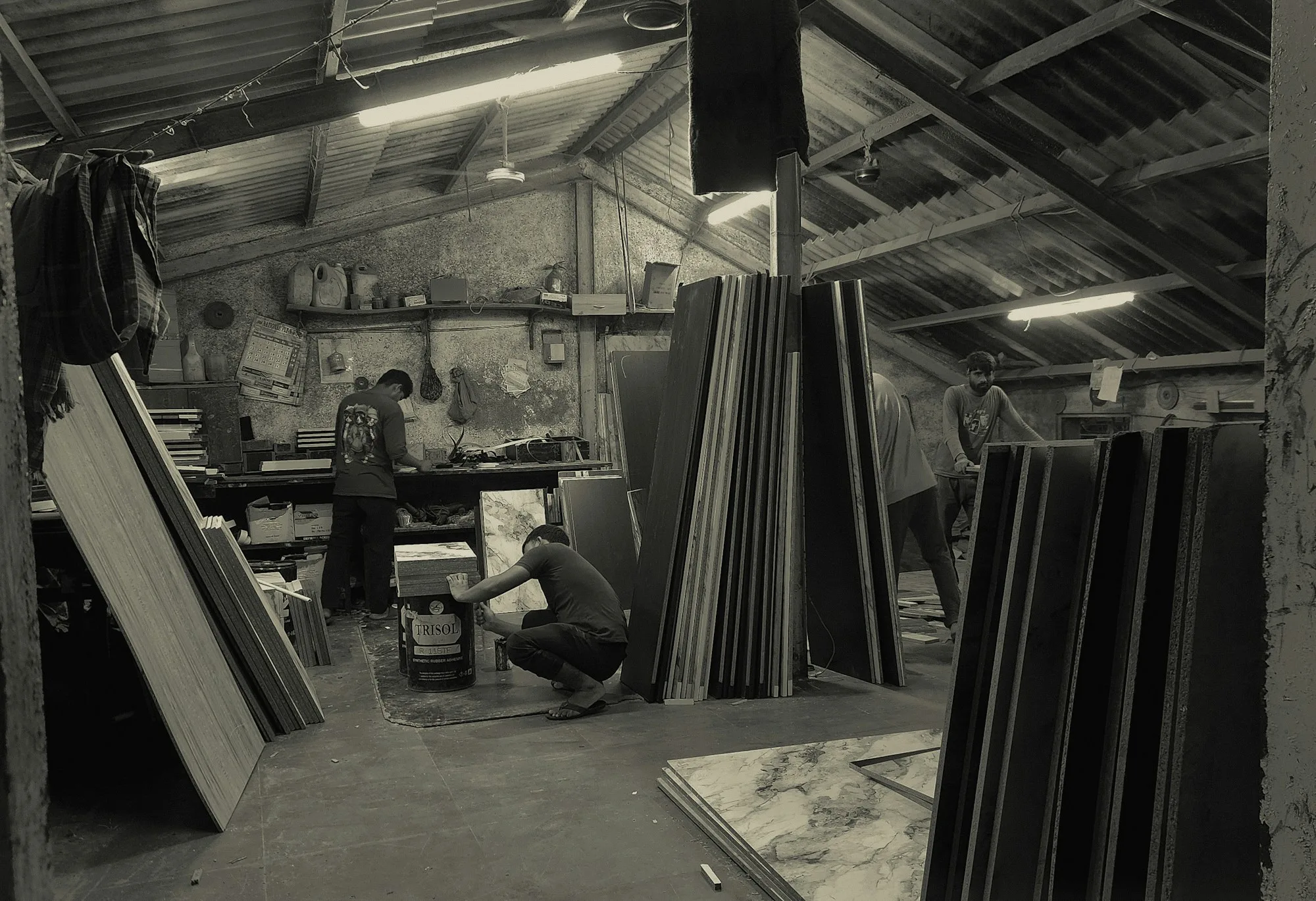
A major cluster of the Johor furniture trade. Timber suppliers, hardware, spray shops and transport are all in the same few streets — three outsourced process steps, fifteen minutes round trip. You cannot buy that density in a new park.
Printing, signage and light fabrication
Print shops, signage and advertising production, packaging converters, garments and small assembly. This is the trade where the customer revises at 3pm and needs it that night — proximity is the product, and airport access is worth nothing.
E-commerce fulfilment and last mile
Johor Bahru’s dense population starts right here, so for same-city delivery and e-commerce fulfilment this beats any outlying estate. Plenty of small units and controllable rent — start with one, add another as order volume grows.
Who should look elsewhere
Anything needing a large yard, frequent heavy vehicles, a doubling of capacity, or that makes noise or odour — there is not enough space, the neighbours are too close and the roads are too tight. See Senai / Kulai for space, or Pasir Gudang for heavy industry and ports.
🧭 Import or export?
This belt is domestically driven — the least export-oriented of the Johor industrial areas. Most tenants serve local and southern-Malaysian customers, with import and export only a part of the mix. So the reason to choose it is never logistics cost; it is how close you are to customers and labour. If 90% of your revenue is overseas, this belt’s advantage is worth almost nothing to you.
Are your customers in Johor Bahru, or overseas? That decides whether you stay
Local customers, staff who will not commute far, units that do not need to be large — nothing else is this easy. Otherwise, you should be looking outward. Send me your customer mix and I will tell you in ten minutes.
WhatsApp me your situation Photo: Unsplash (illustrative)Distance is the only logistics argument that never expires
Indicative road distances — verify against your own plot.
A real, draggable map. The buttons below open Google Maps and calculate the actual route and drive time — the peak and off-peak difference here is large, so check it at both 8am and 6pm.
Bearings and distances at a glance
We drew this ourselves: Tebrau at the centre, with five key destinations at their true bearing and distance. Each ring is 10 km — the city centre and the Causeway both sit in the inner two rings, which is the geographic basis of this belt making money by being near.
- 🏙️Johor Bahru city centreThe core advantage of this beltapprox. 12 km
- 🌉Causeway CIQMuch closer than the Second Link15–20 km
- ⚓Johor Port (Pasir Gudang)Where export containers usually goapprox. 20 km
- ✈️Senai International Airportapprox. 30 km
- 🚧Second Link CIQNot the crossing to use from hereapprox. 35 km
- 🛒Mount Austin commercial beltStaff lunch and daily amenity2–5 km
- 🏘️Main residential areasStaff basically live next door1–6 km
⚖️ It wins on people and loses on vehicles
Wins: the shortest staff commute, the easiest customer visit, suppliers on the same street. Lower turnover and lower coordination cost are the money this belt actually saves you.
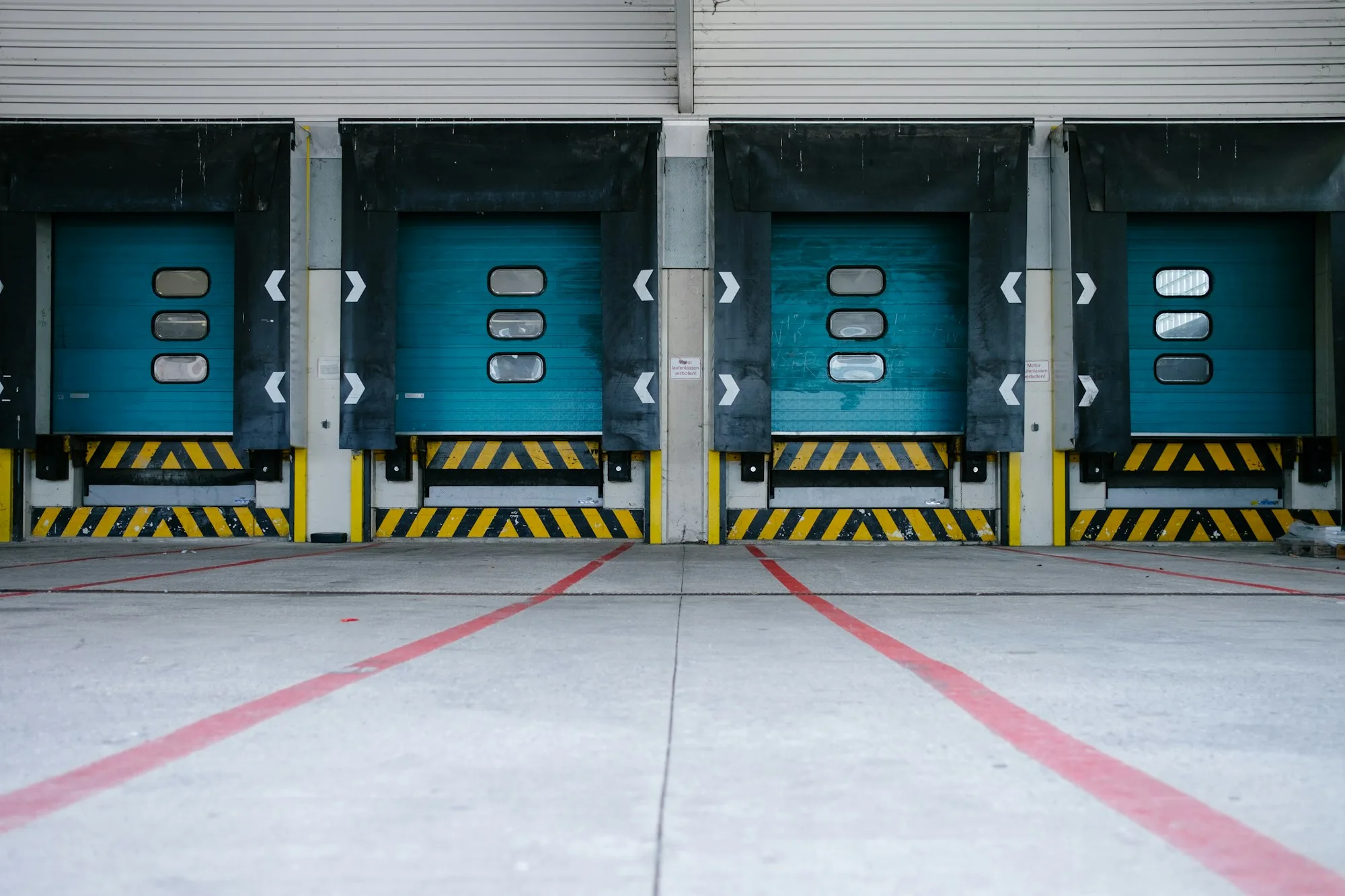
Loses: these are city roads. Heavy vehicle access is genuinely difficult at peak, and container trucks often have nowhere to turn. View during working hours and watch the access route yourself.
First, what those rents actually buy
The rent and land figures below turn into one of these three buildings. All three are drawn to the same scale, with a 1.7 m person beside them — clear height and door count decide whether your machines and lorries fit, and that matters more than floor area.
Rents, sale prices and land
All figures are indicative asking bands from publicly advertised listings. Asking is not transacted, and units vary enormously by condition, parking and access.
1 · By product type — one card each
Rent is quoted per square foot of built-up area per month.
Terrace / link factory
The most numerous product here and the usual SME rental. Vintages differ a lot, which is why the band is wide.
Semi-detached factory
Side access and a small yard — the first step up from a terrace unit here, and considerably scarcer.
Detached factory
The rarest category here — mostly older buildings on regular plots. When one is released it usually transacts fast, because central JB has almost no substitute.
Office-warehouse / business unit
Recent build: office in front, warehouse behind, tidy elevation and real parking. Suits e-commerce and service businesses.
Industrial land
Land here is very scarce — mostly odd small parcels or sites released when an old factory comes down, and usually straight into negotiation.
If it is not here, look one ring out
The usual problem in this belt is simple: the size you want does not exist here. Over 20,000 sq ft, a real yard, or heavy vehicle access — there is essentially no answer.
When that happens I point people toward Kempas, outer Tebrau or Senai — fifteen more minutes of driving, and both space and rent look completely different.
Check the nearby alternatives2 · Rent bands compared
Horizontal axis is rent per square foot per month.
⚠️ Narrow bands, enormous quality spread
All four bands overlap heavily — which means the per-square-foot number tells you almost nothing about quality here. What actually separates units is whether there is a loading bay, whether the power capacity is adequate, floor loading, and whether the office and mezzanine were ever approved. At the same RM1.80 psf, one unit takes two machines and the next is only fit for storage.
Measure three things on every viewing: shutter clear height, whether a truck can reverse in, and total power capacity. All three matter more than the rent.
3 · Industrial land
Note: the land sample here is thin. These bands indicate positioning only, and individual parcels can sit well outside them.
💡 Here, land prices buy a position that cannot be reproduced
Land here approaches planned-park pricing in Iskandar Puteri, but you are buying something completely different: there park guidelines and frontage, here the simple fact that central JB has no second plot. Main-road parcels carry a further layer of value — you can put a showroom in front and combine the plant with the shop.
The flip side: if your use does not need that position, you are paying for nothing — the same money buys more than twice the land in Senai.
4 · Estate by estate
Tenure below is what is commonly seen — never a substitute for a land search.
Taman Perindustrian Tebrau I / II / III
The core of the belt: the highest SME density, the most mature services and footfall, and the most congestion.
Desa Cemerlang industrial area
Looser than the core, with bigger plots and easier traffic — the first choice for businesses in this belt that need to expand.
Mount Austin light industrial
Heavily mixed with commercial, so it suits office-warehouse units, showrooms and service businesses. Rents sit at the top of the band.
Cemerlang Heights area
Recent office-warehouse and business-unit product with tidy elevations and adequate parking; suits e-commerce and professional services.
Setia Business Park area
A planned business-park product with more orderly management — one of the few genuinely park-like options in this belt.
Toward Kempas
The first direction to look when the size does not exist here — fifteen minutes further, and space and rent are completely different.
🕒 Bands compiled from publicly advertised listings in Tebrau, Desa Cemerlang and Mount Austin, cross-checked in 2026. The land sample is thin and indicates positioning only. Asking prices only — not valuations, not transacted prices, not an offer. Last reviewed 2026-09-06.
What this belt wins and loses
Advantages and weaknesses side by side, then when you should choose another corridor.
✓ Where it wins
- Closest to your customers: about 12 km to the city centre — visits, deliveries and after-sales are all fastest from here
- Shortest staff commute: housing is adjacent, and turnover is visibly lower than in outlying estates
- Extremely dense supply chain: hardware, timber, spray, print and transport all within a few streets
- Low entry threshold: plenty of small units, controllable total rent, easy to start or step up
- Freehold still findable: one of the few places in central JB where freehold industrial exists
- The best daily amenity: the Mount Austin commercial belt, dining, banks and clinics within a few kilometres
- Easy to re-let: the deepest tenant pool in Johor Bahru, so vacancy periods are usually shorter
✕ Where it loses
- Space is the hard limit: narrow yards, difficult extensions, and almost nothing above 20,000 sq ft
- Severe peak congestion: city roads, with heavy vehicle access and turning both difficult
- Older building stock: clear height, floor loading and power capacity generally trail newer parks
- Unsuitable for noise or odour: mixed with housing and retail, so complaint risk is high
- No logistics advantage: neither port nor airport, so exporters gain nothing here
- Parking and loading are short: many units can only load kerbside, which fails at volume
- Not cheap per square foot: for the specification you get, the rate is honestly not good value
Choose Senai / Kulai
Larger units, room to scale, cargo that flies. Rent from RM1.10 psf and a complete product ladder from 2,000 to 200,000 sq ft.
See Senai / Kulai →Choose Pasir Gudang
Bulk, chemicals, heavy logistics, anything needing a berth or gas — there is no answer here at all.
See Pasir Gudang →Choose Iskandar Puteri
Your team crosses to Singapore daily, customers audit you on site, you hire expatriate managers — the premium pays back there.
See Iskandar Puteri →🧭 The honest version
This belt trades space for convenience. You get the shortest commute, the closest customers and the densest supply chain; you give up space, vehicle access and building specification.
One question decides it: does your business make money by being close, or by capacity? If it is closeness, stay. If it is capacity, one ring out is far more comfortable — and usually cheaper.
Six things to settle before you commit
🌏Can a foreigner or foreign company buy?
Yes, but Johor sets a RM3,000,000 minimum for commercial and industrial property, plus a 4% foreign levy at the industrial rate and state authority consent. Note carefully: many units in this belt are asking below RM3m, which means a foreign buyer simply cannot buy them — a point that catches people out.
✓ Foreign buyers should set that threshold before viewing here; it removes half the wasted trips.
🔌Power capacity is the most common trap here
Existing capacity in older units is often only enough for lighting and light loads. Add machines, a cold room or a compressor and an upgrade is your first job — and upgrade queues on city feeders are not short.
✓ Get TNB’s existing capacity, upgrade quotation and lead time in writing before signing.
🚚Can a truck actually get in?
The most practical and most overlooked question in this belt. Many units cannot take a container truck into the loading bay at all and can only load kerbside, which starts to hurt as volume grows and invites complaints.
✓ Send your own driver in a real vehicle during the viewing — more reliable than any drawing.
🏘️Compliance risk from mixed use
Much of the belt sits directly against housing and shops. Noise, odour, dust or night shifts carry real complaint risk, and once the council is involved it costs more to resolve than to relocate.
✓ Tell me your actual working hours and emissions up front and I will steer you away from the high-risk pockets.
📐Was the mezzanine or office ever approved?
Plenty of units here have unapproved mezzanines or offices. Unapproved additions cause problems at resale, at financing and at insurance claim.
✓ Ask for the approved plans and the CCC / CF — do not judge from the site alone.
📈As an investment: deep tenant pool, clear ceiling
Good news: the deepest tenant pool in Johor Bahru, short vacancy and fast re-letting. Bad news: the specification cannot improve, so rental growth has a defined ceiling and long-term appreciation trails newer parks.
✓ For an investment hold, focus on yield and vacancy rather than the appreciation story.
💡 The nationwide sections are on the Senai page
Company structure, Employment Pass thresholds, labour cost, tax and incentives (Pioneer Status, ITA, JS-SEZ, LMW), TNB tariffs, lease terms and financing constraints are national or state-level and apply equally here. They are written up in full on the Senai / Kulai page.
What is nearby, and what else to ask
Housing and hiring
Mount Austin, Tebrau, Desa Cemerlang and Setia Indah are densely residential, so staff generally live one to six kilometres away. This is the hardest advantage to replicate — both hiring and retention are easier than in outlying estates.
Worker accommodation
Usually rented shophouses or residential units nearby, which carries compliance risk. Under Act 446 as amended, a Certificate for Accommodation and minimum standards apply, and a residential unit used as a hostel may not qualify.
Roads and access
Jalan Tebrau and the EDL are the main arteries. The upside is connections in every direction; the downside is serious peak congestion, and turning space for heavy vehicles is often inadequate.
Commercial and dining
The Mount Austin belt is the densest dining area in Johor Bahru, so staff lunches, late shifts and client entertaining are all minutes away — an unspoken staff benefit of this location.
Parking and loading
The scarcest resource here. On the viewing, count the bays in front of the unit and check whether a truck can park — with many staff or visitors, this affects you every single day.
What the neighbours do
Trades are mixed here: next door might be a spray shop or a central kitchen. View on a working weekday: smell it, listen to it — for food and clean operations, the neighbour directly affects your own compliance.
✅ Five questions to ask on every viewing in this belt
One: can a truck reverse into the loading bay (bring your driver). Two: existing power capacity and upgrade lead time. Three: are the mezzanine and office approved, with plans and CCC. Four: shutter clear height and floor loading. Five: what the neighbour does, and whether there is odour or noise. All five matter more than the rent.
Why here, and not the corridor next door
The buildings are not new, the units are not big and the roads are busy — yet this has been the densest SME belt in Johor Bahru for two decades. Six reasons why.
How far your customer has to drive is your moat
Twelve kilometres to the city centre. A customer who wants to inspect goods at lunchtime and revise the order in the afternoon is twenty minutes away; the same business in Senai or Pasir Gudang costs them 30 km more every time. Over years, customers drift to the nearest supplier — the most practical competitive edge here, and the least written about.
Staff live next door, so turnover stays low
Mount Austin, Tebrau, Desa Cemerlang and Setia Indah are densely residential, so the commute is one to six kilometres. What outlying estates solve with company buses and allowances, this belt solves with geography. Turnover and time-to-hire are the money you actually save here.
Supply chain density: fifteen minutes round trip
Timber, hardware, spray, plating, printing and transport are all in the same few streets. An order needing three outsourced steps takes under half an hour of driving. That density took two or three decades to grow, and a new park cannot reproduce it at any rent — the least replaceable thing about this belt.
One of the last places in central JB with freehold
The planned parks of Iskandar Puteri are almost entirely leasehold; Pasir Gudang is predominantly leasehold too. This is one of the few central locations where freehold industrial property can still be bought — worth real money for financing tenor and long-term holding.
The deepest tenant pool, the shortest vacancy
Tenants here are not one industry but dozens of small businesses across many trades. When a unit comes empty, there are many possible takers — where an outlying estate might wait six months, this belt usually re-lets within a few. For a landlord that matters more than the headline yield.
Amenity as an unspoken staff benefit
Mount Austin is the densest dining area in Johor Bahru. Lunch is five minutes, a late-shift meal is ten, and there is somewhere to take a visiting customer. It sounds minor, but for an SME trying to keep technicians and salespeople it is a difference that happens every single day.
🧭 The difference in one line
Other corridors sell production conditions — space, specification, logistics. This belt sells connection: close to customers, close to staff, close to suppliers.
If your business makes money by being near, every ringgit of rent here is well spent. If it makes money through capacity, the space and the traffic will stop you.
Rent is only the beginning: the cash you actually need
Units here are small and mid-sized, so both cards below use this belt’s real scale rather than a 10,000 sq ft standard case.
Renting a 5,000 sq ft semi-detached
At RM1.80 psf: RM9,000 a month on a three-year term. Everything payable before the door opens:
The line most often forgotten here is the power upgrade: existing capacity in older units often covers only lighting and light loads, so adding machines, a cold room or a compressor makes an upgrade your first job — and city feeder queues are not short.
Buying at RM2,500,000
Held through a Malaysian company with 70% financing — a typical price for a semi-detached unit here:
Note carefully: RM2.5m sits below Johor’s RM3m floor for foreign buyers, so a foreign buyer cannot buy this unit at all. Many units here fall below the threshold — the wall foreign buyers hit most often in this belt.
⚠️ For a foreign buyer here, the real obstacle is that prices are too low
Johor sets a RM3,000,000 minimum for commercial and industrial property. Among the terrace units here (RM1.0–2.4m) and most semi-detached (RM2.4–4.8m), a substantial share falls below the threshold and is legally unavailable to a foreign buyer.
In practice that leaves three routes: buy a larger detached building that clears the threshold, rent instead of buy, or look at another corridor. Settling this first removes half the wasted viewings. Separately, the flat 8% non-citizen stamp duty from January 2026 does not reach industrial property. Verified September 2026: the 8% sits in item 32(ab) of the Stamp Act 1949 (inserted by the Finance Act 2025) and covers residential property only; industrial and commercial transfers stay on item 32(aa), a flat 4% for non-citizens. Two things to keep in mind: the 1/2/3/4% scale is for Malaysian citizens only, so do not budget from it, and Johor charges a separate 4% foreign levy on industrial property (from July 2025) on top of the stamp duty. Also worth confirming with your lawyer: the RM3,000,000 foreign buyer floor quoted in the fact card above is the figure most often cited for Johor, but published sources are not consistent about which band applies to industrial property.
💡 And one more on the way out: RPGT
Real property gains tax tapers with holding period but never reaches zero for companies or foreigners: companies pay 30% in years 1–3, 20% in year 4, 15% in year 5 and 10% from year 6; foreigners 30% for five years and 10% from year six. Assets here turn over quickly, so the exit year matters — selling in year five versus year six is five percentage points.
From decision to production, how long
This is the fastest belt in Johor Bahru to land in: plenty of existing stock, high tenant turnover, simple administration. Only two things really slow you down — the power upgrade and legalising existing alterations.
Rent an existing building: 2–5 months
A trading and storage operation can open in two months. If you need machines, a cold room or a compressor, put the power upgrade first — it is the only item here that genuinely costs time.
Buy land and build: barely applicable here
Parcels here are scarce and fragmented, so the time and uncertainty of building rarely pay. If you genuinely need to build, I would point you toward Kempas or Senai — far more choice for the same money.
⏱️ Three moves that save real time here
One: ask TNB for the existing capacity at that address on the day you view, rather than discovering after signing that you need an upgrade. Two: get the approved plans and CCC/CF and confirm the mezzanine and office are legal — unapproved additions surface at financing and at insurance. Three: bring your own driver in a real vehicle and test the loading access; that one trip saves more trouble than any negotiation.
Three things a foreign operator must get right
These numbers go straight into your financial model, and they decide whether you can hold property in the company’s name at all.
Company structure
Most manufacturing categories allow a 100% foreign-owned Sdn Bhd.
Particularly relevant here: holding through a company or an individual changes how the RM3m threshold and the levy apply, and many units in this belt sit right around that line. Get it wrong and every viewing was wasted.
Work passes
Thresholds rose sharply on 1 June 2026, for new applications and renewals alike:
The old thresholds were RM10,000 and RM3,000. This belt is SME-dominated, and many owners had been posting staff on the old Category III level — that plan now needs rebuilding.
Labour cost
Statutory monthly cost of a local employee:
This is where the belt’s advantage shows: staff live close, so you do not pay for company buses or transport allowances. For the same headcount, real labour cost here usually undercuts the outlying estates.
What you will actually pay
Read the standard rates first, then check whether you qualify — never the other way round, because most incentives attach to an activity, not an address.
- Standard corporate tax
- 24%applies to all non-SME companies
- SME rates
- 15% / 17% / 24%paid-up capital ≤RM2.5m among other tests
- Pioneer Status
- 100% statutory income exempt5 years, extendable to 10 if qualified
- Investment Tax Allowance
- up to 100% of qualifying capexset off against 70–100% of statutory income
- Sales and Service Tax
- by taxable goods / services categorymore relevant here than manufacturing incentives, given the trading and service mix
- JS-SEZ
- special rate 5%, up to 15 yearstied to qualifying high-value activities; general trading and light processing usually do not qualify
- Licensed Manufacturing Warehouse
- duty and sales tax exemption on inputs and machineryexport ≥80%; this belt is domestically driven, so few qualify
- Manufacturing licence threshold
- RM2.5m shareholders’ funds or 75 full-time staffmost SMEs here sit below it and need no licence
- Real property gains tax
- companies 30/20/15/10%foreigners 30% for five years, 10% from year six
💡 The honest point about incentives here
The manufacturing incentives — Pioneer Status, ITA, the JS-SEZ rate — are not available to most tenants in this belt, because they attach to high-value manufacturing activities and this belt runs on trading, warehousing and service processing.
Rather than chase an incentive you cannot get, put the effort into the SME rate bands and correct SST treatment — that is where businesses here actually save money. I would rather say this plainly than have you reshape a business model around something you will never qualify for.
Power, leases and lending: three things routinely underestimated
Utilities and power upgrades
The biggest hidden cost item in this belt:
The RP4 structure from July 2025 splits the bill into energy, capacity, network and retail. What matters more here is whether existing capacity is enough, not whether the tariff is high — get TNB’s written capacity and upgrade quotation for that address.
Lease and sale terms
Local market convention, worth checking line by line before signing:
Leases here need one specific clause: who carries responsibility for the legality of any existing mezzanine or office. Plenty of units have unapproved additions, and it is the tenant who feels it first. Structural repair, fire compliance and reinstatement still need spelling out. From January 2026 tenancy stamp duty moved to self-assessment via e-Duti Setem on MyTax.
Financing
Lending conditions here are relatively friendly:
Standard specifications and a deep buyer pool make banks comfortable with this belt. But be aware: an unapproved mezzanine or office gets deducted from the valuer’s floor area, which shrinks the loan. Find the approved plans before you commit.
Once you are here: what is around you and who to deal with
Local supporting supply chain
- Timber, panel and furniture hardware: the strongest chain in this belt
- Spray, plating and surface finishing: small batches outsourced on call
- Printing, packaging and signage production: the highest density in Johor Bahru
- Metalwork and small fabrication: lathes, grilles and frames
- Cold chain and food distribution: a by-product of the central kitchen cluster
- Local haulage and moving crews: city deliveries covered at short notice
- Fit-out contractors and display joinery: serving city malls and shopfronts
- Thin on heavy machining and oversized transport: for that you drive to Pasir Gudang or Senai
The agencies you will deal with
- Johor Bahru City Council (MBJB): planning, building plans, business licence, alteration approval, CCC
- Fire and Rescue (Bomba): fire system approval and annual inspection; older units often need works
- Department of Environment Johor: the authority for noise, odour and effluent complaints — relevant here given the residential mix
- DOSH / JKKP: machinery and pressure equipment registration
- TNB: power capacity and upgrades — the critical one in this belt
- SAJ Ranhill for industrial water; IWK for sewerage
- MBJB licensing: business licence and signage permits, common for shopfront-type businesses here
- Royal Malaysian Customs: SST registration and filing
- SSM: company registration and annual returns
✅ The right order in this belt
TNB always comes first. Once you like a unit: check the existing power capacity and upgrade quotation for that address, then get the approved plans and CCC to confirm the alterations are legal, and only then negotiate rent. That order avoids about nine out of ten of the problems people hit here.
Nine things people ask once they have decided
None of these appear in an investment brochure, and every one becomes a real cost after you sign.
🌊One · flooding and drainage
This belt runs on city drainage, and some stretches pond in heavy rain; low-lying units need particular care.
✓ Ask the neighbouring factory rather than the owner whether this street floods — the most reliable answer you will get.
🔒Two · security
Busy and mixed-use, so daytime security is reasonable but night and weekend patrol coverage varies a lot.
✓ Check whether the estate runs joint security and patrols, and plan your own CCTV and access control.
🌐Three · connectivity
Close to the city, this is among the best-covered industrial belts in Johor Bahru for fibre — no obstacle for e-commerce or a service centre.
✓ Still confirm the installation route and lead time for that unit; older buildings occasionally struggle.
⚡Four · outages and backup
City feeders are broadly stable, but ageing internal distribution inside older units is the more common problem.
✓ Have an electrical contractor inspect the switchboard and internal wiring, not just the TNB side.
☀️Five · rooftop solar
Buildings here are older, so roof structural capacity and waterproofing are the real constraint — not every unit can take PV.
✓ Commission a roof structural assessment before discussing a PV proposal; older roofs often need repair first.
🎓Six · where the skills come from
This belt’s strongest suit. Dense housing nearby makes operators, drivers and admin staff easy to hire; senior engineering talent is thinner than around Iskandar Puteri or Skudai.
✓ Hire general staff locally; budget for cross-town commuting or a pay premium on technical roles.
🏡Seven · expatriate living
Amenity and dining are excellent, but international schools and upmarket housing are better in Iskandar Puteri.
✓ If expatriate families need international schooling, consider housing them toward Iskandar Puteri — about a 30-minute commute.
🏭Eight · what the neighbours do
Trades are mixed here: next door might be a spray shop or a central kitchen — which matters directly for food and clean operations.
✓ View on a working weekday: smell it, listen to it. For food operations, check which way the wind blows.
🌱Nine · expansion room and ESG
There is essentially no room to extend, so a growing business will eventually face relocation; ESG pressure is comparatively low but customer audits are reaching further down the chain.
✓ Think through your three-year capacity plan before signing — this belt suits steady operation, not a business about to double.
Which kind of buyer are you?
The same belt is a completely different proposition depending on who you are. Find yourself below.
Customers collect in person, so position is the product. Focus on loading access and parking rather than clear height — plenty of people spend the budget in the wrong place.
Delivery radius is the business. Confirm kitchen extraction, effluent and power capacity, and deliberately avoid parcels backing onto housing or a spray shop.
Supply chain density is your biggest asset. Terrace and semi-detached both work; what matters is whether a truck can park in the yard and whether fire compliance is in order.
The dense population starts right here, so same-city delivery is most efficient. Start with one unit and add as volume grows — small units are plentiful, which makes this belt flexible.
The deepest tenant pool in Johor Bahru, the shortest vacancy and the most reliable cash flow. But specification cannot improve and rental growth has a ceiling — right for yield, wrong for an appreciation story.
Space is the hard limit: almost nothing above 20,000 sq ft, narrow yards, difficult heavy vehicle access. Look at Kempas or Senai / Kulai.
Tebrau / Desa Cemerlang / Mount Austin FAQ
What industry class is this belt?
Mainly light industry, with a little medium. Trading and warehousing, food processing, furniture and joinery, printing and signage, auto parts and e-commerce distribution are the main trades. Heavy industry, chemicals and anything needing a berth are entirely unsuitable — see Pasir Gudang.
What does a factory rent for?
Indicatively: terrace and link units RM1.40–1.90 psf per month, semi-detached RM1.60–2.10, detached RM1.70–2.20, newer office-warehouse units RM1.80–2.20. Publicly advertised asking bands, not transacted rents.
Why is older stock here still not cheap?
Because what you are paying for is not the building, it is the position: closest to customers, shortest staff commute, densest supply chain. If those three do not matter to you, the rate here is genuinely poor value — the same money rents a better building in Senai.
Is freehold available?
Yes. This is one of the few places in central Johor Bahru where freehold industrial property still turns up, though the proportion is low and it varies parcel by parcel. Confirm by land search, not by marketing copy.
Can a foreigner buy a factory here?
Legally yes, subject to Johor’s RM3,000,000 minimum, the 4% foreign levy and state authority consent. The practical difficulty is that many units here are asking below RM3m, so a foreign buyer does not meet the threshold at all. Settle that before viewing and you save a lot of time.
I need more than 20,000 sq ft — is it available?
Rarely, and it usually transacts quickly when it appears. If you need more than 20,000 sq ft, a real yard or heavy vehicle access, I would point you toward Kempas or Senai — fifteen more minutes of driving, and both the choice and the rent are different.
Is it suitable for food processing?
Very. This is where Johor Bahru’s central kitchens concentrate, and the delivery radius is the main advantage. Three things need care though: kitchen extraction and effluent compliance, whether power capacity supports cold rooms, and whether the neighbours create cross-contamination or complaint risk.
Is it worth it as an investment hold?
The tenant pool is the deepest in Johor Bahru, so vacancy is short, re-letting is fast and cash flow is stable. But the specification cannot improve and rental growth has a clear ceiling. Right for buyers who value yield and stability; wrong for buyers chasing appreciation.
Six things the brochure will not tell you
An agent will tell you the location is good, tenants are plentiful and units re-let fast. These six are what I say out loud on a viewing, and what nobody puts in an advertisement.
💰One · for the specification you get, this is not cheap
Rent here runs above Senai on older buildings. You are paying for position, not build quality. If being close to customers does not matter to you, the rate here is genuinely poor value — I would rather say so up front.
✓ Establish first whether your business makes money by being near; if not, the same money rents a better building in Senai.
📐Two · many mezzanines and offices were never approved
Unapproved additions are common here. They surface at resale, at financing and at insurance claim — a valuer will simply deduct that floor area, which shrinks your loan.
✓ Ask for the approved plans and the CCC/CF; do not judge from how usable the space looks on site.
🚚Three · plenty of units cannot take a container truck at all
Listing photographs never show the loading approach. Many units here can only load kerbside, which starts to hurt as volume grows and invites complaints.
✓ Send your own driver in a real vehicle during the viewing — more reliable than any drawing.
🔌Four · power capacity is usually sized for the original use
Existing capacity in older units often covers only lighting and light loads. Adding machines, a cold room or a compressor makes an upgrade your first job, and city feeder queues are not short.
✓ Ask TNB for existing capacity and an upgrade quotation on viewing day, not after signing.
🏘️Five · being this close to housing carries real complaint risk
Industry, retail and housing are heavily mixed here. Noise, odour, dust or night shifts carry markedly higher complaint risk than in outlying estates, and once the council is involved it costs more to resolve than to relocate.
✓ Tell me your working hours and emissions first and I will steer you away from the high-risk pockets.
📦Six · a business that will grow does not fit here
There is essentially no room to extend and almost nothing above 20,000 sq ft. A growing business will eventually face relocation, and one move costs far more than the rent originally saved.
✓ Think through your three-year capacity plan before signing — this belt suits steady operation, not doubling.
🧭 Why I write this section at all
This is the deepest tenant pool in Johor Bahru, and precisely because units are easy to take and easy to swap, people view too quickly. All six items above can be checked in two extra hours on viewing day — the people who skip them usually find out in year two.
Tebrau not the fit? Here are the other seven
Every area page is written to the same structure: who it suits, industrial class, rent and land, distance to port and airport, surrounding amenities, total landed cost. Each chip carries the belt’s positioning and its entry asking rent — check the positioning first, the price second.
Tell me what you do, how much space you need, and how goods move
Send me three things: what your business does, how many square feet you need, and how often a truck comes. I will come back with what is actually available in Tebrau / Desa Cemerlang this month and what it really costs — and if you will not fit here, which area does.
Usually a reply within 15 minutes · 9am–10pm MYT