The Bricks @ Seri Austin
Seventy three-storey shop-offices on six acres, by Tiland. The brochure publishes a full specification schedule — which is unusual, and which contains two lines worth stopping on before you sign anything.
- Foreign buyers
- Possibly — but this is commercial, and the threshold must be confirmedThe RM1m and RM2m figures verified elsewhere on this site are for residential strata and landed. Commercial property is a separate regime.
- Development
- The Bricks @ Seri AustinThree-storey shop-office · Tiland (SA) Sdn Bhd
- Developer entity
- Tiland (SA) Sdn Bhd (1524369-M)Named on the brochure as “Development by”. Note the second company below.
- Site area
- 6.017 acresDeveloper’s own figure
- Total units
- 7052 Type A + 18 Type B — my addition of the developer’s own unit counts
- Unit dimensions
- 24′ × 80′, both types1,920 sq ft of land per lot — my arithmetic
- Built-up
- From 5,760 sq ftDeveloper’s figure. Read the note below on what that number is.
- Ceiling height
- 5.5 mListed by the developer as a key feature
- Status
- Open for registrationDeveloper’s own wording; site progress video published
- Price
- Not published by the developerAn agency listing quotes RM2.5m to RM3.5m. Not a developer figure.
- Tenure
- Not published by the developerAn agency listing says freehold. Not a developer figure.
- Completion
- Not published by the developerAn agency listing says Q1 2027. Not a developer figure.
- Advertising permit (APDL)
- There is unlikely to be oneNot on the website or in the brochure, and not in the KPKT register — because a commercial scheme is not licensed under the Housing Development Act. See the developer section.
I checked the national register. This scheme is not in it — and on a shop-office that is the expected answer.
I searched the National Housing Department register for “The Bricks”, for Tiland, and for the township. The Bricks does not appear. On a commercial scheme that is normal rather than alarming: the Housing Development (Control and Licensing) Act 1966 licenses housing developers, so a pure shop-office scheme has no developer licence to hold and no advertising permit to publish.
What the register does hold is the housing township this scheme sits inside. Taman Seri Austin is registered to Dynasty View Sdn Bhd, developer code 9565, across 23 phases — every one of them recorded as completed, with CCC or CFO issued. Read from teduh.kpkt.gov.my on 3 September 2026.
Why that is worth knowing. It tells you the neighbourhood around these lots is built and handed over rather than half-finished, which is the single biggest variable in whether shop-office rental demand materialises. It also tells you the housing developer of the township and the vendor of your unit are different companies — Dynasty View for the homes, Tiland (SA) Sdn Bhd on the brochure for these shops. A track record built by one does not transfer to the other.
So the diligence has to be done by hand: get the vendor’s full name and company number, and search it at SSM — incorporation date, paid-up capital, whether accounts are filed. On a commercial purchase there is no permit, no statutory contract schedule, no housing tribunal and no prescribed late-delivery formula standing behind you. That search is not extra diligence. It is the only diligence available.
One photograph, and why there is only one
Tiland has released no site photographs. There is exactly one freely licensed photograph of Taman Seri Austin that I could find, and it is below.
There are plenty of Mount Austin photographs. I am not using them. This page argues on its own terms that Mount Austin and Seri Austin are different townships — illustrating a Seri Austin project with Mount Austin pictures would quietly undo that argument. One honest image beats six convenient ones.
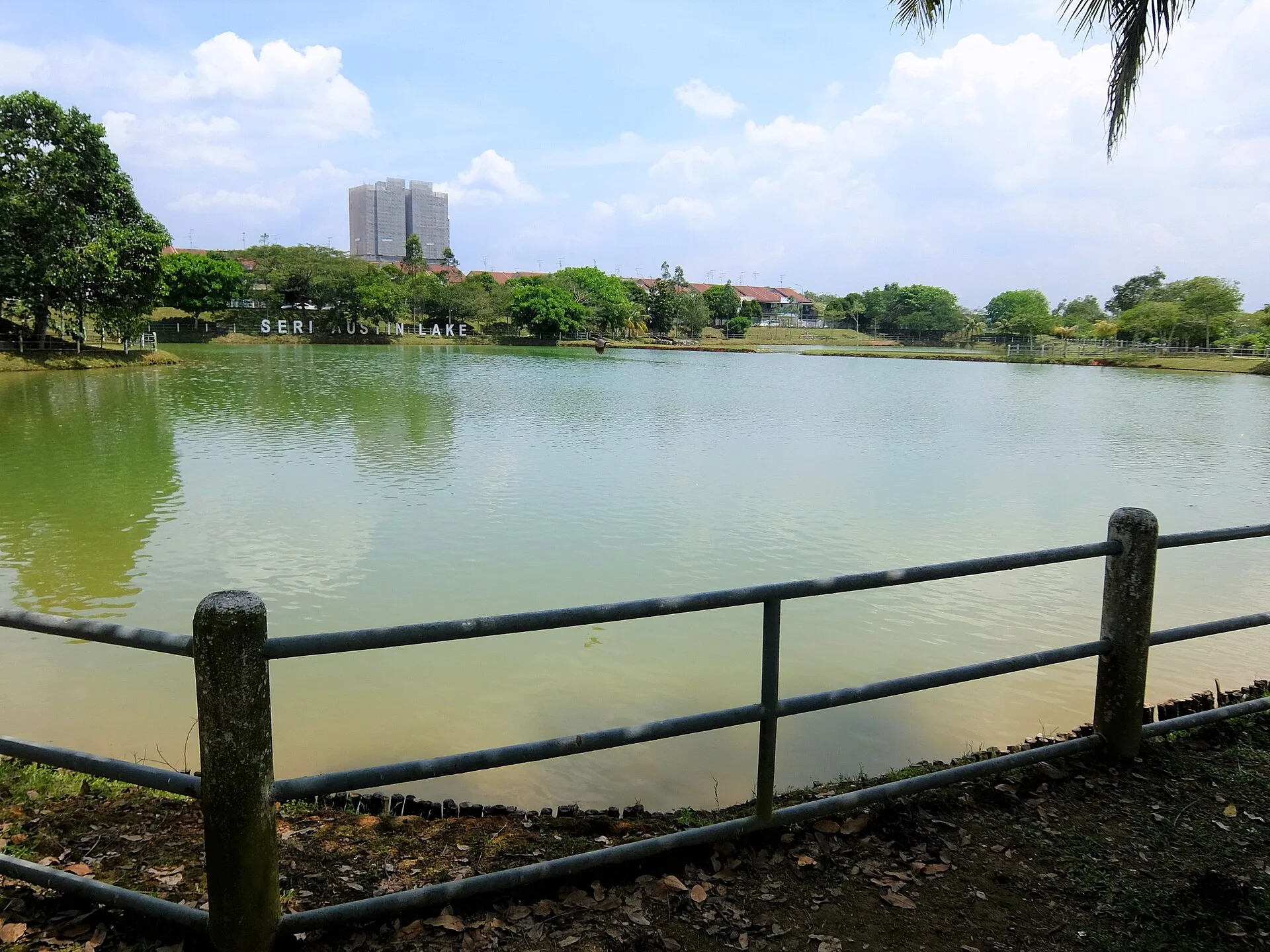
This photograph is of Taman Seri Austin, not of The Bricks, and it is reproduced from Wikimedia Commons under the licence credited. When Tiland releases site images, this section grows. Until then it stays at one.
A developer that publishes its specification schedule
Most of the developments I added in this round publish artist’s impressions and almost nothing else. Tiland publishes a full construction specification schedule in a downloadable brochure — structure, walls, roof, ceiling, windows, doors, finishes, and the number of lighting and power points per unit type and position.
That is genuinely more than most. It is also why this page can do something the others cannot: read the specification and tell you what to ask about it.
Two lines in that schedule are worth stopping on, and one of them is in the disclaimer rather than the specification.
Three things in the developer’s own documents
1. “From 5,760 sq ft” is three floors, not a floor plate
Both unit types are 24′ × 80′. That is 1,920 sq ft of land. The brochure headline is “From: 5,760 sqft”.
1,920 × 3 = 5,760. The 5,760 figure is the total built-up across three storeys, on a 1,920 sq ft footprint. That is my arithmetic, and it matches exactly.
Why it matters: a buyer comparing “5,760 sq ft” here against 5,760 sq ft of single-level warehouse or retail space is not comparing the same thing. Three floors of 1,920 sq ft is a different business proposition from one floor of 5,760 — different staffing, different lift or stair requirement, different tenant pool for the upper floors. Ask for the floor-by-floor areas, not the total.
2. The specification schedule lists a ceiling material worth querying
Under Ceiling, the brochure prints: “Skim coat / Asbestos ceiling tiles”.
I am not going to interpret that for you, because I cannot. It may be a legacy term carried forward in a specification template — the phrase still appears in Malaysian construction documents where the actual product is a non-asbestos fibre cement board. It may be something else. What I can say is that the term as printed names a material whose use in construction is restricted, and that the answer belongs in writing before you sign, not in a conversation at a sales gallery.
Ask the developer, in writing, for the product name and specification sheet of the ceiling material. That is one email and the reply is a document. If the reply is reassuring, you have lost nothing; if it is vague, you have learned something.
3. The company that disclaims liability is not the company selling
The brochure’s “Development by” line names Tiland (SA) Sdn Bhd (1524369-M).
The disclaimer paragraph on the same page begins “we, Tiland Development Sdn Bhd and/or other related companies and parties shall not be held liable…”.
Those are two different companies. This is not unusual and it is not evidence of anything improper — developer groups routinely use one entity per project. But it makes concrete a point this site makes on every page: the entity you can pursue is the one that signs your sale and purchase agreement, and it may be neither the brand on the signboard nor the company in the disclaimer. Ask which company signs, then look up its registration and its filed accounts.
Both company names are reproduced here exactly as printed in the developer’s own brochure.
Two types, seventy units
The developer publishes a floor plan PDF and a site plan. The unit mix below is from the brochure.
Type A — 52 units, 24′ × 80′
Ask for floor-by-floor areasType B — 18 units, 24′ × 80′
Ask what separates A from BThe brochure also lists electrical provision per unit type and per position — end, intermediate and corner. A corner Type B is specified with 27 lighting points against 22 for an intermediate Type A. Position is priced in shop-office schemes, and the specification schedule is where you can see it before the price list arrives.
The name to search at SSM before you pay anything
This page already explains why a shop-office carries no housing permit, and what Tiland has built before. One thing it did not carry is the identifier that lets you check the company yourself.
Tiland Group Sdn Bhd · company number 202401035178 (1581025-M), registered office 81 Jalan Kebun Teh, Taman Kebun Teh, 80250 Johor Bahru.
Take that number to SSM and pull the company search. On a commercial purchase there is no ministry register standing behind you, so the company search is the diligence: incorporation date, paid-up capital, directors, and whether the entity signing your contract is the same one whose track record you were shown. A group name on a banner and the company on a sale and purchase agreement are not always the same legal person.
Company number and registered office read from tilandgroup.com on 14 September 2026.
What the images show, and what they cannot
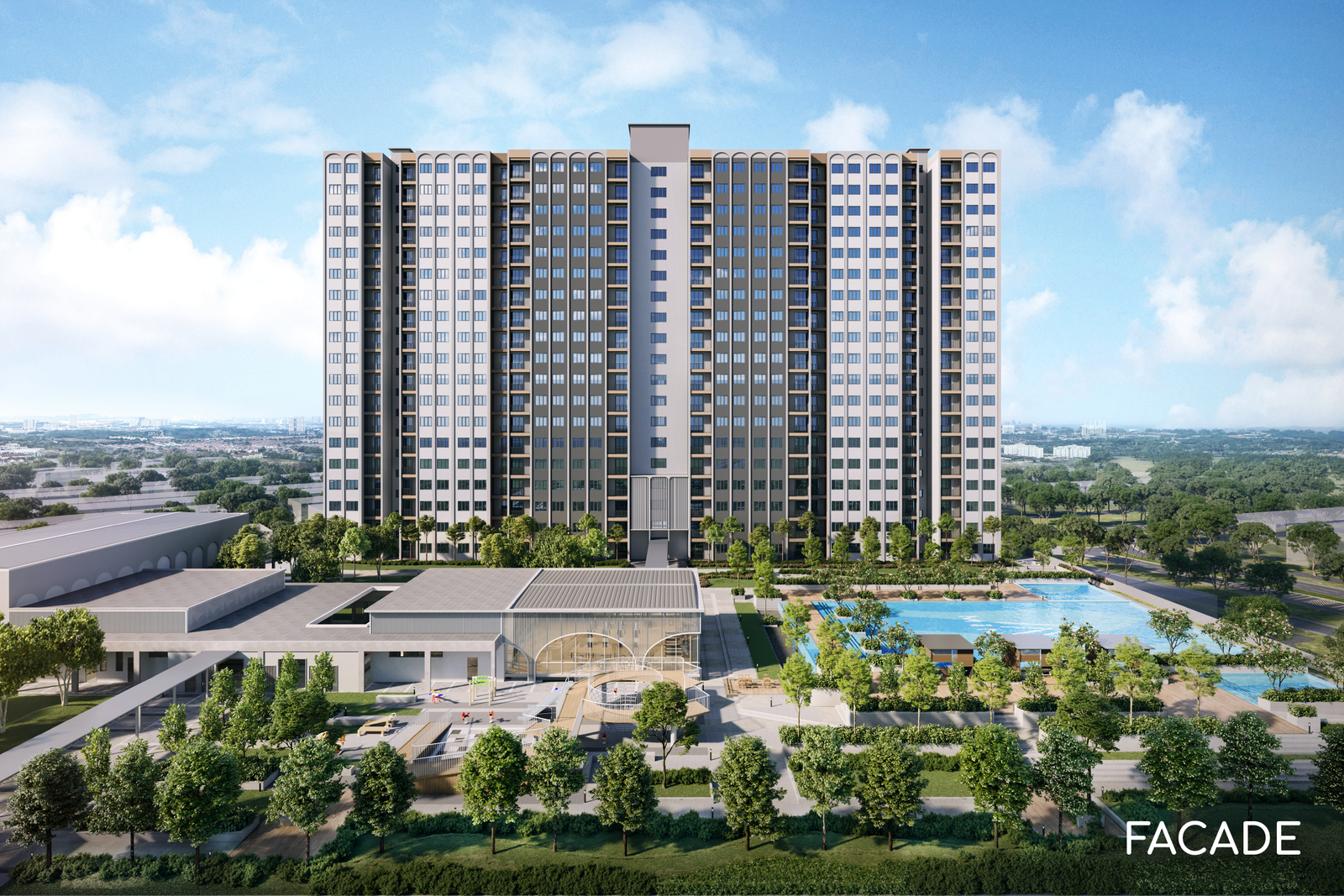
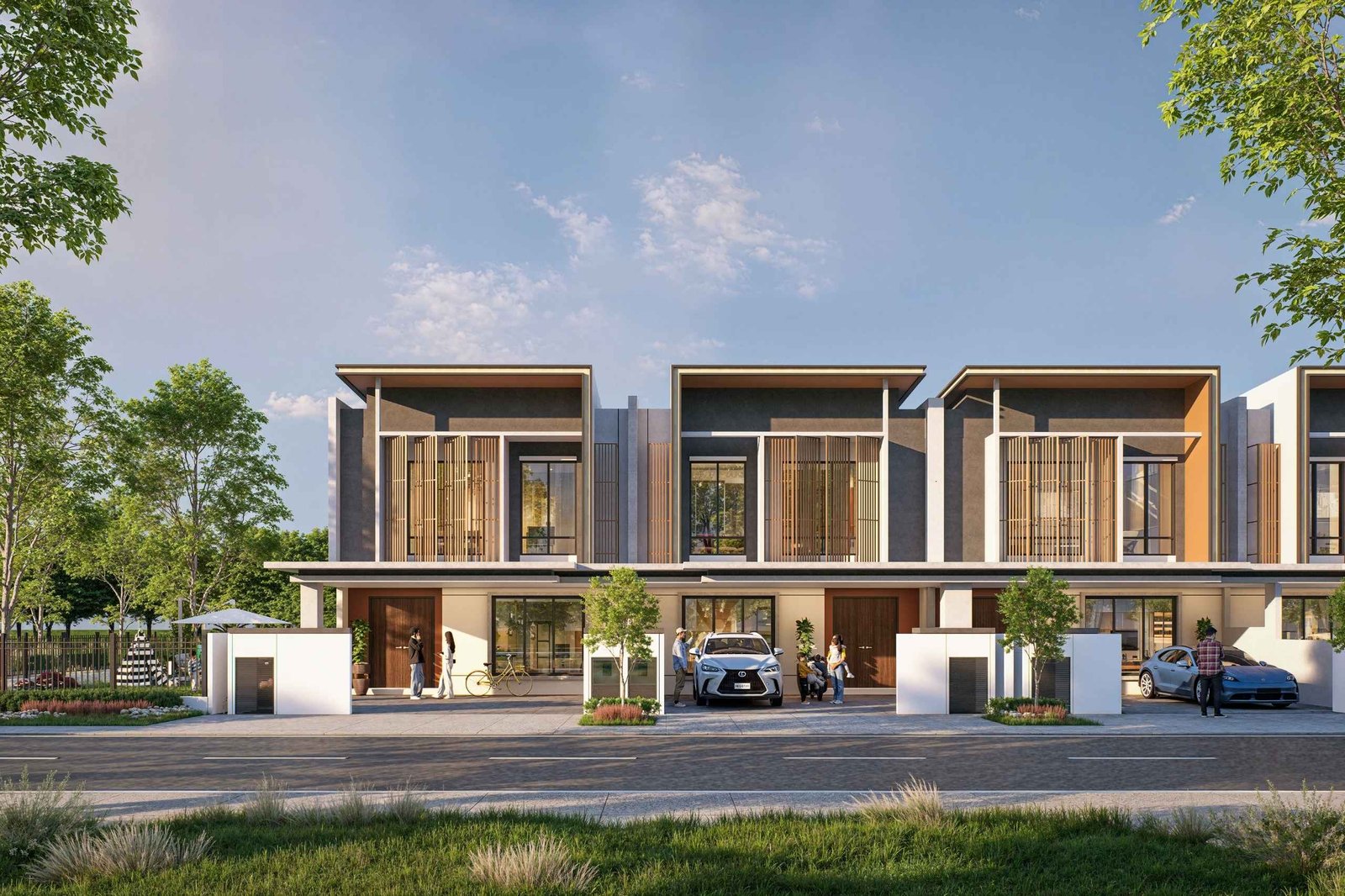
Tiland publishes an artist’s impression gallery, a promotional video and a dated site progress video. None of it is reproduced here.
The usual caution applies with more force than normal for commercial property. An artist’s impression tells you almost nothing about whether a shop will trade. What determines that is footfall, frontage width, parking, the tenant mix that ends up next door, and how long the surrounding catchment takes to be occupied — and not one of those is visible in a render. The site progress video is the more informative item, because it is the only one showing a real condition on a real date.
Seri Austin, and a naming difference worth noting
The developer names the location Seri Austin, in the project title and throughout its own material, with the sales gallery at 81 Jalan Kebun Teh, Taman Kebun Teh, Johor Bahru.
At least one third-party description places the project in Mount Austin. Mount Austin and Seri Austin are different townships — this is the same ambiguity that appears on the KSL Austin Legacy page on this site, where the developer wrote only “Austin” and two agent sites split between the two names.
This page uses the developer’s own naming. The address on the advertising permit is the one that governs, and it is the one to ask for.
The developer has not published a street address for the development itself, a land title reference or coordinates, so this page carries no map and no travel times.
One thing worth doing yourself: drive the frontage road on a weekday at lunchtime and again on a Saturday evening. For a shop-office, an hour spent watching who actually passes the site is worth more than any brochure, and it is the one piece of due diligence a buyer can complete without anyone’s permission.
A shop-office has no housing permit — and that removes protections a residential buyer gets automatically
Every residential project page on this website carries a table read from teduh.kpkt.gov.my, the federal housing register: permit number, licensed developer, unit count, permitted price band, certified construction percentage, project status.
There is none here, and the reason is not that I failed to find one. It is that one does not exist — and the same fact removes several protections that come free with a home.
Why the register does not cover this
The Housing Development (Control and Licensing) Act 1966 applies to housing accommodation — buildings constructed or intended for use as a dwelling. That Act creates the developer’s licence, the advertising permit, the certified progress returns and the statutory sale and purchase agreement this site reads for every residential project.
A three-storey shop-office is not housing accommodation. The Act does not apply, so there is no licence to check, no permit to verify and no construction percentage filed with the ministry.
I searched the register for Tiland anyway. There is a licence held by Tiland Development Sdn Bhd for a residential scheme called Meadow Heights — a different company from Tiland (SA) Sdn Bhd, and a different project. I am naming it because a reader searching “Tiland” will hit it, and attaching a record to this page because part of a company name matches would be a serious error.
What is missing, stated plainly
No statutory late-delivery compensation. A residential buyer gets liquidated ascertained damages at a rate fixed by law, from a date fixed in a statutory agreement. You get whatever your contract says, and nothing more. If it is silent, you must prove your actual loss.
No statutory sale and purchase agreement. Residential buyers sign a prescribed form that cannot be varied against them. Yours is a commercial document drafted by the seller’s lawyers — every clause is negotiable, which also means every clause is theirs to draft.
No Housing Development Account ring-fencing your money, and no release against independently certified stages unless your contract creates one.
No Tribunal for Homebuyer Claims. Fast, cheap, no lawyer needed — and housing only. A shop-office dispute goes to the ordinary courts.
No free public progress check. Nobody files one for commercial units.
What to ask for instead
A liquidated damages clause with a stated rate and start date. Ask explicitly; if it is absent, ask why.
Payment stages certified by an independent architect or engineer, not by the developer.
A stakeholder or bank-guarantee arrangement for your deposit.
Written confirmation of the title category and approved use — and specifically whether your intended business is permitted. Shop-office units frequently carry restrictions on food and beverage, on signage, and on operating hours through the management rules.
The maintenance charge and who sets it. In a shop-office block this is often the largest ongoing cost after financing, and it is decided by a management body you will share with every other owner.
The residential phases around you are in the register — and they are your customer base
This is the useful part. A shop-office’s revenue starts when the households around it move in, not when your unit is handed over.
Elsewhere on this website you can read the register sections for the residential schemes in this area — their permitted unit counts, their certified construction percentages, their permitted price bands, and whether any carry a cancelled, late or distressed status.
Those numbers are a better commercial due diligence than any footfall projection, because they tell you how many people are actually coming, roughly when, and what they can afford. And they are free.
Foreign buyers
Commercial property sits under a different set of rules from residential. Thresholds, state consent and the acquisition guidelines all differ, and in several situations a foreign interest acquiring commercial property is required to hold it through a Malaysian-incorporated company rather than personally.
Do not carry over any residential threshold from elsewhere on this website. Get the position for commercial property in Johor, for your specific structure, from your own lawyer before you commit — it affects your tax treatment as well as your ownership route.
Federal housing register searched at teduh.kpkt.gov.my on 27 August 2026. No permit exists for shop-office units because the Act does not apply to them. One record under a similar company name found and rejected.
Tiland Group, and the tribunal you cannot use
Tiland Group describes itself as a boutique Johor developer and states two awards: Best Housing/Landed Architectural Design (Malaysia) at the PropertyGuru Asia Property Awards Grand Final 2022, and a People’s Choice Award 2025 at the Malaysian edition. Those are the developer’s own claims and I have not independently verified them.
The same caution applies here as on the Suria Hills page: awards of this type are entered competitions, judged largely on submitted material. They say something about design. They say nothing about construction quality, delivery timing or completion record — the three things that decide whether you take vacant possession on schedule.
Tiland’s Meadow Heights @ Bandar Tiram is already on this site, so the group is not new to these pages.
This is a commercial development, and that changes your remedies, not just your financing.
The Tribunal for Homebuyer Claims has jurisdiction under section 16N(2) of the Housing Development (Control and Licensing) Act 1966 over claims against a licensed housing developer arising from a sale and purchase agreement. Commercial buildings are outside that scope.
In plain terms: if a residential buyer has a defect or a late-delivery claim, there is a cheap, fast forum. For a shop-office, there generally is not. Your remedy is civil litigation, and its value depends on whether the company that signed has assets. That is a reason to care a great deal about which Tiland company signs — see the two names in the brochure, above.
The same statute explains the missing permit number. I searched the National Housing Department’s licence and permit register on 26 August 2026 and this scheme is not in it. That is structural, not suspicious — the developer’s licence and the advertising permit are instruments of the same 1966 Act, which governs housing accommodation. A development of shop-offices is not housing accommodation, so there is no licence to hold and no permit to publish. What you lose with it is real, though: no statutory sale and purchase agreement, no Housing Development Account holding your progress payments, no licensed-developer requirement, and no tribunal. On a commercial purchase the contract does everything that legislation does on the residential side — so have your own solicitor read it, not the developer’s panel firm.
The specification schedule also carries the standard line: “All the above items are subject to variations, modifications and substitution as required by the Authorities or recommended by the Architect or Engineer.” That is normal and it is honest. It is also the sentence that makes the brochure specification non-binding. The schedule attached to your sale and purchase agreement is the one that binds; compare the two line by line before you sign, and query anything that has changed.
Questions worth asking about this one
Can a foreigner buy a shop-office here?
Possibly, but not on the figures used elsewhere on this site. The RM1,000,000 and RM2,000,000 Johor floors this site publishes were verified for residential strata and landed property. Commercial property sits under a different set of rules and state practice.
Get the applicable commercial threshold confirmed in writing for Johor, for this land use, before you commit to anything — and get the land title category confirmed at the same time, because it is the category on the title that determines which rules apply, not the word “shop” in the brochure.
Is 5,760 sq ft the size of the unit?
It is the total across three storeys. The lot is 24′ × 80′, which is 1,920 sq ft, and 1,920 × 3 = 5,760. Ask for the area of each floor separately. Upper floors in a shop-office rent for a fraction of the ground floor, so a single total figure flatters the yield.
Should I be worried about the ceiling specification?
I am not going to tell you to be worried, and I am not going to tell you not to be. The brochure prints “Skim coat / Asbestos ceiling tiles” and I am reproducing it exactly. The phrase persists in Malaysian specification templates where the product actually supplied is often a non-asbestos board.
The correct response is neither alarm nor dismissal: ask in writing for the ceiling product name and its specification sheet. One email, one document, and the question is settled either way.
Why does the brochure name two different companies?
The “Development by” line names Tiland (SA) Sdn Bhd (1524369-M); the liability disclaimer names Tiland Development Sdn Bhd. Group structures like this are routine.
What is not routine is how little most buyers check it. The signatory on your sale and purchase agreement is your counterparty — for defects, for late delivery, for everything. Ask for the name and registration number of that company, and look it up before you pay a booking fee.
Only the ground floor earns retail rent. How should I model the yield?
Floor by floor, never as one number. The ground floor carries the frontage and the footfall, and it is what a retail or F&B tenant pays for. The first and second floors let as office, storage or a walk-up service business, typically at a fraction of the ground-floor rate, and sometimes they sit empty while the ground floor is fully let.
So a yield calculated on 5,760 sq ft at a blended rate will overstate the income. Ask local agents what ground, first and second floors are actually achieving per square foot in Seri Austin today, and build the three lines separately.
What does a commercial title cost to run, compared with a residential one?
Assessment is charged at commercial rates, which are higher than residential. Electricity and water are on commercial tariffs. If the scheme has common areas there is a service charge, and on commercial property it is not capped the way residential maintenance is.
Then the part individual buyers miss: rental income from commercial letting is treated differently for tax, and above the registration threshold it brings sales and service tax obligations on the rent. Model the net, not the headline yield — and confirm the title category in writing, because it is the category that decides all of this, not the word shop in a brochure.
What do tenants in Seri Austin actually depend on?
The residential catchment around the row, and how much of it is occupied rather than planned. A shop-office earns its rent from the households within a short drive, so your income arrives on the same schedule as those homes fill up.
Ask what is already completed and occupied within a kilometre or two, not what is approved. And walk the row at the hours that matter for the trade you expect to attract — a lunchtime and an evening tell you more about footfall than any catchment map.
Does the position of the lot in the row matter more than the size?
Usually, yes. Every unit here is 24 by 80 feet, so size is not the differentiator — position is. Corner and end lots have side frontage, better signage and often extra parking. A middle lot facing the back of the row is a different asset at the same floor area.
Financing follows the same logic: commercial lending is typically a lower margin over a shorter tenure than residential, and a bank valuing a middle lot will not value it like a corner. Get an indicative approval against the specific unit number, not against the project.
Why is there no price on this page?
Because the developer has not published one. An agency listing quotes RM2.5m to RM3.5m and says freehold with completion in Q1 2027; those are third-party figures and this page labels them as such rather than promoting them into the key facts table.
For a commercial purchase the price list matters even more than usual, because position is priced — the developer’s own specification schedule already distinguishes end, intermediate and corner units. Ask for the list by unit number, not a range.
What I would ask for first
The floor-by-floor areas, the price list by unit number, and the ceiling specification sheet. In that order. The first tells you what you are buying, the second tells you what position costs, and the third settles a question that should not be left open.
Then the advertising permit number, the land title category, and the name of the company that will sign.
Ask me for the price listLouis Koh · 11 years in Malaysian property
Everything attributed to the developer on this page comes from tilandgroup.com and the developer’s own downloadable brochure, read on 26 August 2026. Third-party figures are labelled as third-party. Read how these pages are checked.
Explore related topics
Curated hubs, each with its own guide — not auto-generated tag archives.
Ask a specific question
If you would rather not use WhatsApp, use this. I answer them myself. Only your name and one contact method are required.
Developer: Tiland Group (2 developments on this site)
Where it is: Seri Austin, Johor Bahru (JB), Johor
No floor plan is reproduced on this page — but the drawings are findable
A floor plan is the developer’s copyright. This site does not mirror one and let you assume it is official. What it can do is send you to the drawing itself.
Open the floor plans on the developer’s own site · tilandgroup.com
The drawing that binds the developer is the one attached to your own sale and purchase agreement. Anything on any website is a reference copy — check the schedule to your contract before you sign.