Shop lots in Eco Botanic, Johor Bahru
Johor Bahru’s most-copied F&B high street sits 18 minutes from the Tuas Second Link, next door to five universities. Here is what a unit costs, who walks past it, and where the strip is weak.
- Ground floor rent
- RM6k–15kper month, 1,540–1,900 sf
- 3-storey shop, sale
- RM3.5M–4.9Mmedian RM3,829,900 · RM2,127 psf · 18 registered deals
- Peak trading
- Fri–Sun6pm–11pm, weekday lunch soft
- Catchment
- 7 institutionsEduCity + 4 int’l schools next door
Live Street View loads here on the published site.
If you have never been here
The 60-second orientation.
79100 Iskandar Puteri, Johor, Malaysia
- Main access
- Jalan Eko Botani off the Coastal Highway (Lebuhraya Pesisir Pantai) and Jalan Iskandar Puteri; direct feeder to E3 Second Link Expressway.
- Parking
- Free surface parking on both sides of every shophouse row, plus rear service lanes. No paid parking, no coupon system. This is the single most-cited reason customers choose it over older JB strips.
- Township scale
- 270 acres (Eco Botanic) + 193 acres (Eco Botanic 2) = 758 acres across Eco Botanic 1, 2 and 3 total. Single master developer, EcoWorld.
Eco Botanic is a master-planned township in Iskandar Puteri, the western half of Johor Bahru — not the old city centre. It was launched by EcoWorld around 2014 on land that was empty scrub, and its commercial strip has since become the district’s default answer to “where do we eat tonight?”
Three things make it read differently from an older Johor strip like Taman Molek or Mount Austin: the shophouses are new (2016–2023), the roads are wide with surface parking that is actually adequate, and the tenant mix skews café-and-dessert rather than kopitiam-and-hardware. That combination is why it pulls weekend traffic from across the causeway.
Administratively it sits in Mukim Pulai, Daerah Johor Bahru, postcode 79100. Locals also write it as Taman Eco Botanic or 生态园. Nearby Malay-named areas — Gelang Patah, Nusa Duta, Nusa Bestari — are separate townships, not part of Eco Botanic.
| Destination | Drive | Why it matters to a tenant |
|---|---|---|
| Tuas Second Link (Singapore) | 18 min | Weekend Singaporean spend; the single biggest revenue swing factor. EcoWorld markets this as 10 minutes; 18 is the realistic figure including the approach, and the checkpoint queue is on top of both. |
| EduCity (NUMed, Reading, Southampton, NMUC, Raffles, MDIS) | 3 min | Term-time student base; disappears during semester breaks. |
| Gleneagles Medini | 10 min | Medical visitors, staff lunch trade, pharmacy demand. |
| Legoland & Medini | 10 min | Tourist overflow, mostly weekends and school holidays. |
| Bukit Indah | 12 min | The nearest competing strip — check rents there before signing. |
| JB City / RTS Bukit Chagar | 35 min | Far. Eco Botanic gains little direct RTS footfall. |
| Senai Airport | 30 min | Relevant for services and B2B office tenants upstairs. |
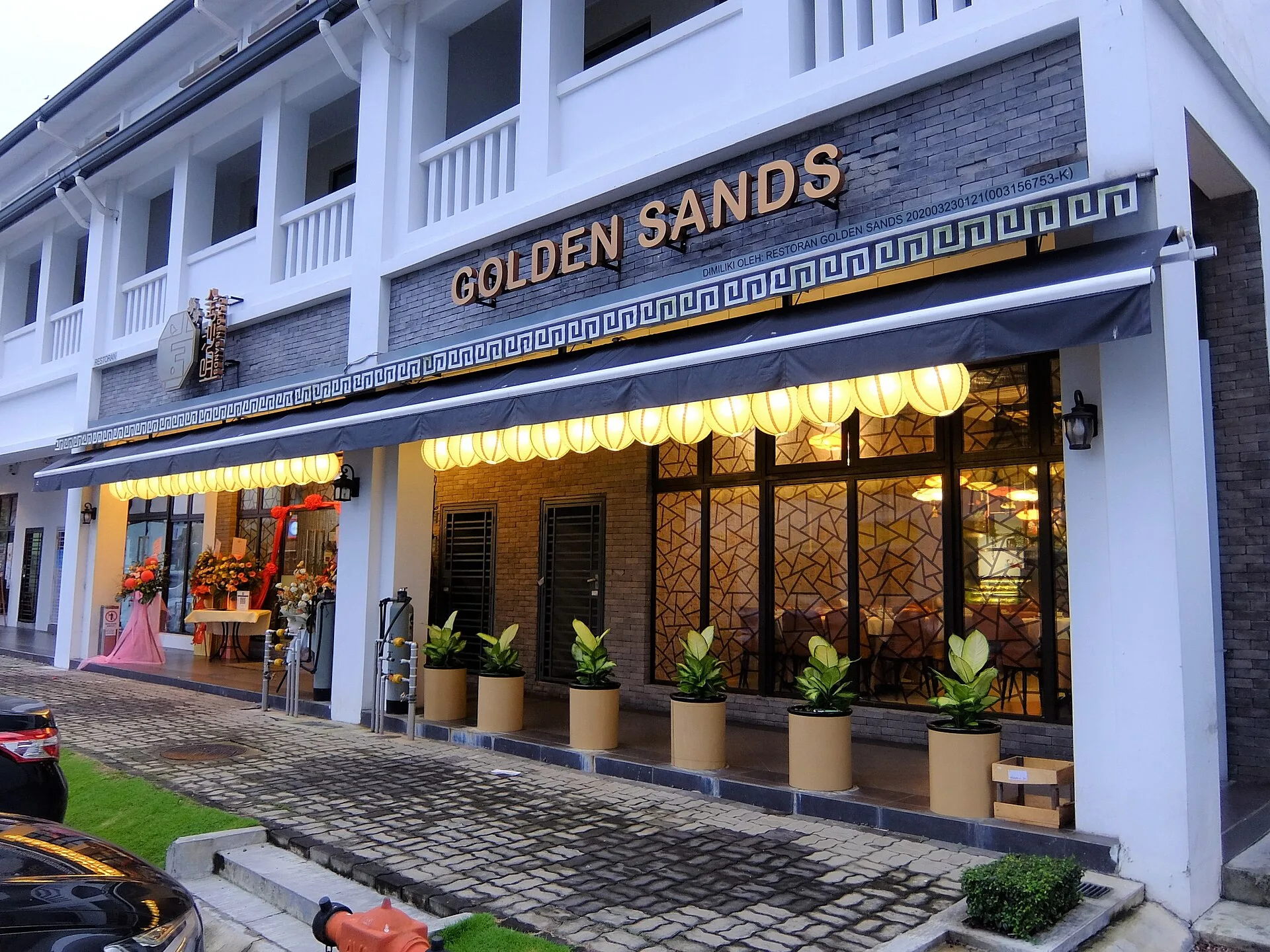
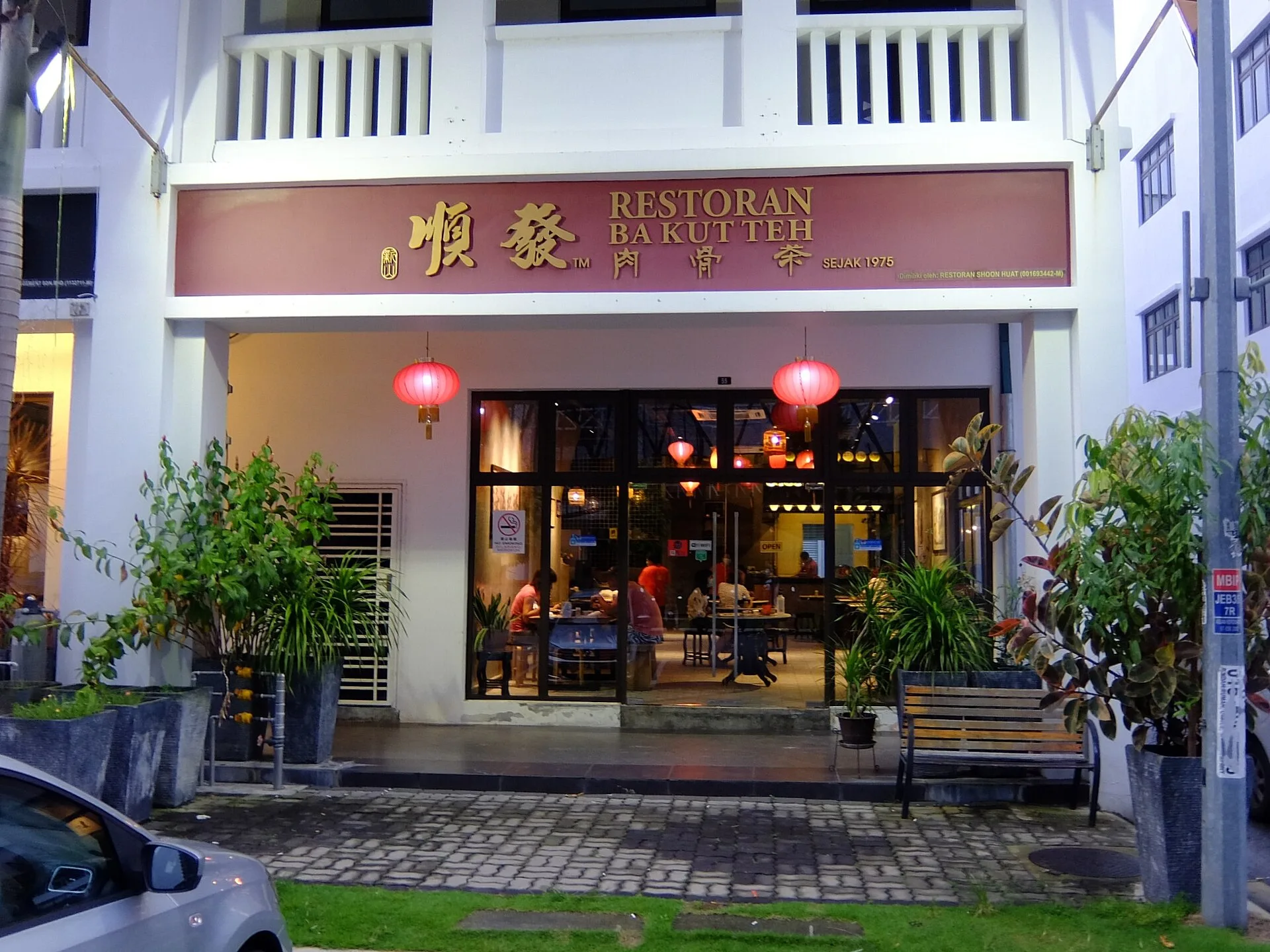
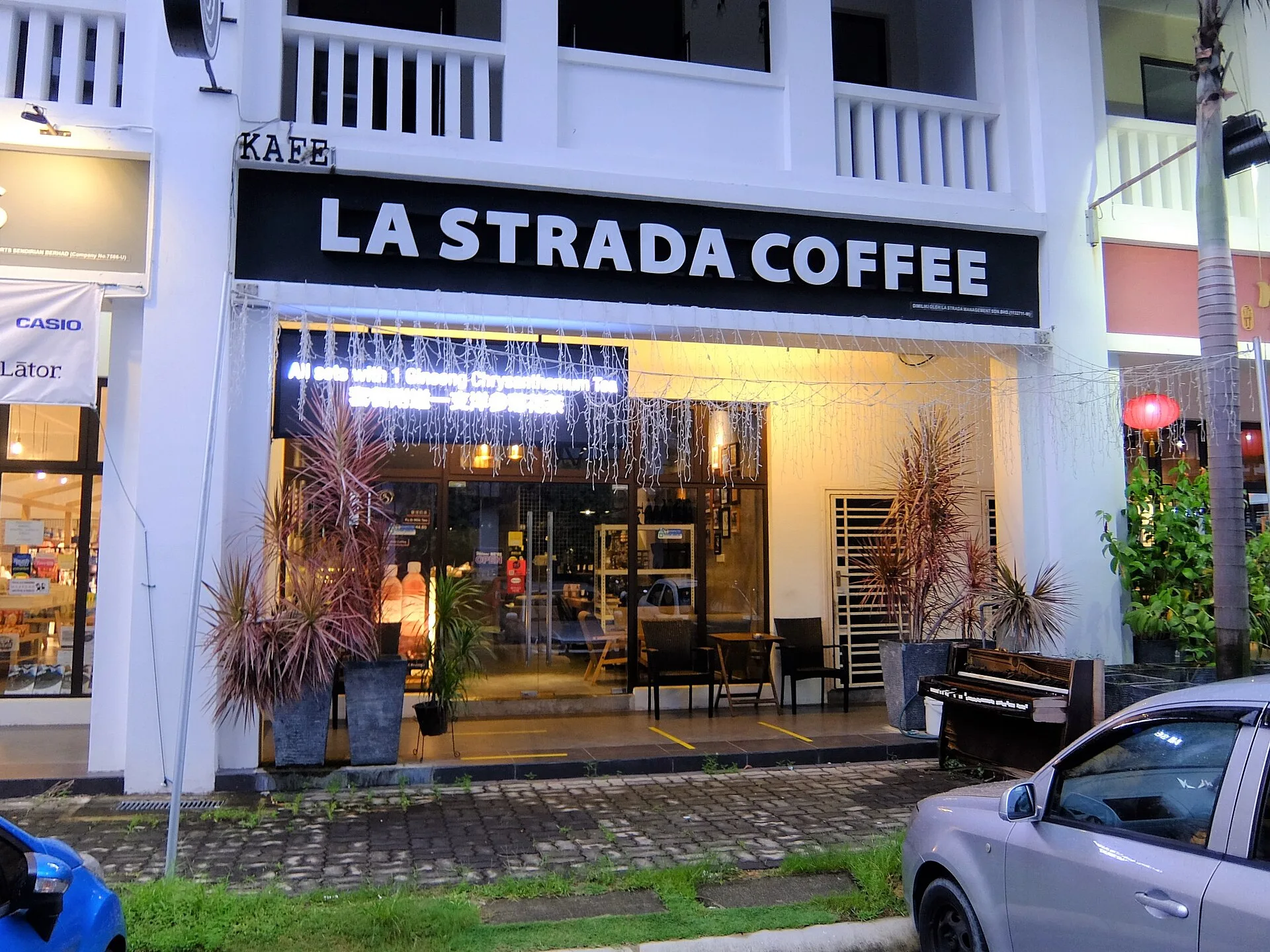
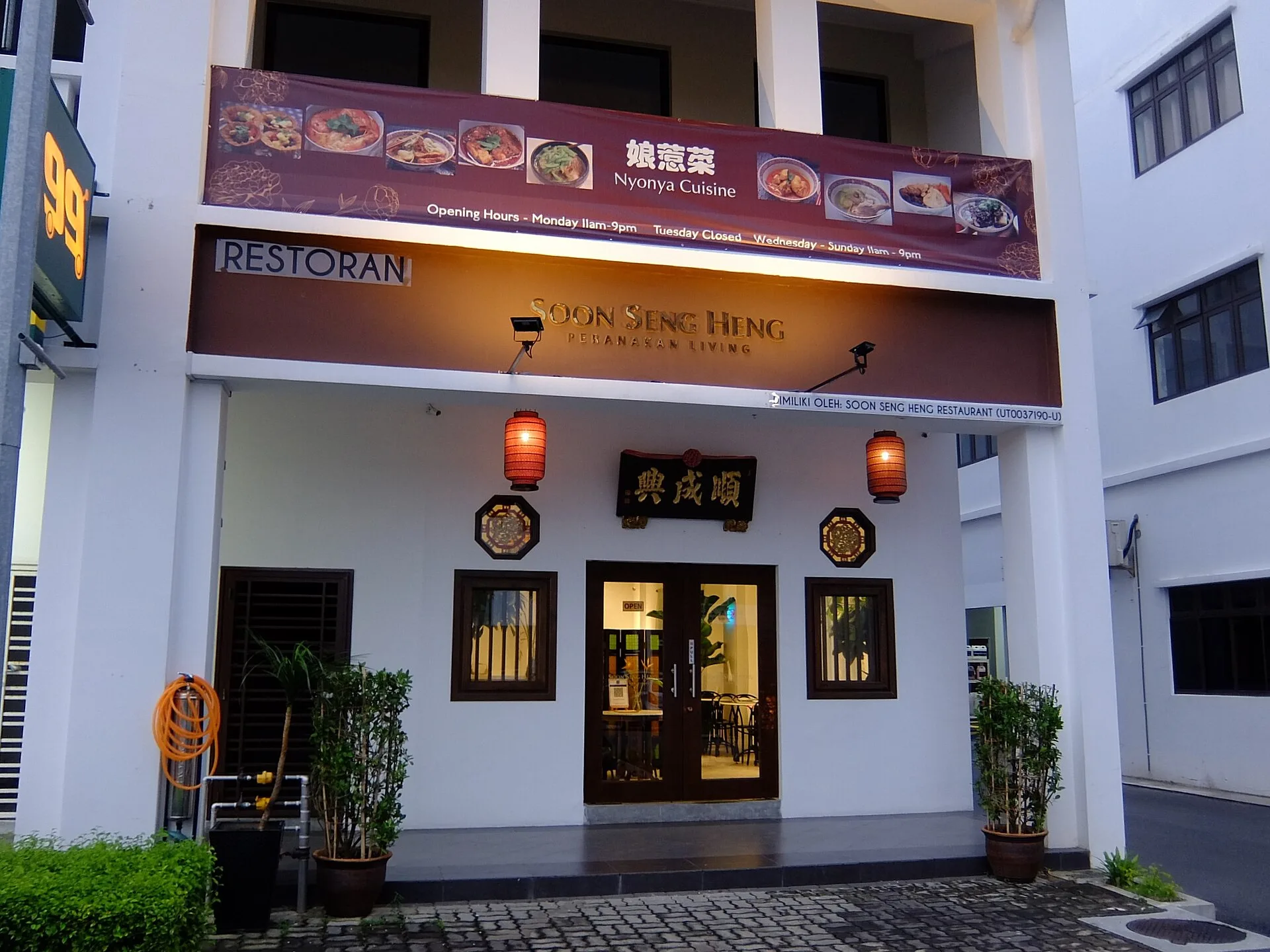
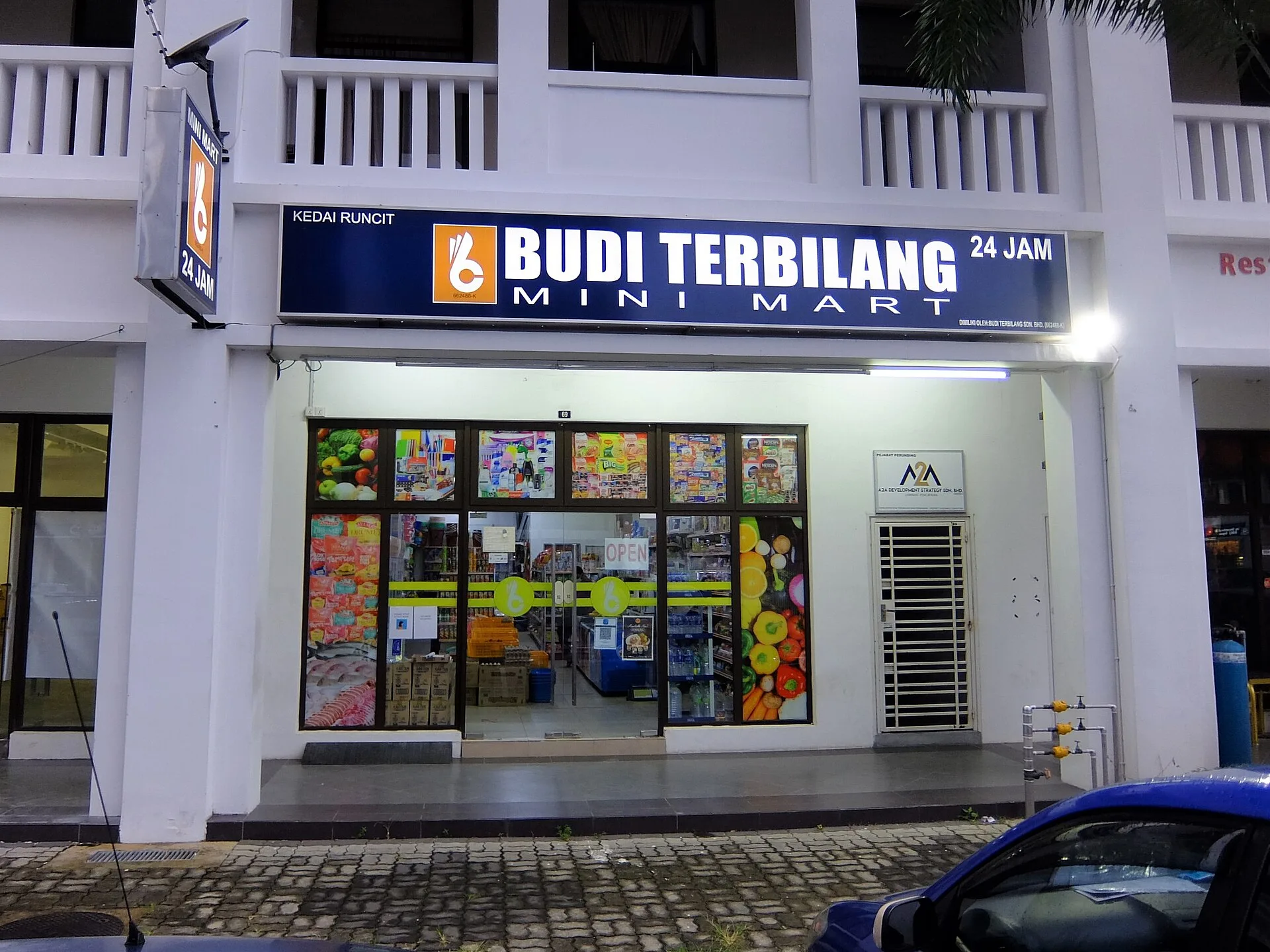
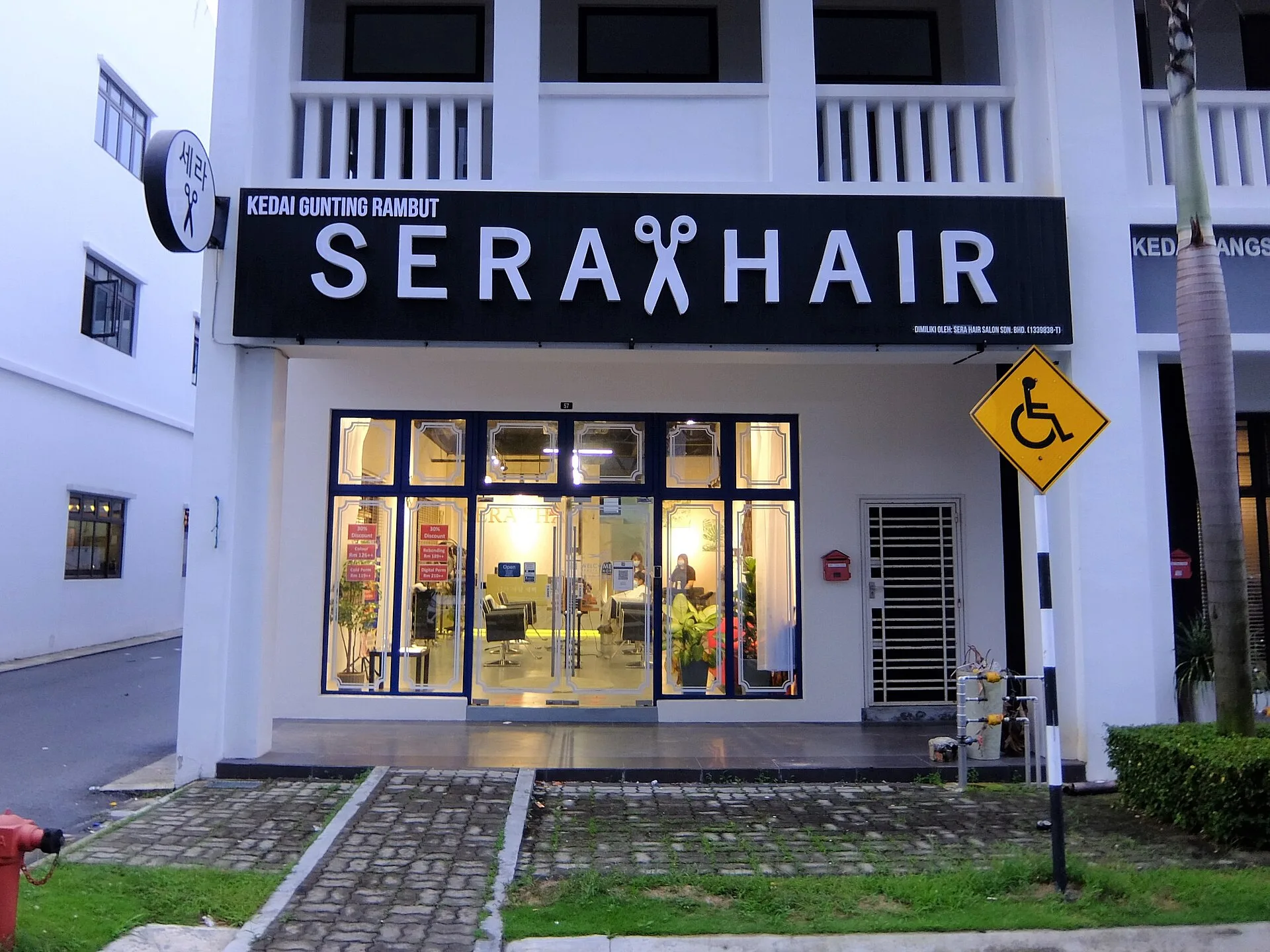
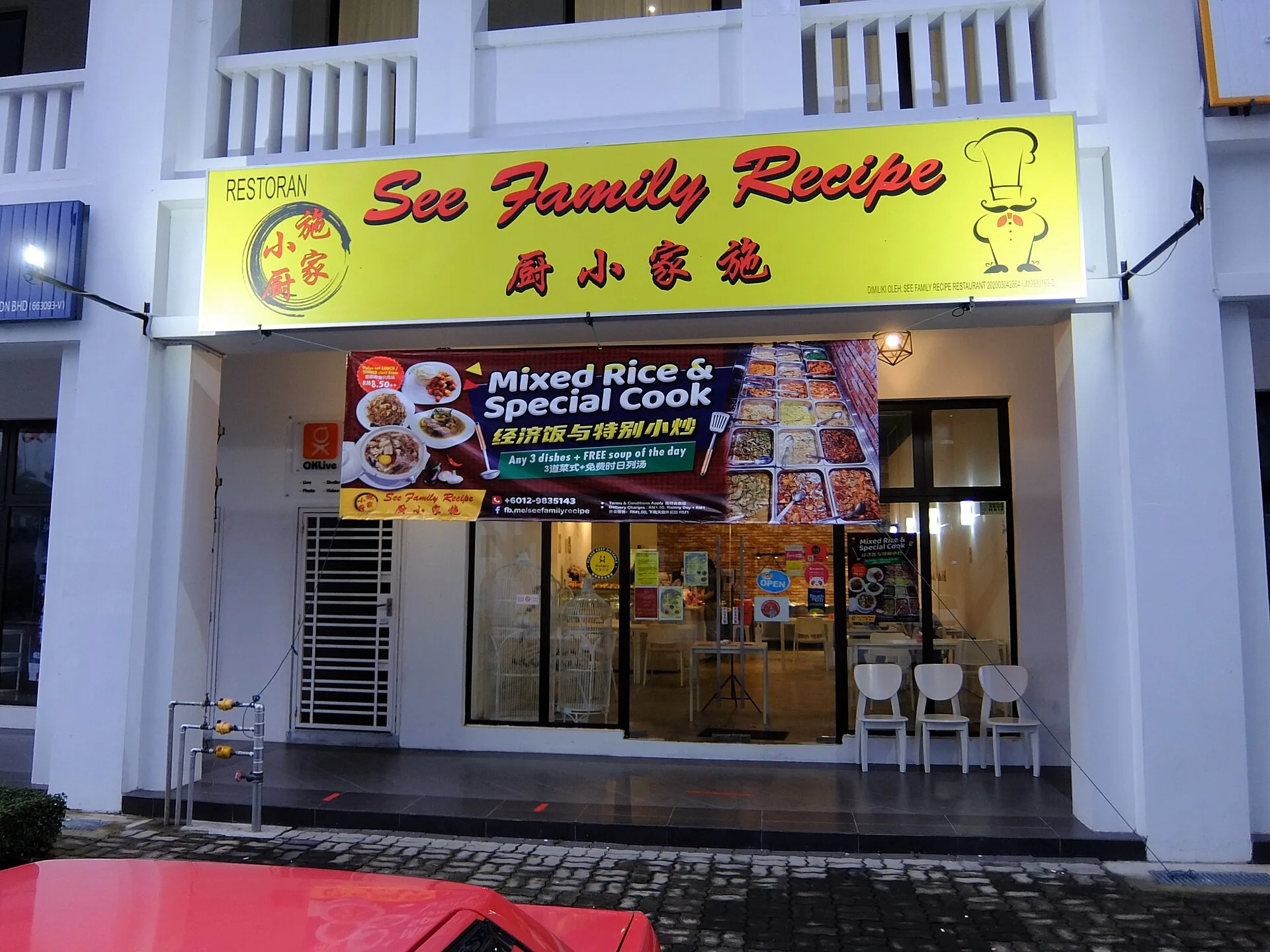
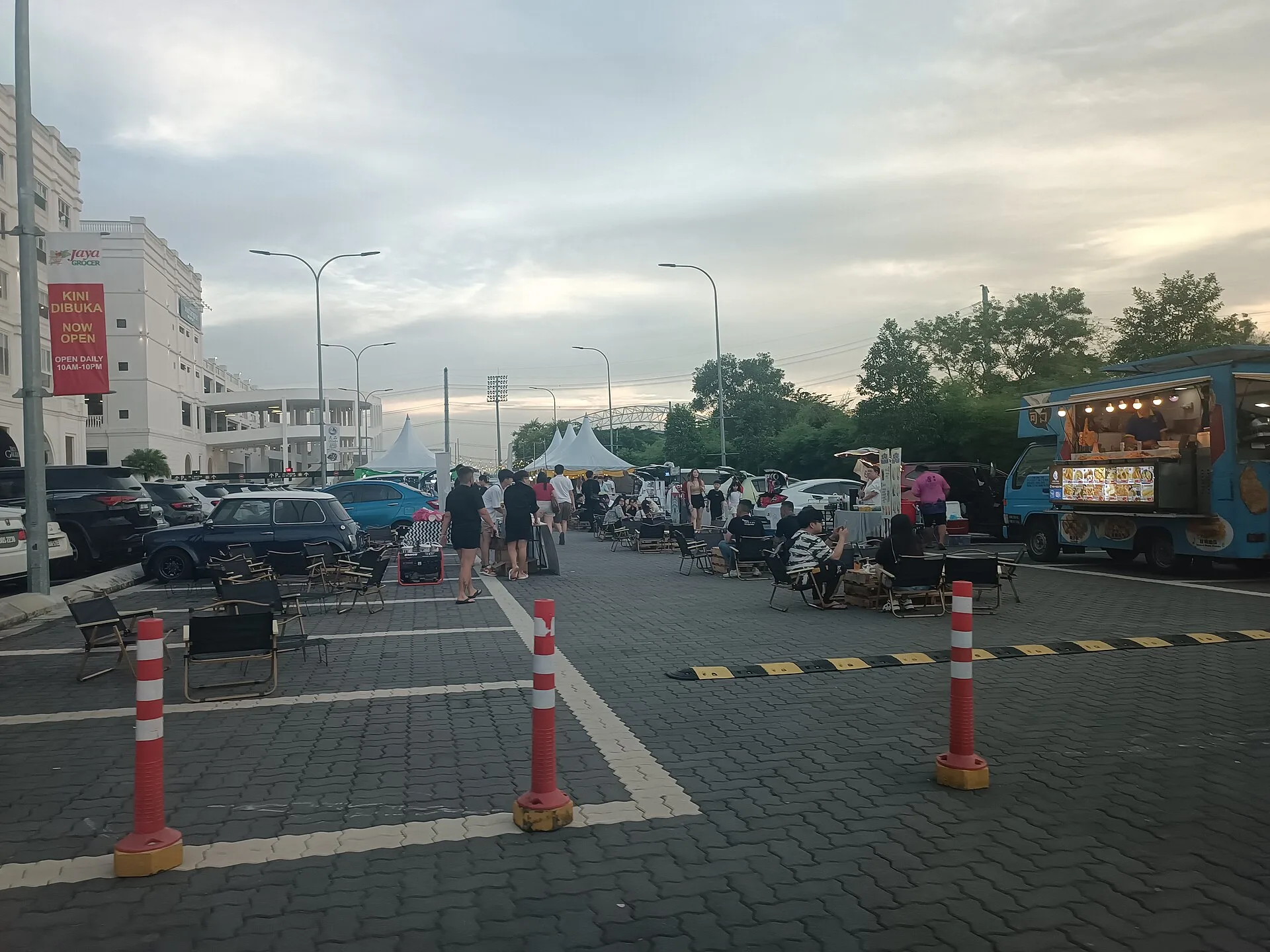
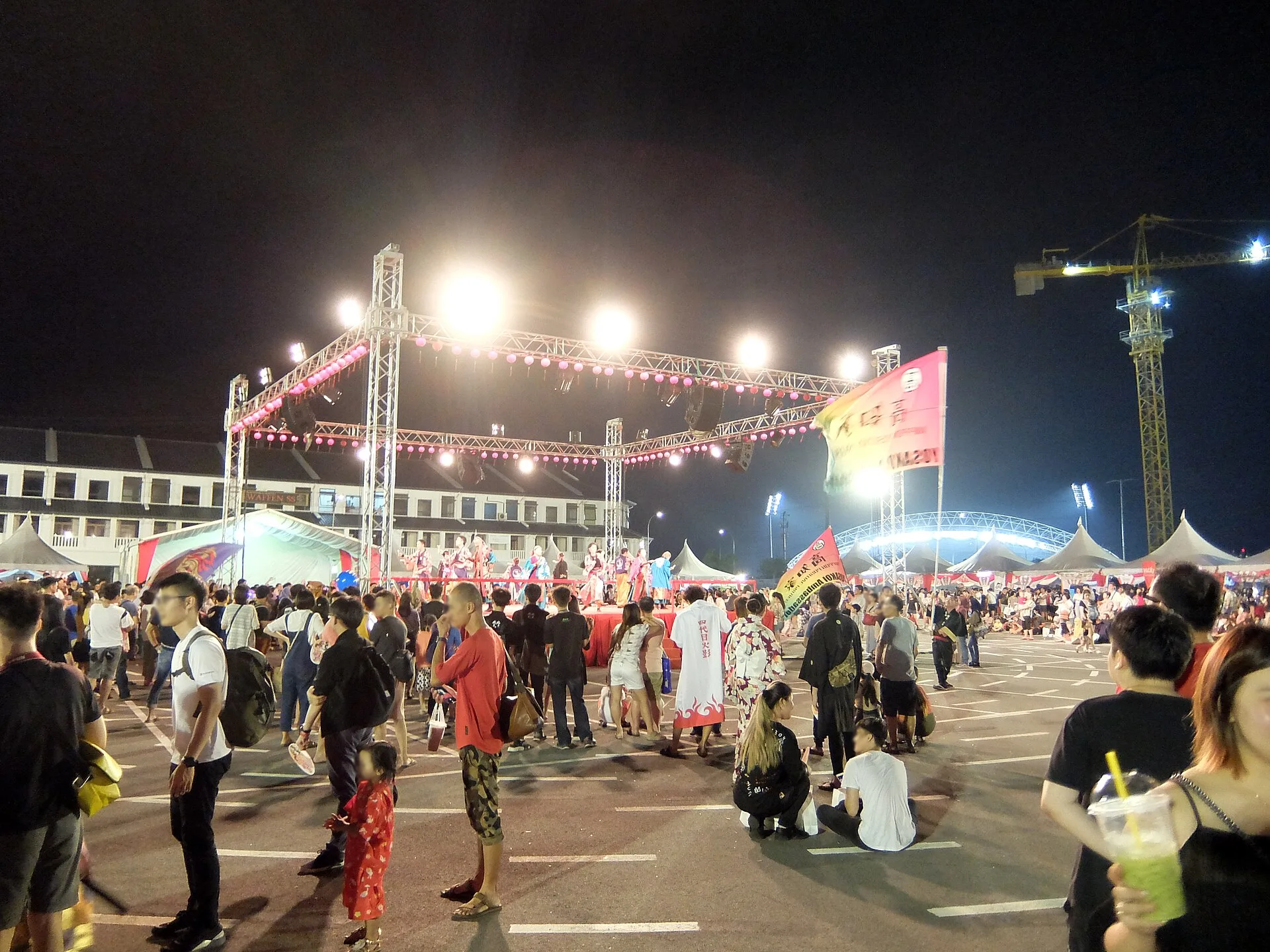
What the shopfronts actually look like
Real, freely-licensed photographs of the shopfronts themselves — not renders, not stock, not the developer’s brochure.
And what surrounds it
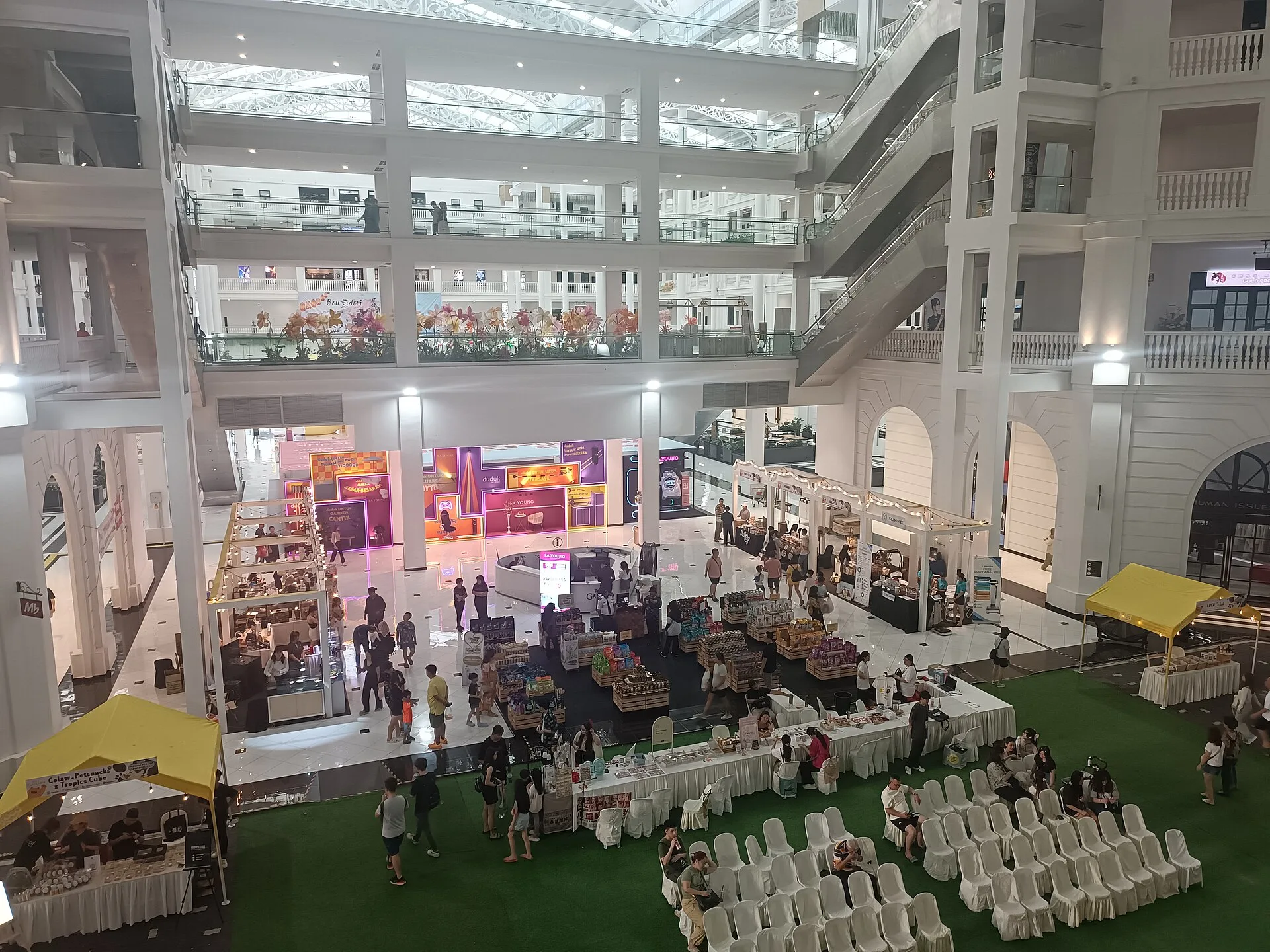
The anchors that feed the strip, all within 18 minutes.
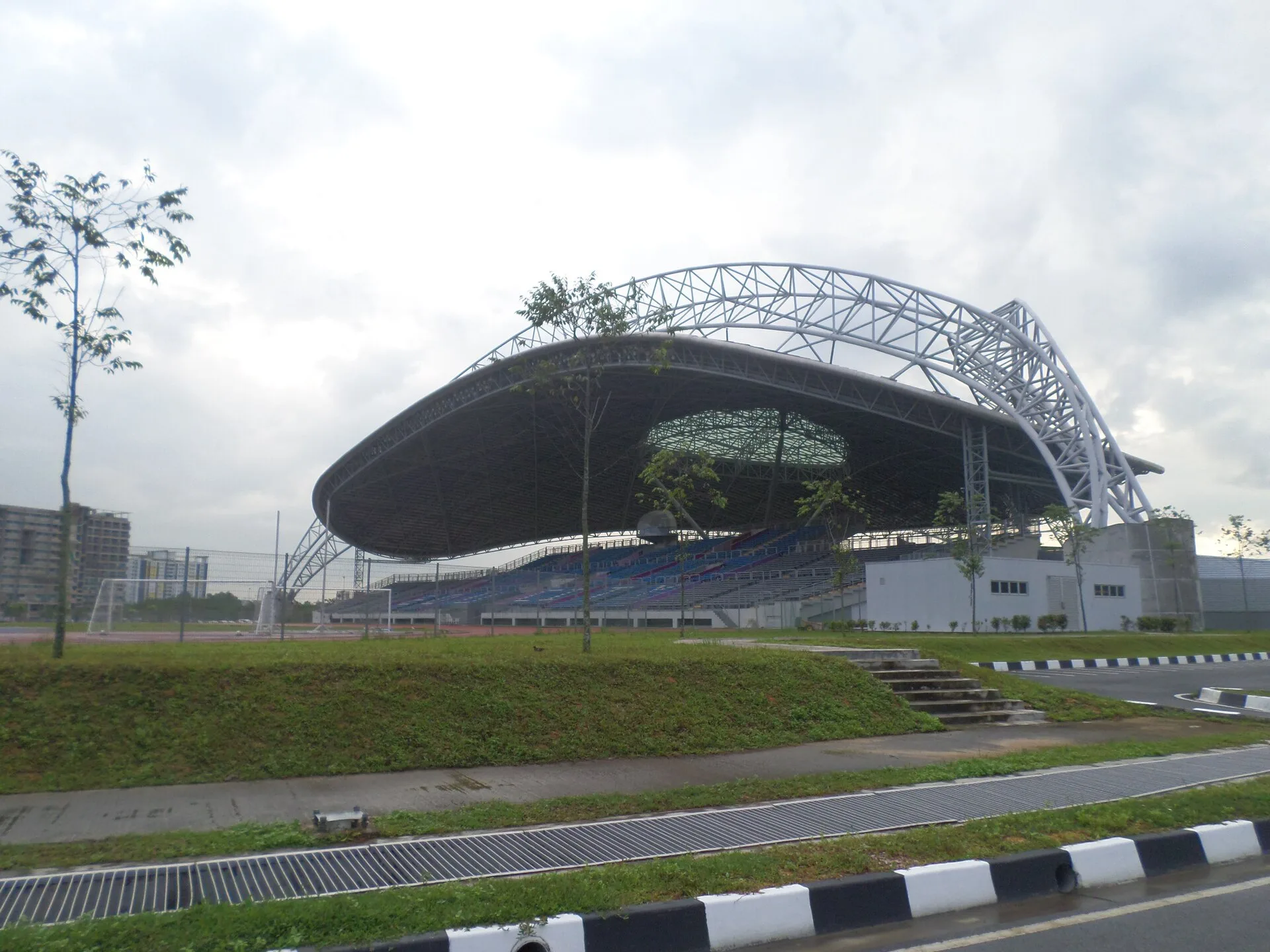
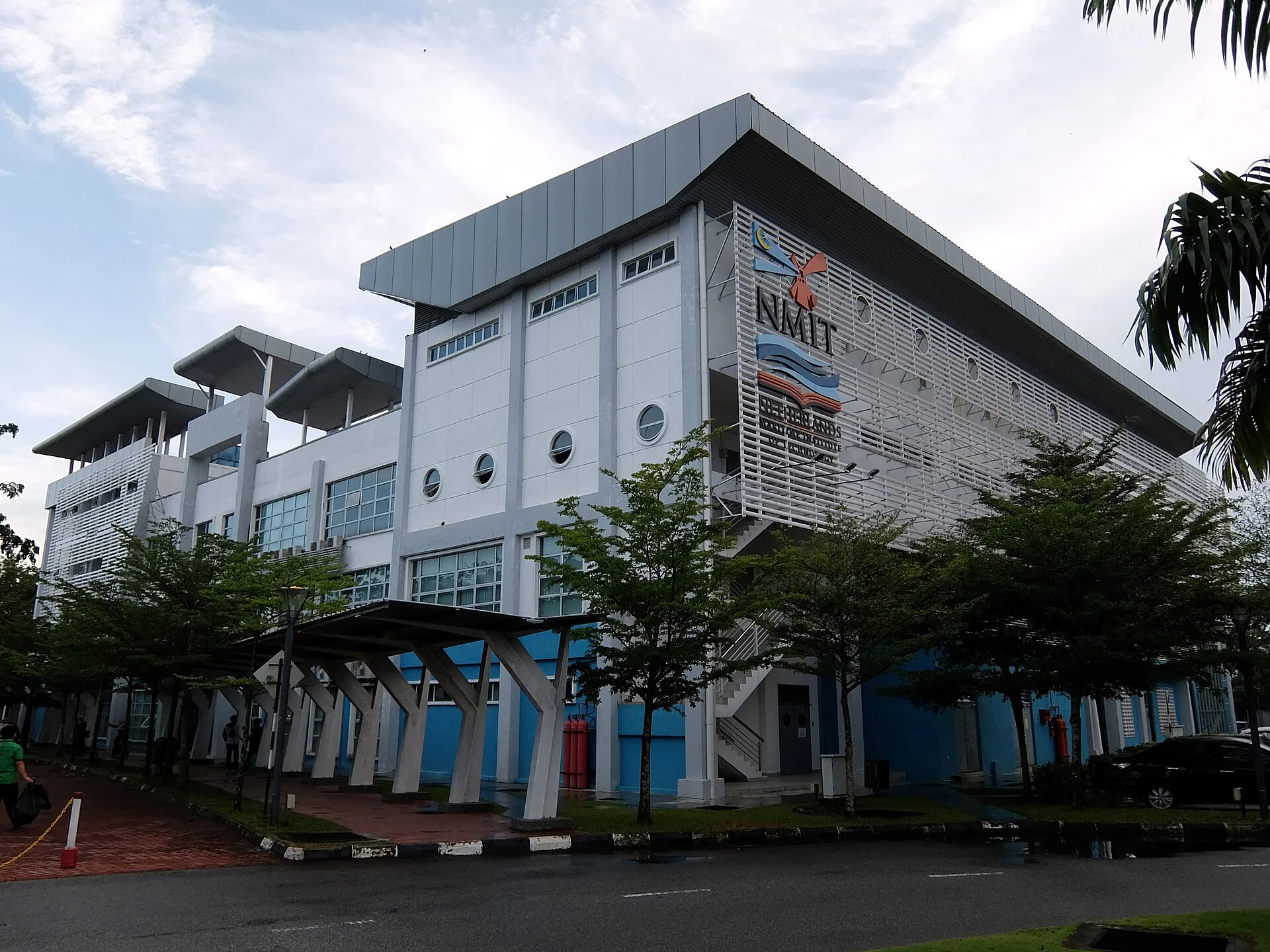
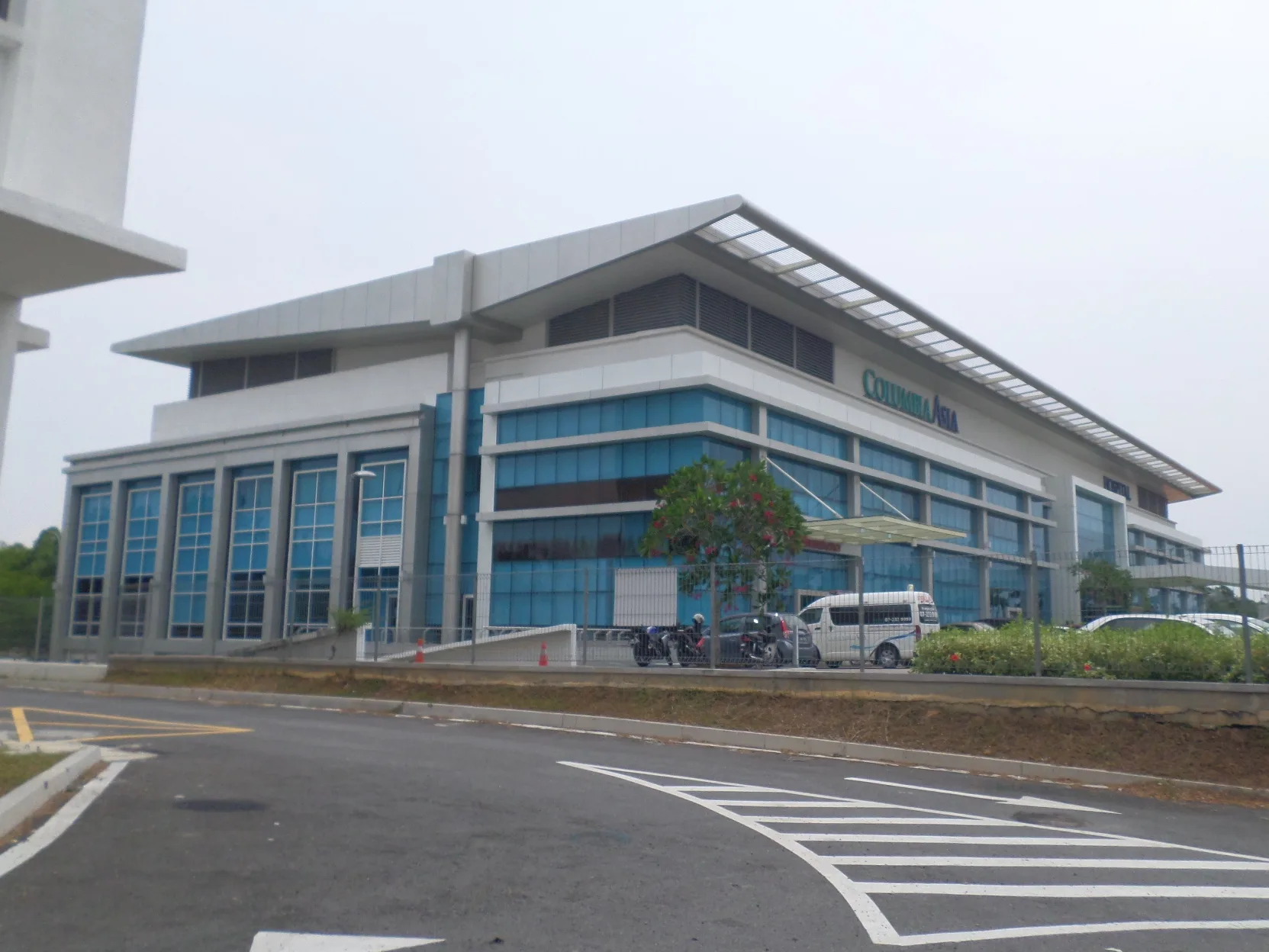
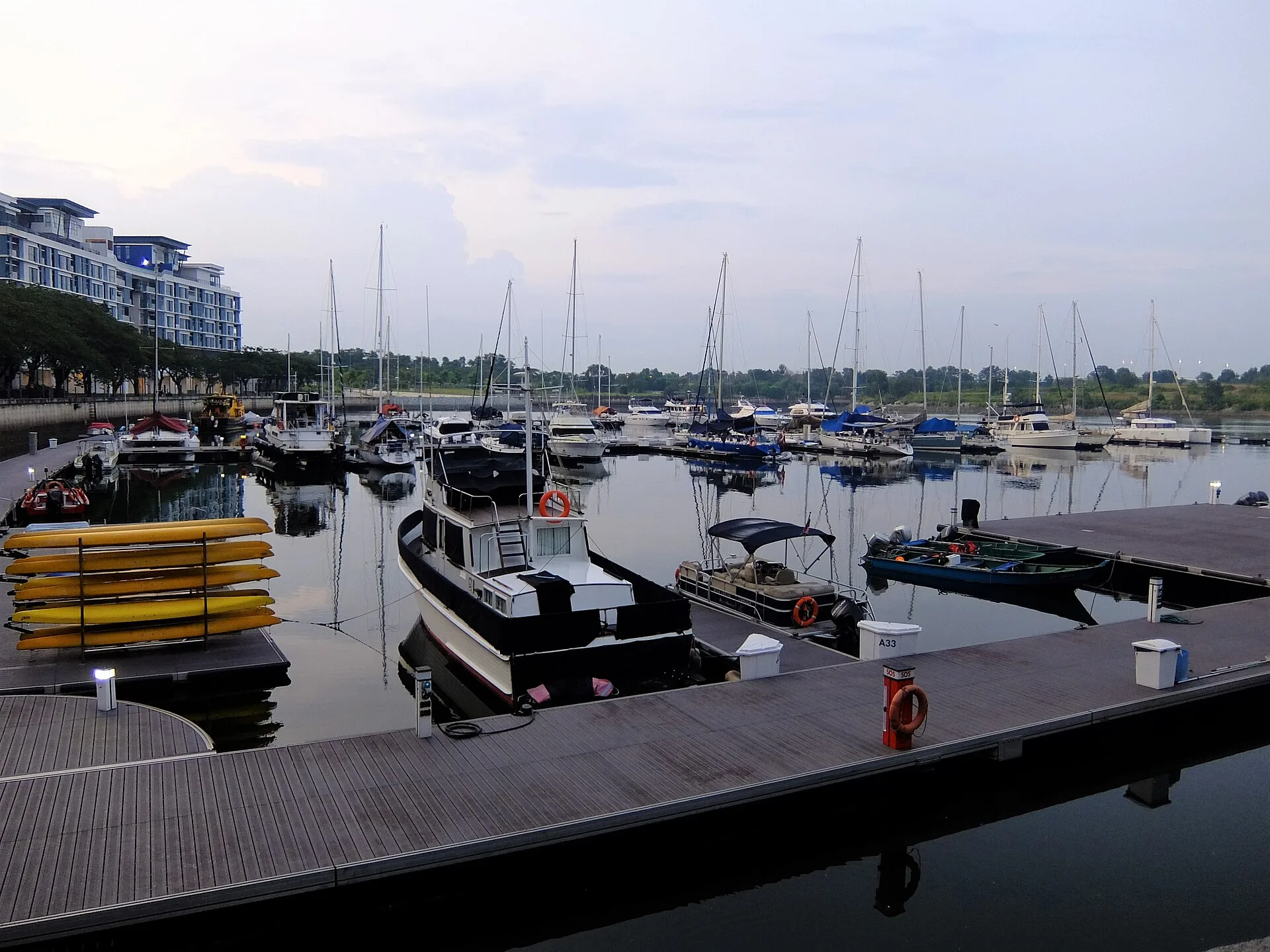
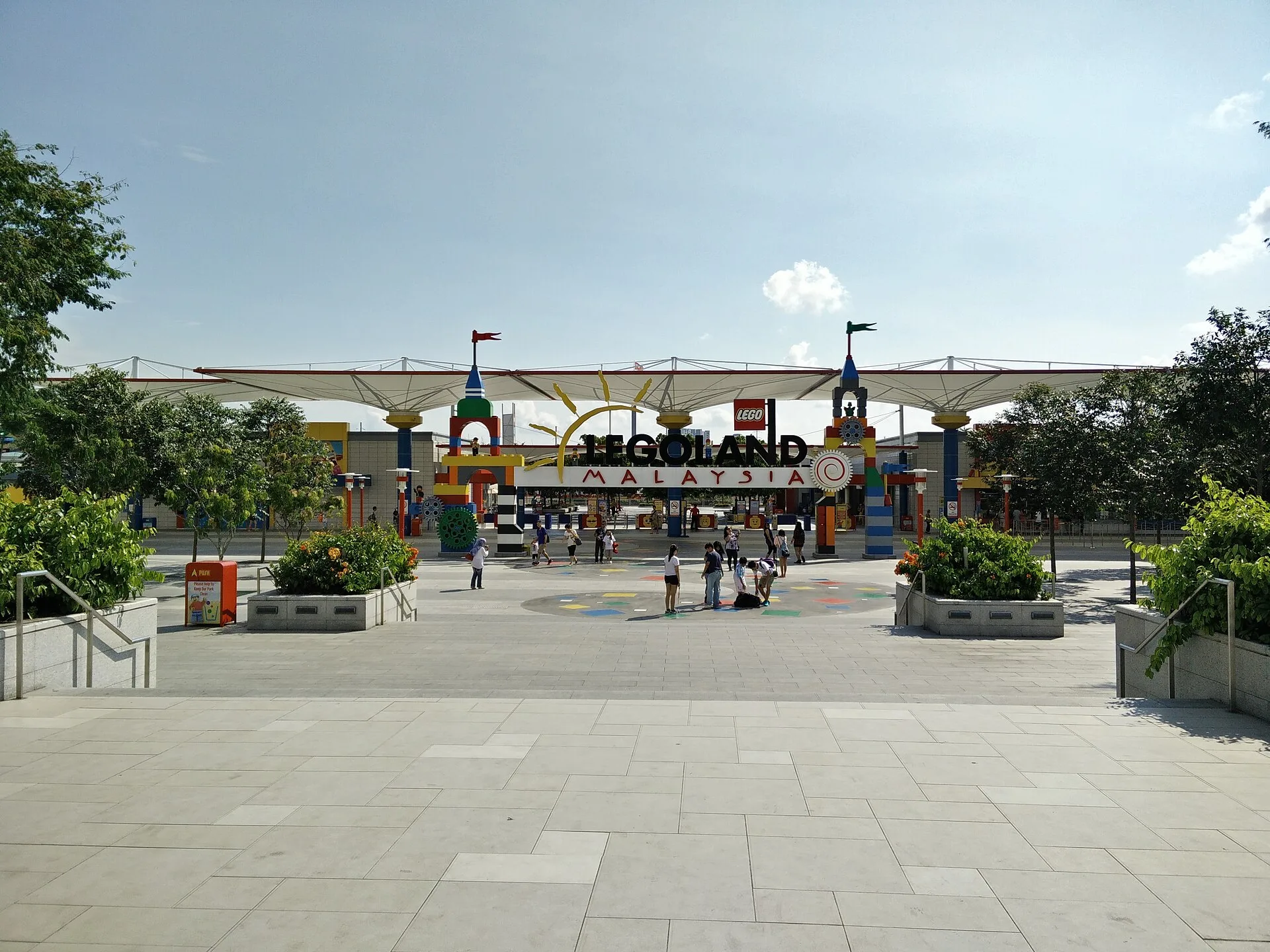
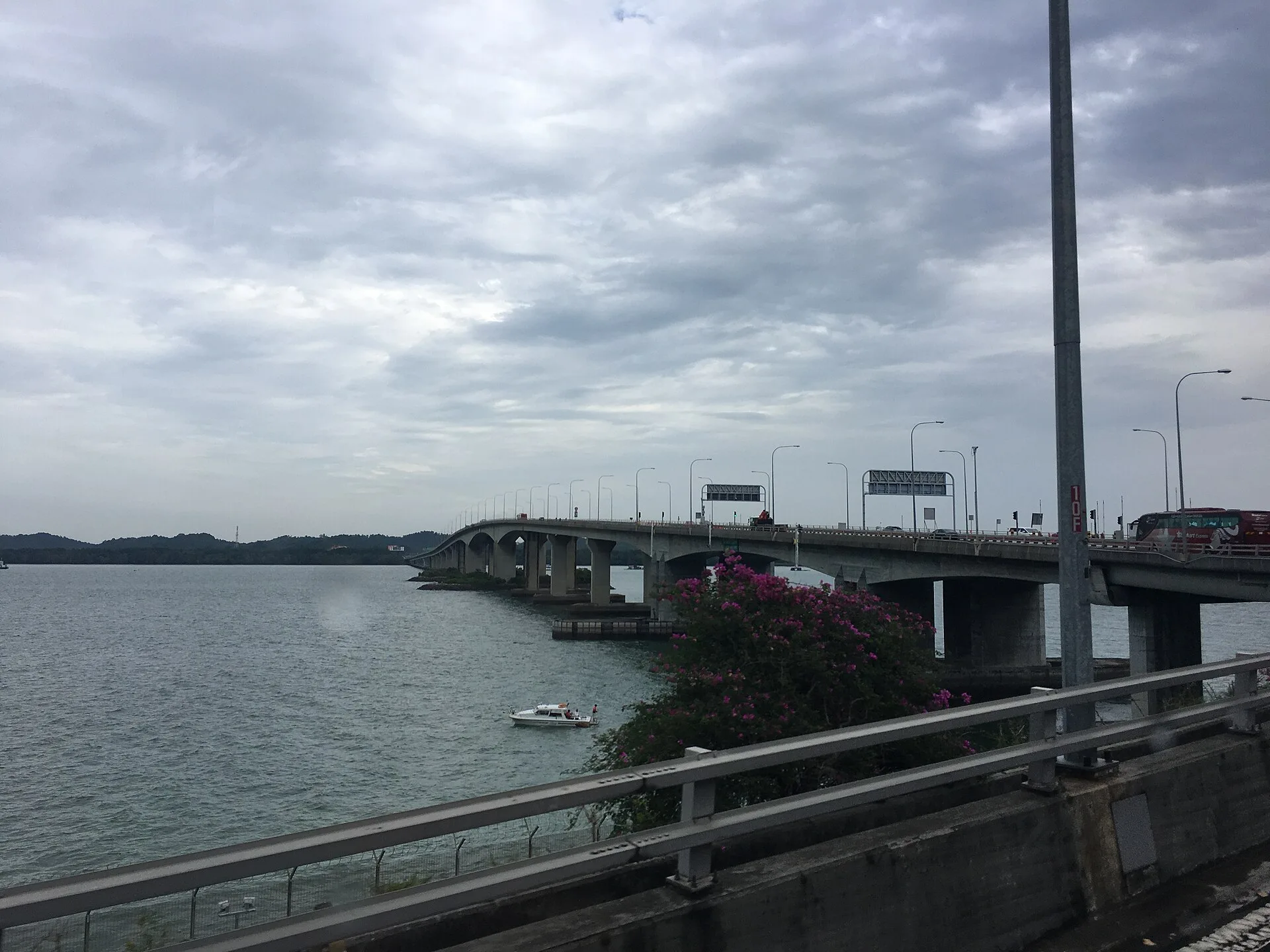
Every photograph on this page is a real, freely-licensed photograph of the place it names, credited to its photographer. We publish no stock imagery, no renders and no AI-generated pictures.
Who lives around here
The residential population inside a 15-minute drive is what carries a shop from Monday to Thursday.
Ethnic composition — Iskandar Puteri
Citizen electorate of the P.162 Iskandar Puteri federal constituency, 2022 general-election roll (the most recent published breakdown).
Why this matters: a Chinese share of 47% is well above the Johor state average, though it has fallen from 49.8% on the 2018 roll while the Indian share has risen, and it is the demographic reason a café-and-dessert tenant mix works here where it would not in most of the state. It also means halal-only concepts reach roughly a third of the citizen base without a non-halal counterpart nearby.
Residential catchment within 15 minutes
Township scale, by residents or dwelling units. Bukit Indah’s figures are widely-quoted estimates, not an official count.
Plus Eco Botanic 1, Eco Spring, Eco Summer, Nusa Duta, Nusa Bestari, Sutera Utama, Gelang Patah town and Medini’s residential blocks — all inside the same 15-minute ring.
Read these with care. The ethnic split is the registered citizen electorate, so it excludes under-18s and every non-citizen — international students, expatriate families and migrant workers are all invisible in it, and locally they matter. The P.162 constituency (447,697 people, MyCensus 2020) is also wider than Eco Botanic’s own trade area. Use these as the shape of the market, not as a headcount at your door.
Why this strip became busy
Four demand engines — and what each one actually pays for.
Cross-border weekend spend
Strongest driverThe Second Link puts Singapore families 18 minutes away — closer than JB city centre is to them at peak. A meal that costs S$70 in Singapore costs S$22 here. Eco Botanic won this traffic because it has parking, which the older JB strips do not.
EduCity & international schools
Term-time baseSeven higher-education institutions and four international schools sit within three minutes — and the University of Southampton Malaysia is not merely nearby, it occupies 150,000 sq ft of Eco Galleria itself — among them Newcastle University Medicine Malaysia, the University of Reading Malaysia, the University of Southampton Malaysia, Netherlands Maritime University College, Raffles University and MDIS. Students give the strip a weekday floor; the parents — Korean, Japanese, mainland Chinese, Middle Eastern and Western expat families — give it a high-value daytime segment that older JB strips simply do not have.
A resident base that skews young and affluent
Weekday floorEco Botanic’s own landed and cluster homes, plus Eco Spring, Eco Tropics spillover and the Nusa Duta/Sutera belt, put a large Malaysian Chinese professional and family population within a 10-minute radius. This is the group that repeats, and repeat trade is what keeps a tenancy alive between weekends.
The JS-SEZ & Iskandar office build-out
Slow burnIskandar Puteri is one of the nine flagship zones of the Johor–Singapore Special Economic Zone, which offers qualifying companies a 5% corporate tax rate for 10 or 15 years against the standard 24% (the widely-quoted 15% is a personal income tax rate for knowledge workers, not a corporate rate). That is pulling regional offices and data-centre support firms into Medini and Nusajaya — an office-lunch and after-work segment that is still forming, not yet delivered.
Five things no other JB strip has
Not “advantages” — structural facts a competing location cannot copy, however much rent it undercuts you by.
A captive tertiary-education catchment three minutes away
Seven higher-education institutions inside one 305-acre education city, plus international schools, sitting on land zoned for nothing else. One of those campuses is a tenant of the commercial scheme itself. No other commercial strip in Johor Bahru has this on its doorstep — and unlike a mall or a factory, a university cannot relocate, downsize its lease or go quiet after a bad quarter.
One developer, 758 acres across Eco Botanic 1, 2 and 3, one design code
Eco Botanic (270 acres) and Eco Botanic 2 (193 acres) were master-planned and built by EcoWorld under one architectural code, with enforced facade rules, coordinated landscaping and a single maintenance standard. Almost every older Johor strip is a patchwork of separate developers, mismatched signage and inconsistent upkeep. You cannot retrofit that coherence — it is decided once, at planning stage.
Singaporeans who live here, not only visit
In adjoining Horizon Hills about 28% of residents are Singaporean. That converts a weekend-only revenue profile into something steadier: a resident, Singapore-dollar household that shops on a Tuesday. Very few Johor catchments carry a resident Singaporean share anywhere near this.
Freehold with individual titles, next door to leasehold Medini
Eco Botanic shophouses are freehold, and the three-storey stock carries individual titles rather than strata. Medini, ten minutes away, is leasehold and operates under its own foreign-ownership regime. For a foreign buyer, financier or eventual resale, freehold individual title is the cleaner instrument — and it is a permanent property of the land, not a marketing feature.
Free surface parking designed in from day one
Parking bays on both sides of every row, rear service lanes, no coupons and no gantry. Older Johor strips were platted before car ownership hit today’s levels and physically cannot add bays. This is the reason a Singaporean family with two children and a boot full of groceries chooses Eco Botanic — and it is the single most repeated line in tenant interviews.
Who actually walks past your door
Estimated share of retail spend, by ethnicity and customer type. Read the last row before you commit.
| Segment | Share of spend | Spend per visit | When they come | Concepts that win them |
|---|---|---|---|---|
| Malaysian Chinese — families & young professionals | 45–55% | RM25–60 | Daily; peaks Fri–Sun evening | Café, hotpot, dessert, bubble tea, salon, tuition |
| Singaporeans — weekend day-trippers | 15–25% up to 35% on Sat | RM60–150 | Fri night – Sun; public holidays | Massage, seafood, dental, pet grooming, car detailing |
| Students — EduCity & int’l schools (Malaysian, Chinese, Indonesian, Middle Eastern, African) | 10–15% | RM15–40 | Term-time weekday afternoons | Value meals, printing, barber, laundry, co-working |
| Expat & int’l-school parents (Korean, Japanese, mainland Chinese, Western) | 8–12% | RM50–120 | Weekday mornings, school pick-up 3–5pm | Specialty grocers, Korean/Japanese F&B, clinics, enrichment |
| Malay middle-class households — Gelang Patah, Nusa Duta, Nusa Bestari | 8–12% | RM20–45 | Evenings, weekends, strong in Ramadan | Halal-certified F&B, pharmacy, kids’ services, banking |
| Medical visitors & hospital staff — Gleneagles Medini, Columbia Asia | 3–5% | RM30–80 | Weekday daytime | Pharmacy, TCM, physiotherapy, quiet cafés, serviced stays |
| Blue-collar & migrant workers (Bangladeshi, Nepali, Indonesian, Myanmar) | <3% | RM8–18 | Rare — no factory belt or worker hostels adjacent | Do not plan for this segment here. Volume-driven cheap-eats, remittance, mini-marts and hardware belong in Tampoi, Senai or Pasir Gudang. |
Shares are our field estimate from tenant interviews and observed weekend traffic, not census data. Treat them as a planning guide, not an audited figure.
Who is already trading here — and what is missing
Two hundred-odd businesses have already voted with their deposits. The gaps in that list are where the opportunity is.
The anchors that pull people in
A university campus inside the commercial building
The University of Southampton Malaysia occupies about 150,000 sq ft of Eco Galleria Block C, with capacity for roughly 2,000 students. Not near the shops — in them. That is an anchor tenant most strip malls cannot buy, and it puts a daytime population directly above the retail.
Malaysia’s largest Jaya Grocer
35,000 sq ft in Eco Galleria Block C, opened August 2023. A premium grocer of that size is a weekly-shop destination, and weekly-shop trips are the most reliable footfall a shop lot can sit next to.
The convenience cluster on one corner
Watsons, Guardian, Caring, Big Pharmacy and Well Pharmacy, plus 7-Eleven, FamilyMart, CU and 99 Speedmart, sit around the Starbucks corner at Jalan Eko Botani 3/2 — which locals and visitors use as the wayfinding landmark for the whole precinct.
Tenant mix — Eco Galleria & Eco Botanic 2
116 managed units, by the landlord’s own directory. Excludes the Eco Boulevard shophouse rows, which are more F&B-heavy still.
What is not here — the actual opportunity list
Compiled from the landlord directory, Google Maps and on-the-ground surveys. Absence of evidence is not proof of absence — verify before you commit.
The four shop lot precincts
“Eco Botanic” is not one strip. The precincts trade very differently — and price very differently.
Eco Botanic 1
Most mature Jalan Eko Botani 3/xThe original strip and still the anchor. Three-storey shophouses on a wide loop with generous surface parking; the highest concentration of established F&B, and the addresses Singaporeans navigate to by name. Ground-floor corner units here rarely reach the open market.
Eco Galleria
Highest footfall density European-style high streetA curated high-street format with four-storey shop offices around a pedestrian spine. Strong for boutique retail, lifestyle services and small-format F&B; the strata layout means smaller, cheaper entry units than a whole shophouse. Upper floors (L3–L4) are office-grade and let slowly.
Eco Boulevard
Main-road frontage Larger lotsWider, deeper three-storey lots facing the arterial road. Signage visibility is the best in the township, which makes it the right pick for showrooms, clinics, banks, car-related trades and any concept that lives on drive-by recognition rather than walk-in browsing.
Eco Botanic 2 & the newest releases
Newest · still filling Developer packages availableThe newest commercial releases. Lower entry pricing and developer incentives — rebates, rent guarantees, fit-out allowances depending on the launch — but occupancy is still building, so a tenant here is buying tomorrow’s footfall, not today’s. Suits operators with a destination brand who can pull their own crowd.
Rent and price schedule
Market bands, September 2026. Individual units transact outside these ranges — corner, frontage and existing tenancy change everything.
| Level & position | Typical size | Monthly rent | RM / psf | Best suited to |
|---|---|---|---|---|
| Ground floor — corner, main frontage | 1,600–1,900 sf | RM9,000–15,000 | 5.50–8.00 | Anchor F&B, hotpot, flagship café |
| Ground floor — intermediate | 1,540–1,800 sf | RM6,000–10,000 | 3.80–5.50 | Restaurant, bakery, clinic, salon |
| 1st floor | 1,540–1,800 sf | RM2,500–4,200 | 1.50–2.40 | Studio, tuition centre, spa, private dining |
| 2nd floor | 1,540–1,800 sf | RM1,800–3,000 | 1.10–1.80 | Back office, storage, co-working |
| Whole block (3 floors) | 4,600–5,400 sf | RM12,000–18,000 | 2.50–3.40 | Multi-floor F&B, medical, corporate HQ |
| Level | Typical size | Monthly rent | Notes |
|---|---|---|---|
| Ground — high street retail | 1,000–1,600 sf | RM6,500–12,000 | Best walk-in exposure in the township |
| Level 2 | 900–1,500 sf | RM2,600–4,500 | Works if you draw your own bookings |
| Levels 3–4 — office | 900–1,500 sf | RM1,700–3,200 | Longest vacancy periods; negotiate hard |
| Asset | Asking range | RM / psf | Gross yield | Tenure |
|---|---|---|---|---|
| 3-storey shop, intermediate | RM3.3M–3.9M | ≈1,150–1,300 | 3.2–4.0% | Freehold |
| 3-storey shop, corner | RM4.2M–4.9M | ≈1,300–1,450 | 3.6–4.5% | Freehold |
| Eco Galleria — ground floor strata | RM1.6M–2.6M | ≈1,400–1,700 | 3.5–4.8% | Freehold, strata |
| Eco Galleria — upper strata | RM550k–1.1M | ≈600–800 | 3.0–4.2% | Freehold, strata |
| Reference: 18 shoplot transactions were recorded at Eco Botanic across the whole of 2025, at a median of RM2,127 psf and a median price of RM3,829,900, with the middle half of deals between RM3.1m and RM3.9m (brickz.my, from JPPH data). The earlier Mar 2024–Feb 2025 window showed 32 deals at a median RM2,259,300 — the two windows use different property-type filters, so the psf jump is not purely price growth. Note also that psf here is quoted on land area, while the rental table above uses built-up area. | ||||
How it compares with the other JB strips
Ground-floor asking rents from live portal listings, September 2026.
| Strip | GF rent / month | Who shops there | Parking | Pick it if |
|---|---|---|---|---|
| Mount Austin | RM3,800–9,500 | Dense local Chinese Malaysian; highest weekday volume in JB | Congested | Your model needs volume seven days a week and you can live without parking. |
| Bukit Indah | RM2,500–4,200 | AEON-anchored footfall plus Singaporean day-trippers | Adequate | You want an Eco Botanic customer at roughly half the rent. |
| Eco Botanic | RM6,000–15,000 | Singaporean weekenders, EduCity students, expat families | Free, ample | You want high basket size and can survive a soft Monday–Thursday. |
| Taman Molek | RM4,500–15,000 | Affluent Chinese Malaysian, expat and Singaporean | Tight | You are an evening or bar operator with an existing following. |
| Sutera Utama | RM3,500–25,000 | Affluent Skudai households; the state’s highest median price | Adequate | You sell premium and need a catchment that pays for it. |
| Johor Jaya | RM2,200–4,500 | 66,000 residents; the most balanced ethnic mix in JB | Adequate | You want the healthiest yield and the deepest deal flow. |
| City Centre / IIBD | RM5,000–13,000 | Singaporean walk-in via CIQ; RTS terminus January 2027 | Paid / limited | You want walk-in cross-border traffic and will pay for the story. |
Ground-floor asking rents from live portal listings, September 2026. Expect 5–15% negotiation room on any of them. We will tell you honestly when another strip is the better commercial decision for your concept.
Buying, not renting? The people who staff and shop this strip have to live somewhere — and tenant demand follows housing. Completed condos in the same catchment, with resale bands, rents and gross yields: Iskandar Puteri / Medini →
What it actually costs to open here
Rent is the number everyone quotes. It is rarely the number that kills the deal — the fit-out is.
| Item | Amount (RM) | Basis |
|---|---|---|
| Fit-out — full F&B with kitchen | 231,000 – 539,000 | RM150–350 psf. Kitchen exhaust, grease trap, heavy plumbing and M&E are what push it up. |
| Fit-out — basic retail (indicative) | 150,000 – 280,000 | Mid-range commercial renovation guidance; no retail-specific Malaysian benchmark is published. |
| Deposits — 2 months security + 1 month advance + ½ month utility | 28,000 | The Malaysian “2 + 1 + ½” convention. Payable before you touch the unit. |
| Stamp duty on the tenancy | 384 (1 yr) / 1,152 (3 yr) | RM1 per RM250 of annual rent for ≤1 year; RM3 for 1–3 years. The RM2,400 exemption was abolished in January 2025. |
| Legal fee — tenancy agreement | 2,400 | 30% of one month’s rent under the Solicitors’ Remuneration Order 2023 (minimum RM500). |
| Agent commission | 0 | 1.25 months’ rent, paid by the landlord by convention. A tenant paying this is being overcharged. |
| TNB three-phase connection + security deposit | 4,300 – 6,900 | RM1,700 connection plus RM2,600–5,200 deposit at 10–20 kW declared demand. Deposit earns 2.5% p.a. and is refundable. |
| Licences — MBIP premise + signboard, first year | 730 – 930 | Premise licence fees are set by your own council by business type and floor area — confirm with MBIP. Signboard RM200–400. Planning allowance, not a quote. |
| Sdn Bhd incorporation | 1,000 | SSM fee, before company secretary charges. A foreigner cannot register a sole proprietorship. |
| Food handler training + typhoid jab | ~50 per person | Mandatory under the Food Hygiene Regulations 2009. Jab renews every 3 years. |
| Halal certification (optional) | 1,500 – 10,000 | The fee is only RM20–700. The real cost is supply-chain compliance and staffing. |
| Realistic total before you sell anything — F&B | 270,000 – 590,000 | Plus opening stock, POS, signage design, insurance and 3 months’ working capital. |
The break-even you should model before signing
Healthy rent-to-revenue for Malaysian F&B is 12–22%. A shop lot should sit at the low end — a mall unit is where 20%+ belongs.
Licences, company setup and the foreign-ownership trap
If you are not Malaysian, read the WRT row first. It decides whether your concept is legal here at all.
| Requirement | Cost | Time | What actually matters |
|---|---|---|---|
| WRT licence — only if foreign equity exceeds 50% | No govt fee RM1,000,000 paid-up capital per outlet | 2–3 months | This is the one that stops most foreign plans. Requires RM1m paid-up capital per outlet and a Sdn Bhd. Foreigners are outright restricted from mini markets, provision shops, and non-specialised F&B outlets — you must show your concept does not compete with small local operators (full menu, chef with ~3 years’ experience, air-conditioned premises). Convenience stores cap foreign equity at 30%. |
| SSM company registration | RM1,000 (Sdn Bhd) RM60 sole prop | 1–3 days | Foreigners cannot register a sole proprietorship — Sdn Bhd only. A foreigner may own 100% of a Malaysian Sdn Bhd; there is no blanket Bumiputera equity rule at shop-lot scale. |
| MBIP business premise licence | Varies/yr | 7–14 working days | Apply via the awam@MBIP portal. Needs SSM cert, floor plan with measurements, location plan, and interior/exterior photos. MBJB now works date-to-date: you may renew up to three months before your own expiry date without penalty. Renewal usually triggers re-inspection. |
| Signboard licence + DBP language approval | RM200–400/yr | 6–8 weeks total | Bahasa Malaysia must be the largest text on your sign — the working rule is 30% larger than any other language, placed top-left or centre. DBP approval comes first (1–2 weeks), then the council (2–6 weeks). An unlicensed sign draws a RM250–5,000 compound and forced removal at your cost. |
| Food handler training + typhoid vaccination | ~RM50 per person | ~3 hours | Mandatory for every food handler under the Food Hygiene Regulations 2009. Certificate is for life; the typhoid jab renews every 3 years. |
| Act 852 no-smoking compliance | Signage cost only | — | In force since 1 October 2024. You must display current-standard signage and provide no ashtrays. Proprietor fine up to RM5,000 — and operators have been fined for displaying an outdated sign, not for allowing smoking. |
| Grease trap | Part of fit-out | — | Compulsory for any premise doing heavy cooking, and a standard item on the council floor-plan submission. Confirm the exact MBIP specification by phone — it is not published online. |
| Halal certification | RM20 + RM100–700/yr | 15–30 working days | Voluntary — the Cabinet rejected mandatory certification in 2024. Johor applications go to JAINJ via the MYeHALAL portal. First-time food premises get 2-year validity. The fee is trivial; the compliance is not — every supplier in your chain must also be certified. |
Fees are indicative for 2026 and set by by-law, so they move. MBIP’s exact signboard rate table and grease-trap specification are not published online — call the Licensing Department at Jalan Medini Sentral 9 before you budget. We can walk you through the whole sequence for a unit we place you in.
Two things no listing will tell you
Flooding and staffing decide more Johor tenancies than rent does. One of them favours Eco Botanic. The other does not.
- Eco Botanic is not on MBIP’s hotspot list. The council named seven flash-flood hotspots in its jurisdiction: Taman Syed Idrus and Kampung Muafakat in Gelang Patah, Taman Damai Jaya, Kampung Batu 8½ and Kampung Laut in Skudai, Kampung Tuah Jaya in Taman Perling, and Taman Ungku Tun Aminah. Eco Botanic is on none of them.
- It sits on higher ground. Elevation models put Eco Botanic around 31 m above sea level, against roughly 19–20 m for the JB city and Pasir Tebrau area that flooded worst in March 2025. Satellite elevation data carries real error in the tropics, so treat this as indicative, not surveyed.
- Retention ponds were mandatory at planning stage. MBIP requires them for any development over 5 hectares and spends about RM15 million a year on drainage. A 270-acre post-2014 master-planned township was built under that rule; a 1990s shophouse row was not.
- No reports of shop flood damage here. Documented damage in this district has been residential — Nusa Bayu, the Skudai kampungs, Kampung Pasir Tebrau in JB city.
- Roughly 400,000 Malaysians cross to Singapore for work every day. Your labour pool is competing against a currency, not against the shop next door.
- The pay gap is three to four times. A server in Johor Bahru averages around RM2,200 a month against roughly S$2,400 — about RM8,000 — for the same role across the Causeway. Johor restaurants reported losing 20% of their workforce when the border reopened in 2022.
- The RTS Link will make it worse, not better. Johor’s own economic adviser has warned that easier crossing will accelerate the outflow of skilled workers. Every article that sells the RTS as good for JB business omits this.
- Do not count on EduCity students. International student-pass holders may work a maximum of 20 hours a week and only during semester breaks or holidays longer than seven days — not during term, and only with prior Immigration approval. EduCity’s intake is heavily international, so much of it is legally unavailable for regular shifts.
- The one relative advantage. The RTS terminus is at Bukit Chagar, 25–30 km east. A shop in JB city centre feels the staffing pull directly; Eco Botanic feels it second-hand. That is a mild edge, not immunity.
The honest assessment
Every agent will tell you the first column. Read the second one twice.
- Parking that actually exists. The decisive advantage over Mount Austin and Taman Molek, and the reason Singaporean drivers choose it.
- Newest building stock in the district. 2016–2023 completions mean lower fit-out and maintenance risk, and three-phase power in most units.
- A place name customers already search for. “Eco Botanic” is a destination in Singaporean weekend planning. Your signage inherits demand instead of having to create it.
- High basket size, not high volume. Average spend per party runs well above the Johor norm. A 60-seat restaurant here can out-earn a 120-seat one on a cheaper strip.
- Three-phase power and modern services as standard. Kitchen-heavy and medical fit-outs go in without an upgrade application.
- Yield is thin. 3–4.5% gross against RM3.3M–4.9M entry. This is a capital-appreciation and owner-occupier asset, not an income play. Financing above ~4.2% is negative carry.
- Car-dependent, with no rail. The RTS terminal is at Bukit Chagar, ~35 minutes away, and as of September 2026 it has not opened. Eco Botanic captures almost none of that footfall directly — a point often blurred in marketing.
- Weekday daytime is genuinely quiet. Model your P&L on four strong trading days, not seven. Concepts that need Monday-to-Friday lunch volume struggle.
- F&B oversupply and visible churn. Walk the strip on a weekday and count the papered-over windows. Another bubble tea or Korean fried chicken shop has no defensible position here.
- Upper floors are hard to let. The classic three-storey shophouse problem. If you buy a whole block, underwrite the upper two floors at zero for the first year.
- Seasonal cliffs. Student segments vanish June–August and December. Singaporean traffic softens when the ringgit strengthens or checkpoint queues blow out.
- Competition is building, not static. Sunway Iskandar, Medini and new Bukit Indah phases are adding comparable retail into the same catchment.
How Eco Botanic compares with the other JB strips
Ground-floor asking rents from live portal listings, September 2026. Expect 5–15% negotiation room on any of them.
| Strip | GF rent / month | Who shops there | Parking | Pick it if |
|---|---|---|---|---|
| Eco Botanic | RM6,000–15,000 | Singaporean weekenders, students, expat and int’l-school families, affluent Chinese Malaysian households | Free, ample, both sides | You want high basket size and can survive a soft Monday–Thursday. |
| Mount Austin | RM3,800–9,500 | Dense local Chinese Malaysian; highest weekday volume in JB | Congested | Your model needs volume seven days a week and you can live without parking. |
| Taman Molek | RM3,500–7,000+ | Established local families; strong evening and supper culture | Tight | You are a traditional F&B operator with an existing local following. |
| Bukit Indah | RM4,000–4,500 | AEON-anchored footfall plus Singaporean day-trippers | Adequate | You want a similar customer to Eco Botanic at roughly half the rent, and will trade newer buildings for older ones. |
| Medini | RM700–1,800 small units | Corporate and residential, thin footfall | Ample | You are betting on future occupancy, not today’s traffic. Note Medini is leasehold with its own foreign-ownership regime. |
The honest summary: Eco Botanic is the most expensive strip in this table and the one with the fewest trading days. It earns that premium on basket size, parking and Singaporean traffic — not on volume. If your concept lives on volume, Mount Austin is the better commercial decision, and we will tell you so.
Concepts that fit this catchment — and that don’t
Two ways we can help
We hold ready units in Eco Botanic that are never listed publicly, and we hold current developer rebate sheets for the new phases.
Tell us the concept. We’ll send matching units within 24 hours.
Most good ground-floor units in Eco Botanic change hands before they are advertised. Send us your trade, floor area, budget and target opening date, and we’ll come back with what is actually available — including units where the current tenant is quietly looking to assign.
- Off-market and tenancy-assignment units
- Floor plans, actual outgoings and licensing feasibility
- Foreign-buyer and non-resident tenancy guidance
No fee to tenants and buyers. Reply within one working day.
Get the current new-launch rebate sheet for Iskandar Puteri.
New commercial phases carry incentives that are never published — early-bird discounts, rebates, rent guarantees and fit-out allowances that shift monthly. We’ll send you the live sheet for the newest Eco Botanic 2 releases and comparable launches nearby, with the yield maths done.
- Live rebate and package comparison across projects
- Net yield modelling after outgoings and financing
- Foreign purchase threshold and MM2H notes
Includes the RM1M foreign-buyer floor and the 3% state consent levy for Johor commercial property.
Questions people actually ask
Short, direct answers.